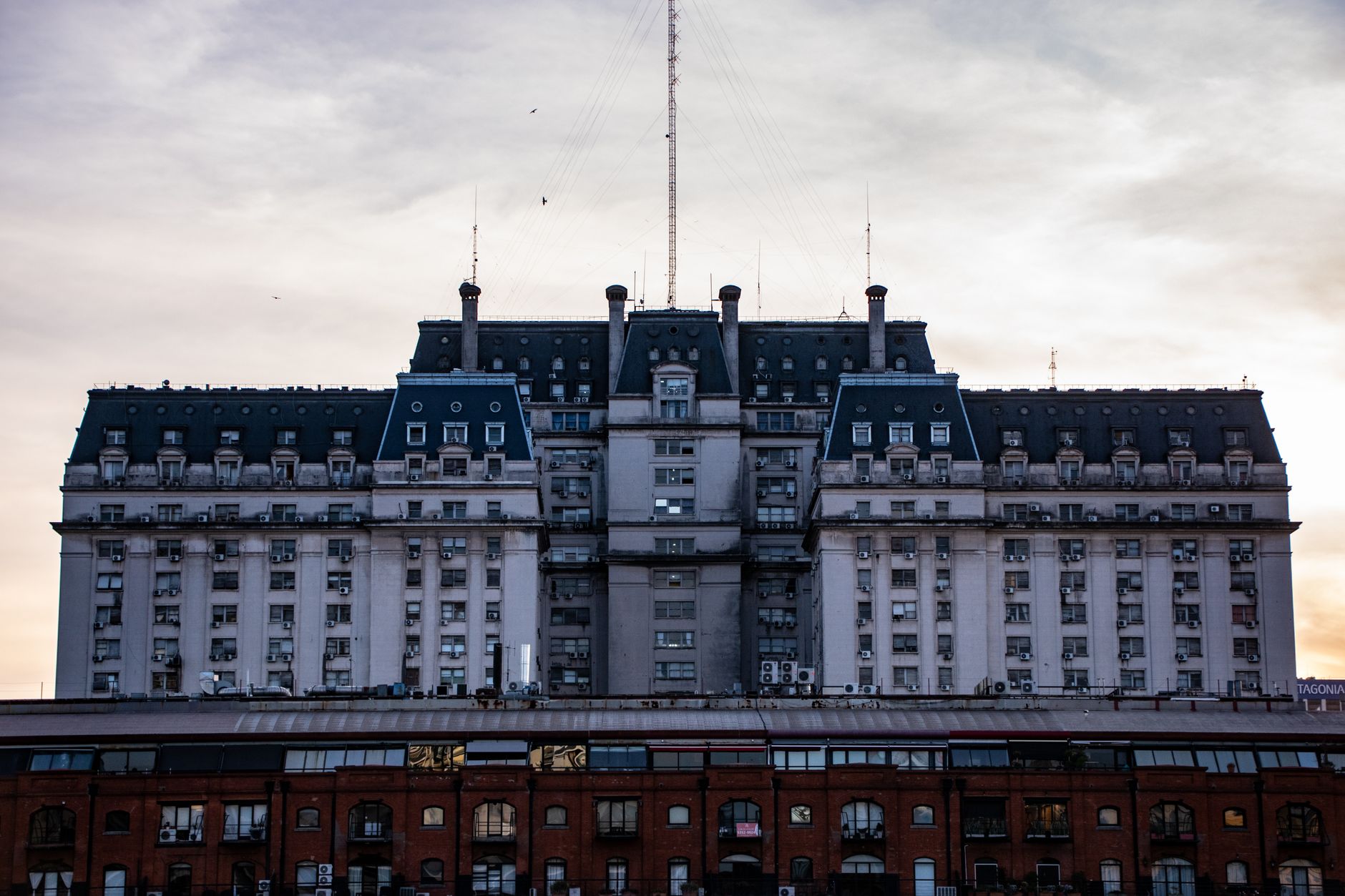
10 Things to Do in Buenos Aires in 3 Days
Buenos Aires is the entry point for South America from most of North America — fares from Newark and Los Angeles have run from $308–$319 one-way on the recent low (Treverra search data, Jul–Aug 2026 window), and the city's position at the continent's southern hinge makes it the natural base for Argentina and the launching pad for Uruguay, Patagonia, and Iguazú Falls. It's also a city that asks something specific of the traveler: not to watch but to participate. Tango here is a social practice, not a dinner show. Beef is cooked in neighborhood grills that don't have English menus. The Sunday street market runs for five hours on foot.
Three days is enough to get a real read on Buenos Aires — if the list is right. What follows are the ten things to do in Buenos Aires that actually define the city, in a shape that fits a tight 3-day window, weighted toward the version of Buenos Aires you can only get by showing up rather than sitting back.
1. See a performance — or a daytime tour — at Teatro Colón
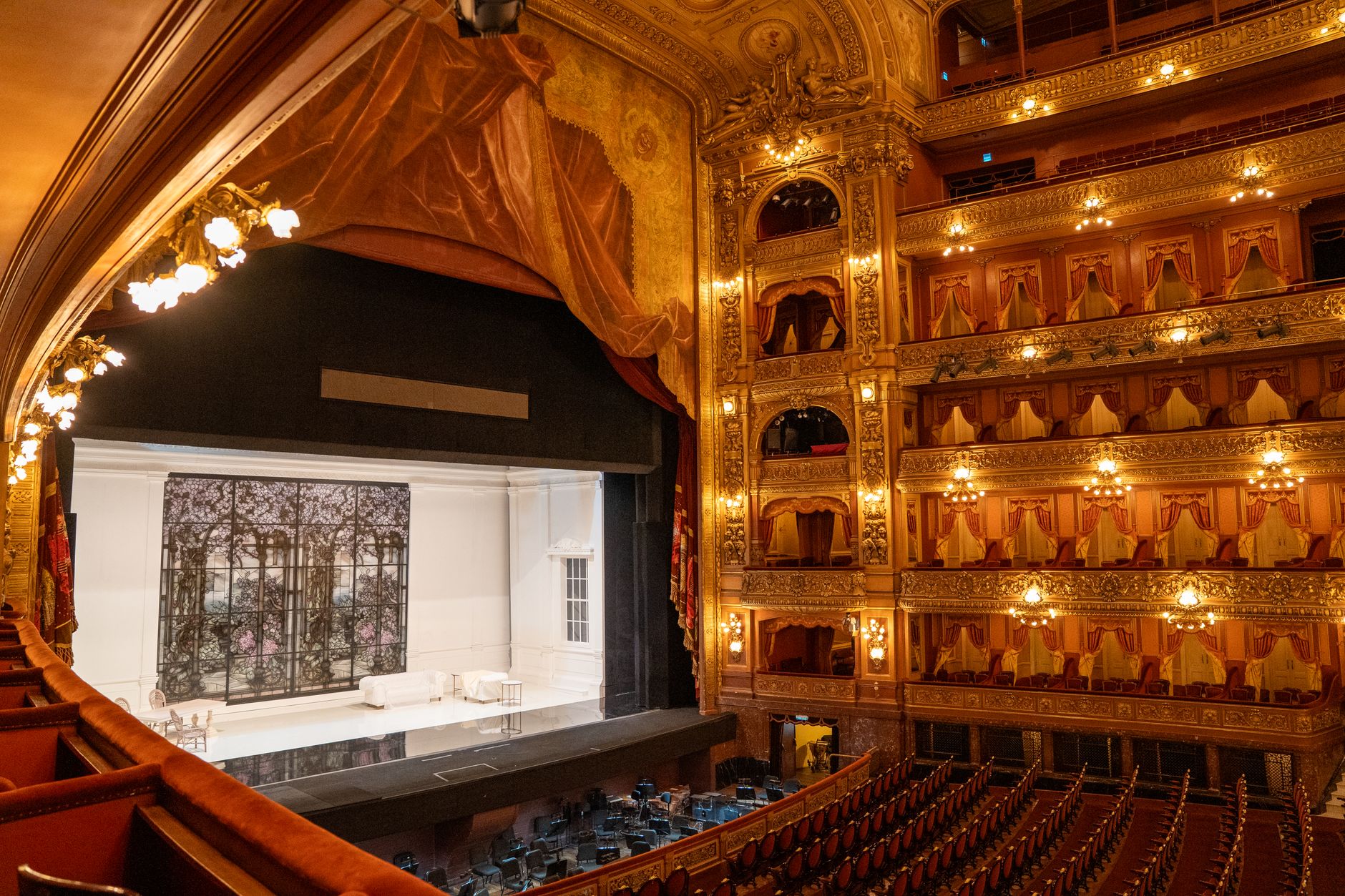
Teatro Colón is one of the five best concert halls in the world by acoustic measurement, opened in 1908 with a performance of Verdi's Aïda, and it is the geographic and cultural anchor of central Buenos Aires — a reason in itself to land in this city (Teatro Colón official, teatrocolon.org.ar, 2026).
The building is on Tucumán 1171, a short walk from the Obelisco. Daytime guided tours in English run four to five times daily and cover the full interior — not just the lobby but the rehearsal spaces, the costume workshops, and the tiers of the main hall. For 2026, the theater added the "Immersive Colón," a separately ticketed multi-sensory presentation of the building's history, running alongside regular touring hours. The active 2026 season marks the 80th anniversary of the Buenos Aires Philharmonic — if you're here for a performance rather than a tour, the season calendar is on the official site.
The hall's acoustics were designed without amplification. Standing in the upper tiers during a rehearsal, when the house is quiet except for the orchestra testing the room, you understand what natural resonance means in a way no description manages. The building earns the visit on its own terms, whether or not a performance lines up with your dates.
Practical: Box office Monday–Friday 9am–4:45pm; tours depart multiple times daily, book at teatrocolon.org.ar.
2. Wander Recoleta Cemetery

Recoleta Cemetery is a nineteenth-century garden cemetery in the Recoleta neighborhood — a city within the city, built from marble mausoleums, wrought-iron gates, and stained-glass chapels, where the Argentine presidents, military generals, and aristocratic families of the past two centuries are buried (Recoleta Cemetery official, recoletacemetery.com, 2026).
Eva Perón's tomb draws visitors — she's in Section 12, in the Duarte family mausoleum — and it's worth finding. But the cemetery rewards wandering past it. The scale of the tombs tells you something specific about Argentine ambition in the 1880s and 1890s: this was a society building its monument district out of Beaux-Arts grandeur, vaulted chapels, and neo-Gothic spires. Walk the main alleys and then branch off. The oldest mausoleums carry inscriptions in French and Italian — you can run a hand along the carved stone of a doorframe and feel the limestone grit — reminders that Buenos Aires was built in large part by European immigrants who wanted their final architecture to match the aspirations they'd crossed the Atlantic to pursue.
Free-entry hours are 9am to 5pm (6pm in summer). English-language tours administered by the cemetery depart Tuesday, Thursday, and Saturday at 11am from the main entrance. The surrounding Recoleta neighborhood is one of the city's most comfortable for walking — cafés within a block in every direction.
Practical: Non-resident entry 24,080 ARS (roughly $24 USD, card only at entrance); cemetery tours ARS 5,000–8,000 (~$5–8 USD); third-party guided tours from ~$10 USD (Buenos Aires Free Walks, buenosairesfreewalks.com, 2026).
3. Spend a Sunday morning at the San Telmo feria

The San Telmo Sunday feria (feria — street market) runs every Sunday along Defensa Street through the historic San Telmo neighborhood: 270-plus stalls of antiques, leather goods, handmade jewelry, textiles, and art; street tango performances along the route; and food vendors selling empanadas and choripán (grilled chorizo on crusty bread) at the corners (Secrets of Buenos Aires, secretsofbuenosaires.com, 2026).
The tango here is spontaneous rather than staged — a couple takes up space on the cobblestones and a crowd forms. It's not the full milonga experience described in item 4, but it's tango as a lived public act, not a performance with a ticket price. This thread runs through Buenos Aires in ways that surprise visitors expecting the theatrical version: the dance bleeds into Sunday mornings as naturally as it bleeds into Thursday nights. Arrive before 11am to walk the market before the noon crowd builds; the peak hours run noon to 3pm, when the ten-block route becomes slow and elbow-close.
Cash is strongly preferred — many vendors offer 10–20% discounts for peso payment, and cash-first is simply how the feria runs. The route covers more than a mile, so wear comfortable shoes. You are not obligated to buy anything; the market is genuinely worth walking for the architecture, the street music, and the choripán alone.
Practical: Every Sunday, 10am–5pm, Defensa Street, San Telmo. Free entry. ARS preferred; some vendors accept USD (LandingPad BA feria guide, landingpadba.com, 2025).
4. Go to a real milonga — not a dinner show

A milonga (the social tango gathering, held in a neighborhood hall or club) is the participatory version of the tango experience Buenos Aires is famous for — entry runs $5–20 USD, beginner lessons often open the evening, and the dance code is social rather than theatrical (CultourBuenosAires, cultourbuenosaires.com, 2026).
The difference from a dinner tango show ($70–150, choreographed for an audience) is not a matter of authenticity gatekeeping — the dinner shows are well-produced and many visitors enjoy them. But they are professional entertainment, and the milonga is something else: a living social practice that Porteños built over a century and still maintain on Thursday through Sunday nights across the city. La Catedral Club in Almagro runs in a former warehouse with a relaxed atmosphere and regular beginner classes — the least intimidating entry point. La Viruta in Palermo is beginner-friendly and runs lessons before the social dancing begins. Salón Canning in Palermo hosts the long-running Parakultural milonga, a traditional atmosphere and one of the most respected floors in the city.
The milonga runs on its own social logic — the cabeceo (a subtle nod across the floor to invite a partner), the tandas (sets of three to four songs) and cortinas (short musical breaks that signal a change of partners) that structure the evening. You don't need to know any of this to go; a guided milonga tour from Buenos Aires Horizon Tours or CultourBuenosAires runs approximately $25–40 and includes transport, entry, and a lesson that orients you to the codes before you're on the floor. Most milongas begin around 11pm and run until 3–5am. Buenos Aires runs late in general, and the milonga runs later than almost anything else.
Practical: Entry $5–20 USD; guided milonga tours ~$25–40 USD including transport and lesson. Thursday–Sunday nights.
5. Eat at a neighborhood parrilla
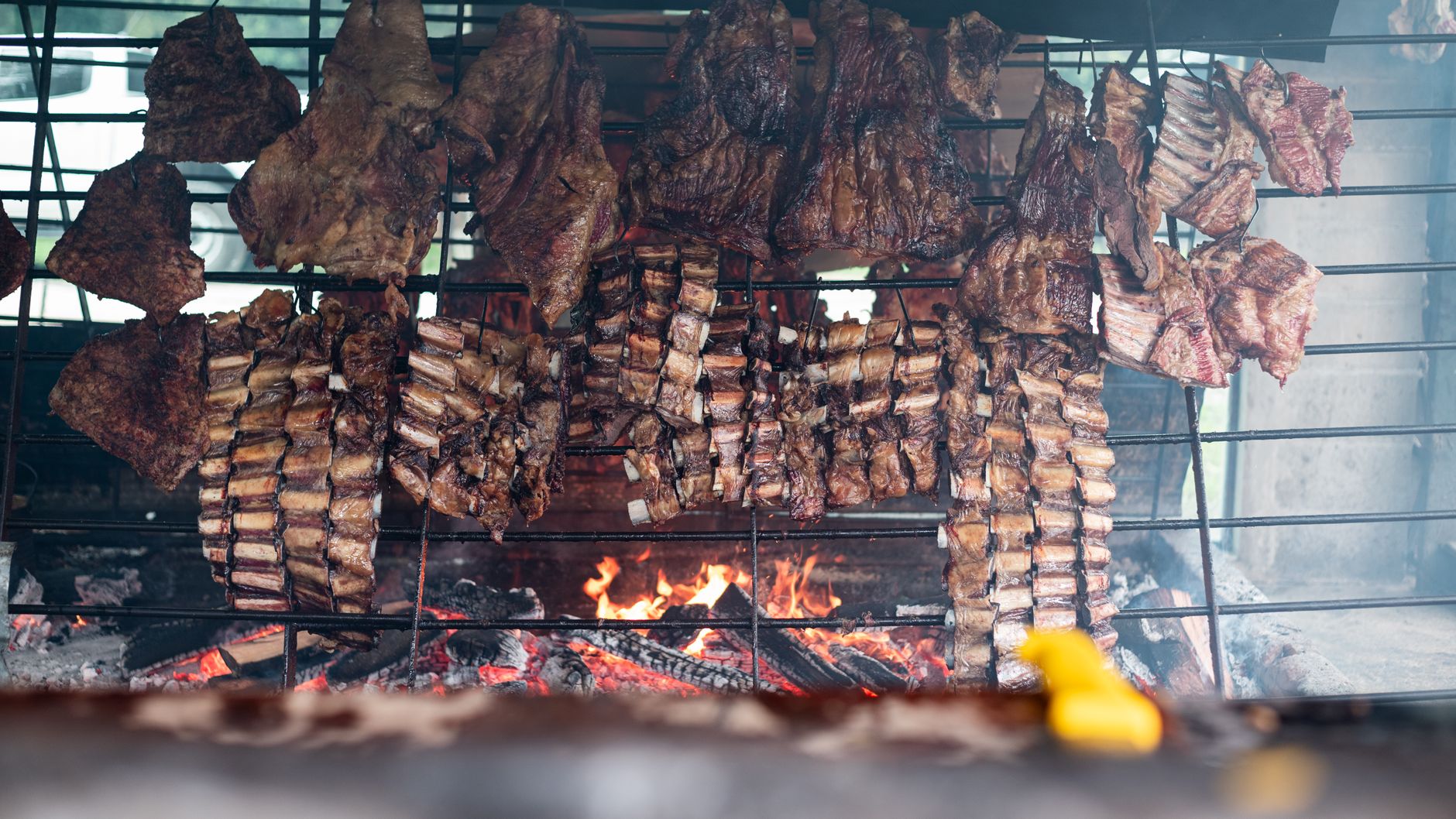
A parrilla (the Argentine wood-fire grill, and the restaurant built around it) is what Buenos Aires beef actually tastes like — grassfed, pampas-raised, cut differently than North American beef, and cooked over wood embers in a neighborhood restaurant that typically has no English menu and no tourist-circuit presence (Secrets of Buenos Aires, secretsofbuenosaires.com, 2026).
The tourist-facing steakhouses are not bad — they serve reliably good beef, they handle reservations in English, and they offer a curated experience for visitors who want that. But the neighborhood parrilla is a different proposition: lower prices, less theater, and a room where the person at the next table is a Buenos Aires local rather than a fellow traveler. El Desnivel in San Telmo is the classic entry — no-frills, locals outnumber visitors, the cuts (entraña, the skirt steak; vacío, the flank; bife de chorizo, not related to the sausage, but a bone-in ribeye) are listed in Spanish only. Parrilla Peña, a few meters from Teatro Colón in the Centro, is similarly local-oriented and worth the walk. La Cabrera in Palermo is the middle ground — a higher-quality parrilla with some polish and a tourist-aware menu, popular but not purely tourist-facing.
A full asado (grilled meat spread) with a bottle of Malbec runs roughly $20–40 USD per person at a neighborhood parrilla. Lunch service, 1–3pm, is typically quieter than dinner — and dinner in Buenos Aires doesn't start until 9pm; restaurants before then are empty not because they're weak but because Porteños eat late by North American standards. Tip 10% in cash, in pesos, directly to your server; card tips don't reliably reach service staff.
Practical: Asado with wine ~$20–40 USD/person; tip 10% cash in pesos. El Desnivel: San Telmo. Parrilla Peña: Centro (Sherpa Food Tours, sherpafoodtours.com, 2026).
6. Spend an evening in Palermo

Palermo is Buenos Aires' largest neighborhood and the one that best captures the city's 2020s energy — boutiques, café culture, street art, and a bar scene built around outdoor seating that runs until 2am on weekends (Sol Salute Palermo Soho guide, 2026).
Palermo Soho (centered on Plaza Armenia and Plaza Serrano, the neighborhood's main gathering square) is where local designers run their shops alongside specialty coffee spots that have been open since mid-morning. Palermo Hollywood, named for a period when television production companies clustered here, is restaurant-dense and shades into the newer food energy coming out of Chacarita, the adjacent neighborhood where Buenos Aires-resident food writers and The Infatuation's Buenos Aires bureau have been pointing visitors for the past two years. Chuí, an open-air natural-wine restaurant under the Chacarita train tracks, and Ajo Negro, a narrow space doing ambitious tapas, are the specific anchors local sources name as worth seeking out.
Palermo is also the practical base for most first-time visitors — it's genuinely safe day and night, well-connected to the Subte (metro) at Palermo station on Line D or Plaza Italia on the same line, and walkable to Recoleta in about twenty minutes. An evening that starts with a walk through Plaza Serrano and ends at Chuí after 10pm is a good Buenos Aires evening.
Practical: Subte Line D to Palermo station or Plaza Italia; Plaza Serrano bars open after 8pm, busiest after 10pm weekends (Vamos Spanish, vamospanish.com, 2026; Frommers Buenos Aires, 2025; Time Out Buenos Aires, 2026; The Infatuation Buenos Aires, 2026).
7. Visit El Ateneo Grand Splendid on a weekday morning

El Ateneo Grand Splendid is a fully working bookstore built inside a 1919 theater at Santa Fe 1860 in Palermo — the stage is now a café, the original painted ceiling remains overhead, and the gilded balconies that once held theater patrons now hold shelves of novels and architecture books (El Ateneo official via gotobuenosaires.com, 2026).
It appears on every "most beautiful bookstores in the world" list, which has the predictable effect of filling it with cameras on weekend afternoons. The weekday morning version — 9am to noon on any day from Monday to Friday — is a different visit. The ceiling is the same, the proportions are the same, the stage-café serves espresso at the same prices. But you can actually move through the stacks, sit in a balcony chair with a Spanish-language novel you won't finish, and notice — in the near-quiet of a Tuesday morning, with only the soft creak of the old theater's wooden balcony underfoot — how the building holds its 1919 design alongside contemporary bookselling without the seams showing. As of January 2026, a separately ticketed "Grand Splendid Experience" — an immersive building-history presentation — runs alongside regular browsing hours for visitors who want the full architectural story.
This is not a hidden find. It's widely known, which is an argument for going early on a Tuesday rather than skipping it entirely.
Practical: Hours 9am–9pm Monday–Saturday; noon–9pm Sunday. Free entry for bookstore browsing. Grand Splendid Experience separately ticketed (buenosairesfreewalks.com, 2026; audiala.com, 2026).
8. Stand in Plaza de Mayo and watch the Madres march

Plaza de Mayo is the founding public square of Buenos Aires — laid out in 1580 — and has been the site of the country's most consequential political events for four centuries, from independence celebrations to the 1976 military coup and the protests that followed it (Buenos Aires city tourism, turismo.buenosaires.gob.ar, 2026).
The Madres de Plaza de Mayo — the Mothers of the Plaza de Mayo — have marched in the square every Thursday at 3:30pm since 1977, holding photographs of their children who disappeared during the 1976–1983 military dictatorship. The march is still happening. It's open to the public, free to attend, and it is not a reenactment: these are the mothers (and now the grandmothers and the children of mothers who have died) of specific people who were taken, and the march is the ongoing, public record of that. To stand in the square on a Thursday afternoon and watch it happen is to understand something about Buenos Aires that no museum exhibit delivers in the same way.
The Casa Rosada (the executive mansion, facing the square — its distinctive pink-stucco finish dates to the nineteenth century) is open for weekend tours, free of charge. The Cabildo, the colonial administrative building on the square's western edge, has a small museum. The Metropolitan Cathedral completes the architectural frame of the square.
Practical: Plaza de Mayo, free access. Madres march Thursdays 3:30pm. Casa Rosada weekend tours free via official booking; Cabildo museum hours variable, check turismo.buenosaires.gob.ar.
9. See El Caminito in La Boca — in the morning, with clear eyes
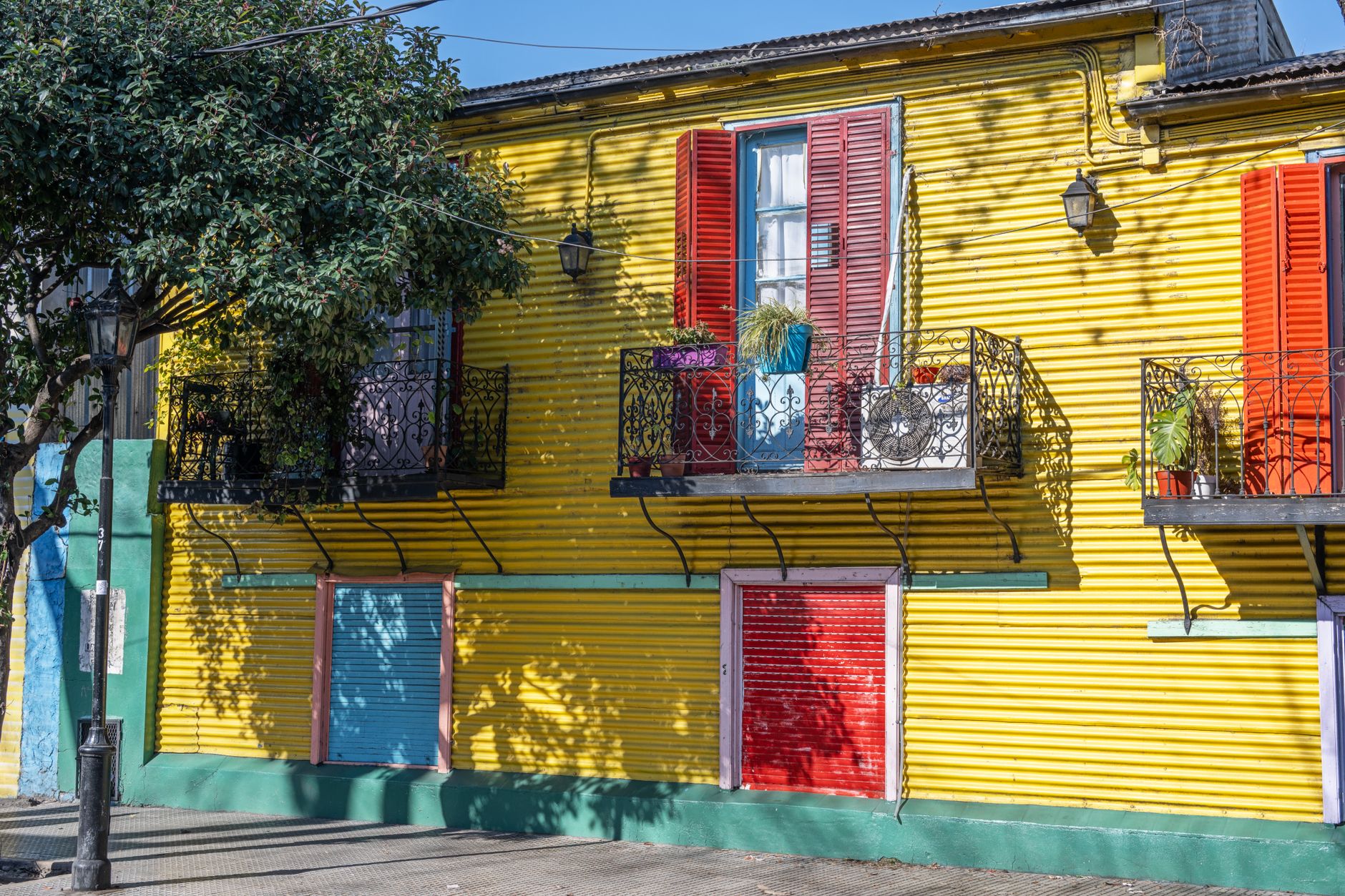
El Caminito is a short cobblestone alley in the La Boca neighborhood whose brightly painted metal-sheet facades — blues, yellows, reds, greens, the colors of the port paints available to the Italian immigrant community who built them — became an open-air symbol of Buenos Aires in the early twentieth century, and have been that symbol in every tourist photograph since (Secrets of Buenos Aires La Boca guide, secretsofbuenosaires.com, 2026).
The honest context: the tourist strip immediately around El Caminito is the most commercially tourist-facing block in the city. The performers visible from the alley will ask you for payment in exchange for a photograph. The restaurants on the strip serve food priced for visitors who won't return. Local writers at Secrets of Buenos Aires are direct about this without being dismissive of the visit itself — the corrugated iron facades are specific to Buenos Aires' Italian port-immigrant history, the architecture is genuinely photogenic, and the location is worth the trip. The distinction is to visit for 1–2 hours on a weekday morning (best light on the facades, fewer crowds than a Sunday afternoon) and not to eat on the tourist strip. Residential La Boca, two blocks from El Caminito, is a working-class neighborhood with a different character — interesting to walk in the morning, not recommended after dark. Get there by taxi or Uber from the city center (~$10 USD round-trip from Palermo); the nearest metro stop (Constitución on Line C) requires a bus connection.
Practical: No admission to El Caminito. Best visited by taxi (~$10 USD round-trip from Palermo); budget 1–2 hours. Daytime only; leave before dark (Wander Argentina La Boca guide, wander-argentina.com, 2025).
10. Walk the Costanera Sur Ecological Reserve
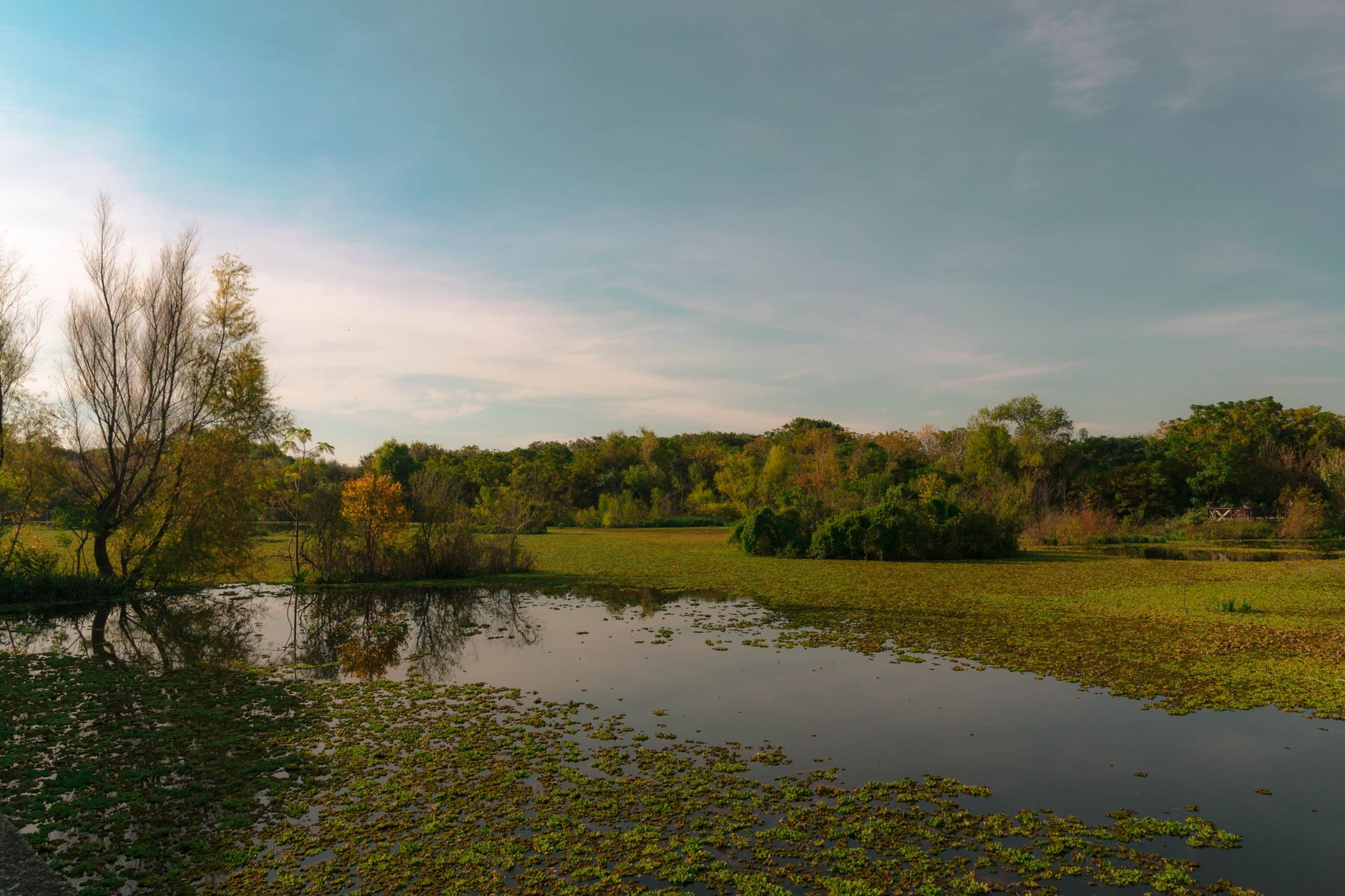
The Costanera Sur Ecological Reserve is 865 hectares of reclaimed wetland along the Río de la Plata, adjacent to Puerto Madero's renovated waterfront — three lagoons, over 500 native plant species, and resident bird populations (herons, woodpeckers, southern lapwings, ducks) within taxi distance of the city center (Buenos Aires city government, turismo.buenosaires.gob.ar, 2026).
After a few days of dense urban Buenos Aires — the cobblestone feria, the parrilla, the opera house, the late nights — the reserve operates as a pressure release. You enter through a gate and the city noise drops. The paths run along lagoons and through stands of native pampas grass; the birdlife is visible rather than hidden — southern lapwings call loudly from the grass margins, an abrupt sound against the city's distant hum — the kind of natural-world access that requires three-day national park trips in other South American cities. The reserve pairs naturally with a walk through Puerto Madero (the renovated former port district) and a look at the Puente de la Mujer — the tilted pedestrian bridge by Santiago Calatrava, whose angular geometry fits oddly and perfectly into the flat riverbank it crosses.
Free entry. Open Tuesday through Sunday (closed Mondays), 8am–7pm weekdays, 8am–8pm weekends. Free guided walks depart Saturday, Sunday, and public holidays at 9:30am and 4pm. Bring water; there are no food vendors inside.
Practical: Free entry. Tuesday–Sunday; closed Mondays. Guided walks Saturday, Sunday, and public holidays 9:30am and 4pm (Lonely Planet Buenos Aires, 2025).
Practical notes
Buenos Aires is a good-value city by North American standards — budget travelers can manage comfortably on $50–60 USD per day; a comfortable mid-range stay (private hotel room, sit-down meals, occasional taxis) runs roughly $100–120 USD per day (wanderwallet.io 2026 budget guide; secretsofbuenosaires.com 2026 cost guide). It is not the near-free destination it was in 2022–2023, when Argentina's parallel exchange rate gave dollar-holding visitors dramatically inflated purchasing power. By April 2025, currency restrictions were lifted and exchange rates converged (wanderwallet.io, 2026). Use a Wise or Revolut card for the best rates, or a standard Visa/Mastercard — when a card terminal asks whether to charge in ARS or USD, always select ARS.
Getting around: The Subte (metro — seven lines, A–H) covers the central city; fare is roughly 400 ARS (under $1 USD, requires a SUBE transit card from any newsstand). Palermo to Recoleta is about 20 minutes on foot. Cabify and Uber are both active and reliable. For La Boca, take a taxi rather than the metro.
Getting in from EZE: Ministro Pistarini International Airport (EZE) is 35 km southwest of the city center. The Tienda León shuttle bus runs approximately $11.70 USD to the Madero Terminal, taking about 50 minutes. Taxis from the official airport counter run 38,000–50,000 ARS ($38–50 USD) with a fixed price. Cabify and Uber are available inside the terminal via app. Note: if your trip includes any Argentine domestic flights (Iguazú, Bariloche, Mendoza), those depart from AEP (Aeroparque Jorge Newbery), on the opposite side of the metropolitan area — budget a separate day before any domestic departure, as the EZE-to-AEP transfer runs 45–60 minutes by taxi.
Safety: Buenos Aires has a medium risk level overall (TravelSafe-Abroad, 2026). Violent crime against visitors is uncommon; petty theft — pickpocketing, bag snatching — is the main concern in crowded areas around the Obelisco, near Retiro station, and in La Boca. Use a cross-body bag, keep your phone in a pocket rather than your hand on busy streets, and carry some small-denomination pesos for tipping and market purchases. Carry travel or basic health insurance for the trip.
When Buenos Aires runs: Restaurants fill after 9pm; milongas after 11pm; bars are quiet before midnight. Visiting in July or August? The city's cultural calendar — milongas, theaters, museums — runs year-round.
Buenos Aires is the entry point for South America and, more specifically, the base for flights into Argentina's interior: Iguazú Falls, Mendoza wine country, and Patagonia are all two-hour domestic flights from AEP (domestic departures). The gateway works best when the trip includes at least one Argentine destination beyond the city itself, or the ferry to Montevideo (~$85–91 one-way, ~4 hours, Buquebus from Puerto Madero — Buquebus official, buquebus.com, 2026). Three days in Buenos Aires followed by a week deeper into Argentina is the natural trip shape this list is built to start.
Frequently asked questions
Is three days enough for Buenos Aires?
Three days is enough to cover the city's main sights and a few deeper experiences — Teatro Colón, Recoleta Cemetery, the San Telmo feria, a neighborhood parrilla, and an evening at a milonga — without rushing. Most travelers find they want more time; the ten items on this list fit a tight three-day window but pair naturally with a longer stay.
What's the difference between a milonga and a tango dinner show?
A milonga is a social dance gathering where locals actually dance tango — entry runs $5–20 USD, beginner lessons often start the evening, and the atmosphere is participatory, not theatrical. A tango dinner show ($70–150 USD) is choreographed performance aimed at visitors. Both are legitimate; they are not the same experience.
Is La Boca safe to visit?
El Caminito in La Boca is safe during the day — budget 1–2 hours for the painted metal-sheet facades, then leave before dark. The broader La Boca neighborhood has security dynamics that differ from Palermo or Recoleta. Local sources including Secrets of Buenos Aires specifically caution against exploring residential La Boca streets after dark.
Is Buenos Aires expensive for US travelers in 2026?
Buenos Aires is affordable but not the dramatically cheap destination it was in 2022–2023, when the blue-dollar parallel exchange rate gave foreign cash-holders major purchasing power. As of 2026, currency restrictions have been lifted and rates have converged. Expect roughly $50–60 USD per day for a budget trip, $100–120 USD per day at a comfortable mid-range level — meaningfully cheaper than US cities, but honest current ranges, not 2023 ones.
When is the best time of year to visit Buenos Aires?
March through May (autumn) and September through November (spring) are the consensus best windows — mild temperatures, lower crowds, and often the best fare-to-experience ratio. June through August (winter, 45–60°F) yields the cheapest accommodation and still offers full cultural programming. December through February is Argentine summer: hot, crowded, and the most expensive, coinciding with Northern Hemisphere peak travel demand.