
10 Things to Do in Amsterdam on a 3-Day Stopover
Amsterdam is one of the most accessible stopover cities in Western Europe from North America — a gateway where the canal-house light off the Herengracht, the lean of 17th-century brick facades over still water, and a rail hub underneath Centraal Station all land in the same three days. Schiphol sits at the top of a transatlantic flight corridor; Amsterdam Centraal puts Brussels under two hours ahead, Paris in three hours and twenty minutes, and London in just over four. Three days here covers more of the best things to do in Amsterdam than most people expect — and ends with a Eurostar booking ahead, not a flight home.
But the city earns three days on its own terms before any of that. In the 17th century, the Dutch Republic produced an estimated five million paintings in seventy years — more than anywhere else in human history for that period. Amsterdam is where you feel that in full. The Rijksmuseum was literally built around The Night Watch. Rembrandt's workshop is still standing on Jodenbreestraat. The Frans Hals Museum in Haarlem, twenty minutes by train, holds the civic guard portraits that belong to the same tradition. That thread — painting volume, workshop, genealogy — is the most rewarding one to follow on three days here.
Below: ten stops, which require planning weeks in advance, which you can walk into for free, and how each one fits the three days.
1. Rijksmuseum
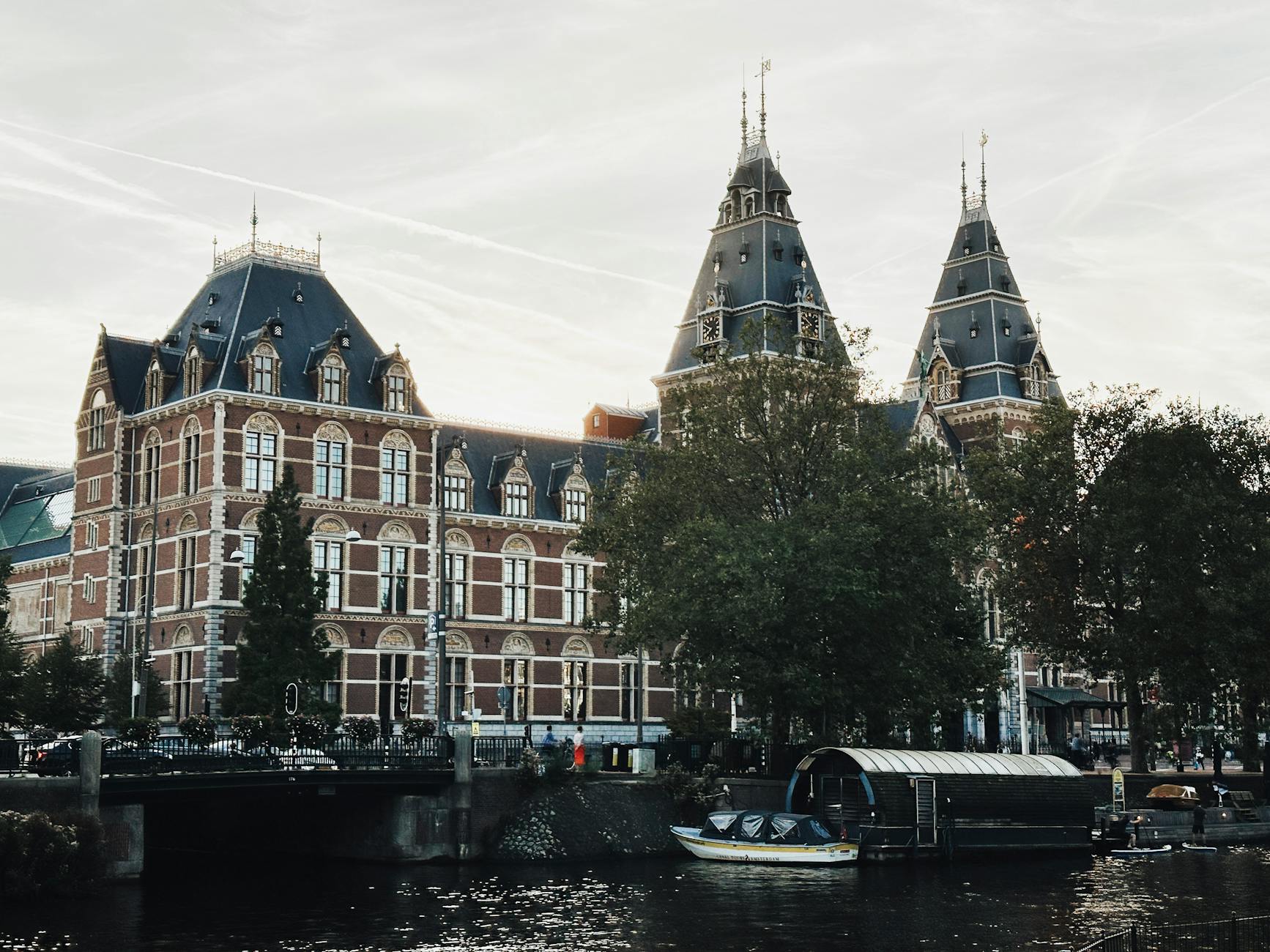
The Rijksmuseum holds the world's largest collection of Dutch Golden Age paintings — Rembrandt's The Night Watch, four Vermeers, and more — in a 19th-century building on Museumplein designed specifically around the paintings inside it.
Quick reference: Online timed entry required; no walk-up sales. Adults €25; free under 18. Open daily 9am–5pm; quietest Tuesdays and Wednesdays, and before 9am or after 3pm (Rijksmuseum.nl, 2026).
The Gallery of Honour — the building's central corridor — culminates in The Night Watch. That spatial fact is not incidental: the architects organized the entire floor plan around where this one painting would hang, so arriving at it from the far end of the hall, through Vermeers and Halses and De Hoochs shrinking into the distance, gives you the painting the way the building intended it. The Dutch Golden Age produced this density of masterwork from a republic that had recently broken free from Spanish Habsburg control and was running global trade from Japan to Brazil. The Rijksmuseum is the argument that those two things are connected.
Give it two hours, arrive at 9am, and skip the midday crush. Museumplein positions you two minutes' walk from the Van Gogh Museum — pairing them in a single day is standard practice, though each wants two hours to itself.
2. Anne Frank House (Prinsengracht 263)

The Anne Frank House is where Anne Frank, her family, and four others hid in a concealed back annexe for over two years during the Nazi occupation; the secret annexe is now open to visitors.
Quick reference: Adults €16.50; ages 10–17 €7; under 10 €1. Booking is essential and specific: tickets release every Tuesday at 10am Amsterdam time (CET), for visits six weeks ahead, and sell out within hours in peak season (March–October) — there are no walk-up tickets and no official resellers (AnneFrank.org, 2026).
Set an alarm for Tuesday at 10am CET before you book anything else about this trip.
The physical experience is what separates this from reading the diary. The annexe entrance is a hinged bookcase. The rooms are small — the kind of small that makes two years feel, in the body, like something different than the mind calculates. A family of four and four others, in a space that required the bookcase door to stay shut and voices below a certain volume while the office below operated normally. The gap between the document most people have read and the place where it was written closes here in a way it can't anywhere else.
3. Van Gogh Museum (Museumplein)

The Van Gogh Museum holds the world's largest Van Gogh collection — 200 paintings and 500 drawings covering every period of his career — in a building by Gerrit Rietveld on Museumplein, two minutes from the Rijksmuseum.
Quick reference: Adults €25; free under 18. Open daily 9am–6pm (Fridays until 9pm). Timed entry online only; during April through October, book two to four weeks in advance — peak-season tickets sell out days to weeks ahead (VanGoghMuseum.nl, 2026).
Van Gogh spent his most productive Dutch years in Nuenen and The Hague before moving to Paris and then Arles. The museum holds the full arc: the dark, thick-painted canvases from the Netherlands, the Impressionist shift in Paris, and the intense southern light of Provence. You stand in front of paintings you've seen on every poster and realize how small the reproductions always were, and how deliberately his brushwork looks applied from a distance. The Museumplein location makes a double-museum morning straightforward — give each two hours and move between them on foot, stopping at the Museumplein square in between if you need air.
4. Rembrandt House Museum (Het Rembrandthuis)

The Rembrandt House Museum is the canal house on Jodenbreestraat where Rembrandt lived and worked from 1639 to 1658, restored to its 17th-century state with his printmaking equipment and the curiosity collection he amassed before going bankrupt.
Quick reference: Adults €23.50; off-peak 4–6pm tickets €19.50; under 25 €15. Open daily 10am–6pm. Online booking with a start time is recommended; walk-up is possible but limited. Closed April 27 and December 25 (Rembrandthuis.nl, 2026).
This is the counterweight to the Rijksmuseum's grandeur. At the Rijksmuseum you see what the Golden Age produced; at the Rembrandthuis you see how one artist lived inside it — and the specific catastrophe of how it ended. Rembrandt collected compulsively: a narwhal tusk, rare shells from the East India trade, paintings by Rubens and Lucas van Leyden. He spent far beyond what commissions could cover. The Dutch Republic's insolvency law required the precise inventory of everything he owned before it was auctioned off, and that inventory is what made the restoration of this house possible. The tension between genius and catastrophic overreach is more legible in these rooms than in any canvas he painted.
5. The Jordaan

The Jordaan is a grid of narrow canals, 17th-century canal houses, bruin cafés (traditional Dutch brown-paneled pubs), and independent restaurants north of Prinsengracht — free to explore, no booking required.
Quick reference: Café prices €4–€6 per beer. Westerkerk tower climbable for €12.50 (Westerkerk.nl) — best elevated view of the canal ring; limited availability, book ahead if it's a priority.
The Jordaan is where the canal-house streetscape the city is known for runs densest and least interrupted. The Anne Frank House is here, at Prinsengracht 263. The Westerkerk is where Rembrandt is buried — his exact grave is not known, the church is too old and its records incomplete, but he's in there somewhere. On the Leliegracht/Prinsengracht intersection, the Westerkerk tower frames with a canal, a drawbridge, and a row of leaning 17th-century facades in a single sightline.
Start here in the morning before 9am, when the streets have the residential quality they lose by mid-morning. Find a bruin café — the term refers to the brown-paneled interiors traditional to Dutch drinking culture, worn smooth by generations of regular customers — take a window seat, and let the next agenda item wait an hour.
6. De Pijp and Albert Cuyp Market

De Pijp is a 19th-century residential grid south of the canal ring, home to the Albert Cuyp Market — one of Europe's largest outdoor daily markets, 260-plus stalls stretching nearly a kilometre along Albert Cuypstraat, running since 1905.
Quick reference: Walk-in; free to browse. Open Monday through Saturday, 9am–5pm; closed Sundays. Arrive before 10am for the freshest selection. Raw herring at the Sweelinckstraat fish stand has been served this way since 1916 (IAmsterdam.com, 2026; Adam and Eve Food Tours, 2026).
Two things are worth eating at the Albert Cuyp Market and not skipping: fresh stroopwafels pressed to order at stand 144 (€2.50 — the caramel-and-wafer cookies sold in every Amsterdam supermarket, but made fresh they're a different category of object), and raw herring with onion and pickle served the traditional way, not sliced, at the fish stand near Sweelinckstraat (€4.50). You hold the tail and lower it into your mouth in one movement — the gesture that locals use to identify first-timers at ten meters.
De Pijp itself positions you ten minutes' walk from Museumplein while sitting among a neighborhood that operates as a city rather than a tourist amenity. The streets get denser and more residential the further south you go from the market.
7. Brouwerij 't IJ (The IJ Brewery)
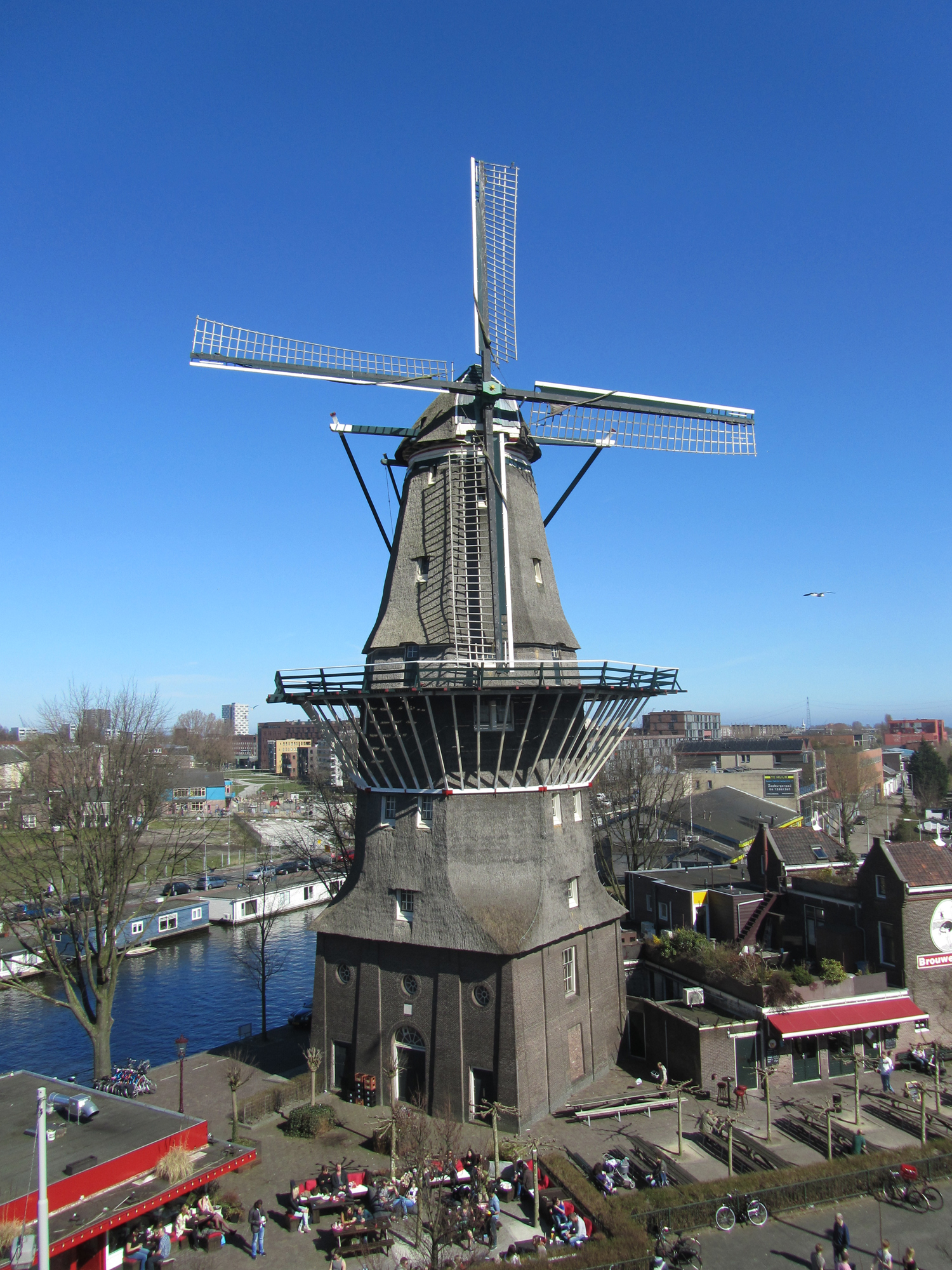
Brouwerij 't IJ is an organic craft brewery founded in 1985 inside a converted 19th-century public bathhouse directly adjoining the De Gooyer windmill — the tallest post-mill in the Netherlands — in eastern Amsterdam.
Quick reference: Taproom open daily 2pm–8pm; verify current hours at brouwerijhetij.nl. Tours available; check schedule online. Walk-in; no booking required. Located east of Centrum — tram or a fifteen-minute bike ride (Brouwerij 't IJ official, 2026).
Kaspar Peterson, a chart-topping Dutch musician, started the brewery in 1985 out of frustration with Amsterdam's lack of robust beers. What he built is now one of the city's most recognizable institutions: twelve standard beers, three seasonal, all organic, and a terrace on the IJ river where the clientele is local. The setting — brewery floor inside a bathhouse, windmill blades overhead, river view from the terrace — is genuinely specific to this building and this corner of the city.
For context on the alternative: the Heineken Experience offers two-beer tastings, scripted queues, and the Heineken brand story in a renovated historic brewery building. It's popular, and there's nothing wrong with going. Brouwerij 't IJ is simply a working brewery with better beer, a stranger location, and no script. The specific reasons are worth knowing so you can make the choice yourself.
8. Canal Cruise (small-boat option)

The canal ring — the Grachtengordel — earned UNESCO World Heritage status in 2010 for its largely intact 17th-century planned layout, and the best way onto the water is a small electric boat rather than a large tour vessel. The ring is four concentric semicircles of waterways (Singelgracht, Herengracht, Keizersgracht, Prinsengracht); the two cruise types differ mainly in canal access.
Quick reference: Standard large-vessel cruise: roughly €16 per adult, departures every ten to fifteen minutes from the Centraal area piers, 100-plus passengers. Small electric boat operators (Pure Boats, KINboat, others): €25–€50 per hour, six to forty passengers. Book in advance for April through September. Best times: before 10am or after 6pm (IAmsterdam.com; Holland-Explorer.com, 2026).
The case for the small electric boat is not that the large cruise is bad — it's a decent orientation ride — but that the two experiences access different canals. Large vessels are too wide to enter the Brouwersgracht, the Reguliersgracht, and the narrower Jordaan waterways. Those are precisely the canals where the canal-house geometry is tightest and the facades were designed to be seen from the water: the Dutch Golden Age's cargo went by boat, not cart, which means the stepped gables were always meant to be read at water level. A small boat gets you into those canals. A large one stays on the wider ring.
The Reguliersgracht bridge at Keizersgracht offers what local photographers call the seven-bridges view: seven canal bridges receding into the distance, each framed by canal-house facades and their water reflections. It's best in the early morning or at blue hour.
9. Amsterdam Noord (Free GVB Ferry from Centraal)

Amsterdam Noord is the post-industrial creative district across the IJ River from Centraal, reached by a free GVB ferry that runs 24 hours a day, seven days a week — no ticket, no tap, no OVpay (the city's contactless tap-to-pay transit system), five-minute crossing.
Quick reference: Departs the dock behind Centraal Station; bikes welcome. Buiksloterweg stop: EYE Film Institute (screenings roughly €11–€14). NDSM stop: the further, larger destination with the wharf and beach bars. A'DAM Tower lookout: €17.50 (A'DAM Tower, 2026).
Noord is what Amsterdam looks like after the canal ring: a former shipyard landscape with industrial-scale murals on warehouse walls, beach bars built from shipping containers, and the EYE Film Institute's cantilevered concrete building landing over the IJ water in a way that belongs to a completely different century from the Herengracht. The NDSM Wharf hosts quarterly flea markets, film screenings, and food events. Pllek and Noorderlicht are the two spots locals point you to — Pllek a waterfront bar built from shipping containers, Noorderlicht a plant-filled greenhouse café — both casual places to eat or drink by the water.
For a city that charges €16 for a canal cruise, a free five-minute ferry to a neighborhood this different in character is worth knowing about. Most visitors stay south of Centraal; that's the only reason Noord feels quieter.
10. Haarlem Day Trip
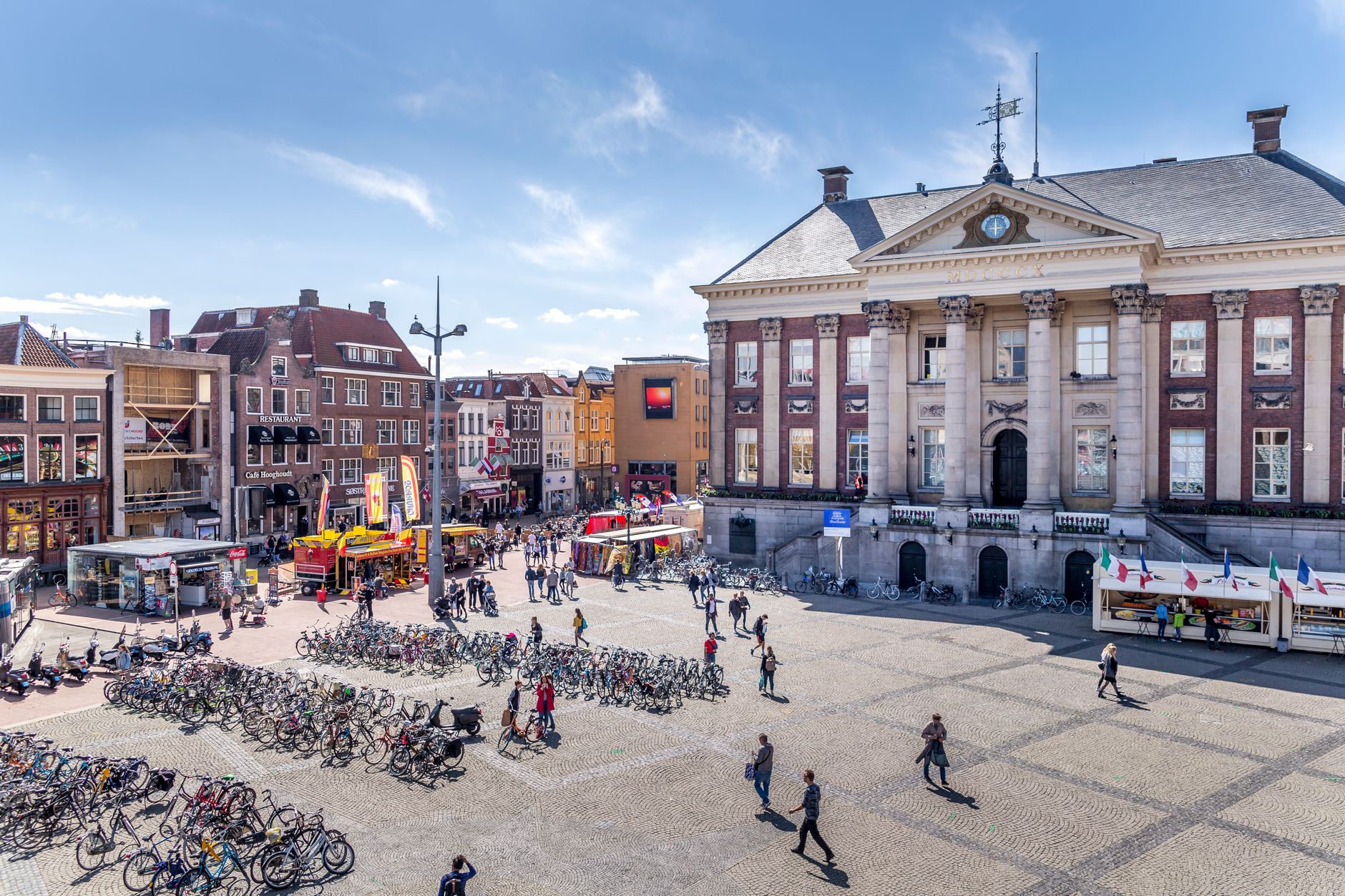
Haarlem is a historic Dutch city twenty minutes west of Amsterdam by train, with its own smaller canal ring, the Frans Hals Museum, and a compact market square — the natural half-day that Amsterdam's crowds push you toward.
Quick reference: Train from Amsterdam Centraal every fifteen minutes; roughly €4.50 one-way; twenty minutes (Trainline, 2026). Walk-in for the city itself. Frans Hals Museum hours and current admission at franshalsmuseum.nl.
The case for Haarlem is specifically the Frans Hals Museum and what it holds: Hals' group portraits of civic guards and regents — the same form, the same commission model, the same tradition that produced Rembrandt's The Night Watch at the Rijksmuseum. Haarlem's Frans Hals predates Rembrandt by a generation. Standing in front of the civic guard portraits here and then standing in front of The Night Watch in Amsterdam gives you the genealogy of the most recognizable painting in Dutch art. Hals was painting these group compositions in Haarlem when Rembrandt was still an apprentice.
Beyond the museum: Haarlem has its own canal ring and operates at a fraction of Amsterdam's tourist density. The Grote Kerk (Sint-Bavokerk) on the Grote Markt contains the Müller organ that Mozart played as a child, and the street scale is genuinely different — provincial rather than tourist-facing. The Amsterdam crowds Amsterdam can no longer avoid are part of what makes this excursion earn its train fare: twenty minutes away, the city feels like a different version of the same idea.
Note for spring travelers: Haarlem is also the transit hub for Keukenhof tulip gardens, open 2026 March 19 through May 10 only, via Regional Bus 50 from Haarlem station.
Practical notes
Amsterdam is one of the more logistically straightforward European cities for North American visitors — nearly universal English in tourist areas, card payments everywhere, an airport-to-center train under twenty minutes — and a few specific pieces of information make it run even more smoothly.
Getting there and around. The train from Schiphol airport runs directly to Amsterdam Centraal every ten to fifteen minutes; single ticket around €6.20 second class (Schiphol.nl, 2026). Inside the city, OVpay — the Netherlands' contactless transit system — lets you tap in and tap out on all GVB trams, metro, and buses using a standard bank card, Apple Pay, or Google Pay. No separate card purchase needed for most visits. Daily cap €10.50. GVB day passes available if you prefer (1 day €10; 3 days €21.50; GVB, 2026). The free IJ ferry to Noord runs from behind Centraal with no tap required.
Museum booking — the three that require it. Book the Anne Frank House, Van Gogh Museum, and Rijksmuseum before you fly. The Anne Frank House releases tickets every Tuesday at 10am CET for visits six weeks ahead; in peak season they're gone within hours. The other two require online timed-entry tickets; walk-up sales don't exist at any of these three. Book the Anne Frank House first, then plan the rest of the trip around that date.
Money and tipping. The Netherlands uses the euro. Most restaurants, cafés, and markets in Amsterdam accept contactless payment; some smaller venues are card-only. Tipping is appreciated but not expected at North American levels — rounding up or leaving 5–10% for a sit-down meal is standard. Payment terminals often offer a tip option when you tap; you can decline (DutchReview, 2026).
Safety. Amsterdam is among the safer major European capitals for violent crime. The tourist-relevant risks are pickpockets — highest at Centraal Station, Dam Square, Albert Cuyp Market, and busy trams — and unmarked taxis at Centraal (use the official taxi queue or Uber/Bolt). Keep your phone and wallet in front pockets in crowded areas.
Language and culture. English is near-universally spoken in Amsterdam's hospitality and tourism sectors. Dutch directness is real and is not impolite — answers will be short and honest, which is useful. Dinner service typically starts at 5:30–6pm and last orders are by 9:30pm.
Visa and entry. US passport holders can enter the Netherlands visa-free for up to 90 days in any 180-day period across all Schengen member states combined — that's the combined Schengen total, not the Netherlands alone. US travelers may need ETIAS pre-authorization before entering Schengen — check travel.state.gov before departure for the current status and requirements.
WorldPride 2026. Amsterdam's highest-demand window in 2026 is WorldPride, running July 25 through August 8, with the Canal Parade on August 1. Hotels are significantly more expensive during this window and all museum advance booking is essential. Avoid for lower prices and smaller crowds; prioritize if the event is a draw.
Onward connections. Amsterdam Centraal is one of Western Europe's best-positioned rail departure points — all Eurostar and ICE trains leave from city center, no transfer required. Brussels in one hour fifty-two minutes from around $34 one-way (Eurostar.com, 2026). Paris Gare du Nord in three hours twenty minutes from around $41 (Rail Europe, 2026). London St Pancras in four hours seventeen minutes from around $69 (Trainline, 2026). Book Eurostar in advance; fares rise as inventory sells and you'll need your passport at Amsterdam for the security check before boarding.
Frequently asked questions
Is 3 days enough to see Amsterdam properly?
Three days in Amsterdam is enough to cover the three major paid museums (Rijksmuseum, Anne Frank House, Van Gogh Museum), two free neighborhoods (the Jordaan and De Pijp), the free Noord ferry crossing, and a half-day excursion to Haarlem. You won't exhaust the city, but you'll understand it — and leave with a Eurostar leg booked ahead rather than a flight home.
Which Amsterdam museums need advance booking — and how far ahead?
The Anne Frank House requires the most planning: tickets release every Tuesday at 10am Amsterdam time (CET), six weeks in advance, and sell out within hours during March through October. The Van Gogh Museum uses online timed entry — book two to four weeks ahead during peak season. The Rijksmuseum also requires timed-entry tickets online; no walk-up sales at the door. All three are free for visitors under 18.
How do I get from Schiphol Airport to central Amsterdam?
The train is the best option. Schiphol's rail station sits directly below the terminal — trains run to Amsterdam Centraal every ten to fifteen minutes, the ride takes sixteen to eighteen minutes, and a second-class single ticket costs around €6.20. OVpay (tapping a contactless bank card or phone) works on all GVB trams, metro, and buses inside the city, so most visitors don't need to buy a separate transit card.
What's the easiest free thing to do in Amsterdam?
Take the GVB ferry from behind Centraal Station to Amsterdam Noord. It runs 24 hours a day, seven days a week, takes five minutes, and costs nothing. On the other side you get the NDSM Wharf's industrial-scale street art, the EYE Film Institute's cantilevered concrete building over the IJ water, and container-bar beach clubs — a completely different city from the canal ring, and free to reach.
Can I visit Amsterdam without booking anything in advance?
Yes — seven of the ten items in this post are walk-in or free: the Jordaan, De Pijp and Albert Cuyp Market, Brouwerij 't IJ, the canal cruise, Amsterdam Noord, and Haarlem. The three that require advance booking are the Rijksmuseum, Van Gogh Museum (timed entry online), and the Anne Frank House (Tuesday 10am CET, six weeks ahead). Book those three before you fly; everything else is available on arrival.
Is the Heineken Experience worth it?
Probably not if Brouwerij 't IJ is the alternative. The Heineken Experience is a scripted tour with two-beer tastings and long queues. Brouwerij 't IJ is a functioning organic craft brewery inside a converted 19th-century bathhouse beside the De Gooyer windmill, with twelve standard beers and a local clientele. The setting and the beer are both meaningfully better — and the taproom has a riverside terrace.