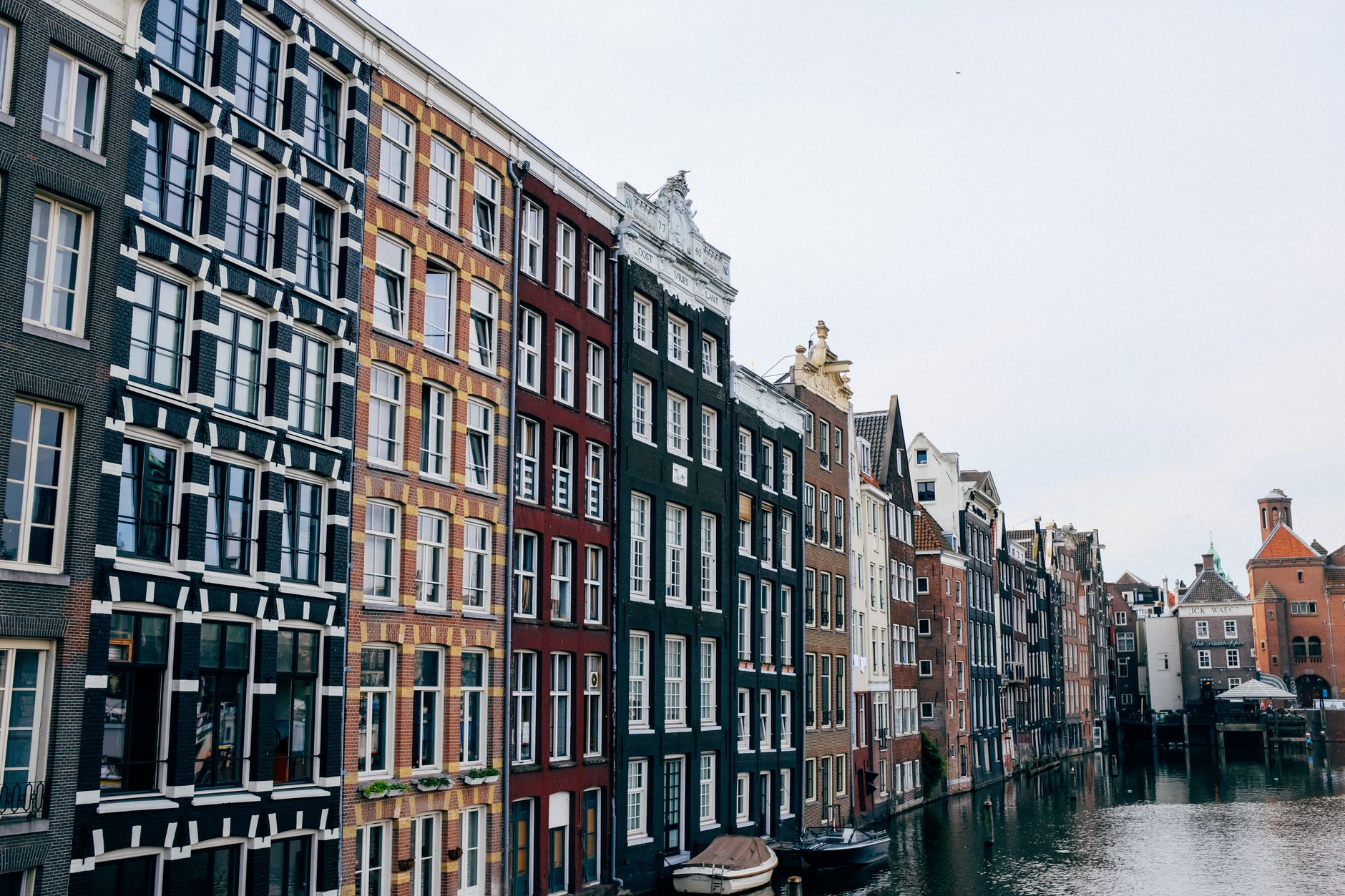
10 things to do in Amsterdam in August
Amsterdam in August rewards the traveler who plans ahead — and punishes the one who wings it. If you're looking for things to do in Amsterdam in August, the list runs from free canal concerts to a Canal Parade that draws 400,000 spectators to the Grachtengordel. The city's canal ring is golden in evening light that lingers until 10pm, the Grachtenfestival (canal festival) fills neighborhoods with free classical concerts, and August is when Amsterdam is most itself — most alive, most colorful, most connected. It's also, honestly, the most expensive and crowded month of the year. Schiphol is one of the most direct transatlantic entry points into Western Europe, with Eurostar trains to Brussels (under 2 hours), Paris (3h20), and London (4h17) running from Amsterdam Centraal from day one of your trip. Plan the pieces in the right order — events, museums, beaches, and the neighborhoods the crowds haven't found yet — and August pays off.
1. The Canal Parade (Amsterdam Pride — annual; WorldPride 2026 is the expanded edition)
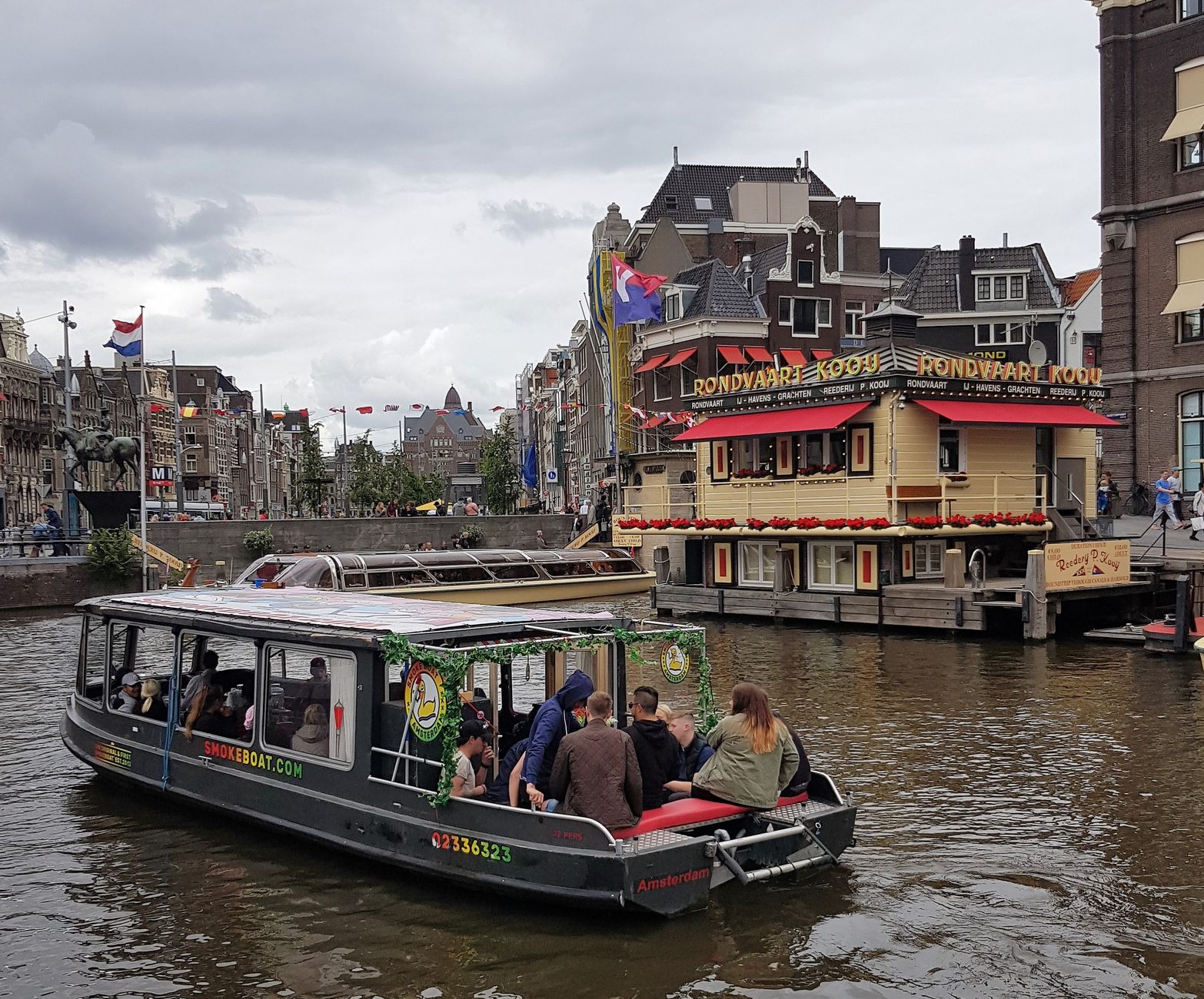
Amsterdam's Canal Parade is a free annual event: decorated canal boats sailing the Grachtengordel with roughly 400,000 spectators on the bridges and quays, every first Saturday of August. The 2026 edition is WorldPride Amsterdam — a one-off expanded event running July 25–August 8, not a recurring format. That distinction matters: the Canal Parade happens every year; WorldPride 2026 does not.
The Canal Parade on August 1, 2026 is the centerpiece of WorldPride's two weeks — boats from 12:00 to 18:00, the route running the main canal ring, watched from every bridge. The viewing is free, but position is competitive. The best spots on Reguliersgracht, the Amstel intersection, and along Keizersgracht fill up 2–3 hours before the boats begin moving; if you want a bridge spot rather than a street-level view, plan to be in place by 9 or 10am. Arrive by tram or metro — cycling through central Amsterdam on Canal Parade day with 400,000 people already on the quays is genuinely difficult.
Beyond the Canal Parade, the WorldPride 2026 program includes a free Pride Walk on July 25 (Dam Square to Vondelpark), street parties on July 31 and August 1, the WorldPride Village at Museumplein (August 5–8), and a free Closing Concert on August 8. Many events are free; the Human Rights Conference (August 5–7, Beurs van Berlage) is ticketed.
In years without WorldPride, annual Amsterdam Pride follows a similar pattern — Canal Parade on the first Saturday of August, Pride Park, street parties — at a smaller scale and without the two-week span. The Canal Parade is a fixture of the city in August regardless of year.
2026 accommodation note: Central Amsterdam hotels for the WorldPride window (July 25–August 8) were already largely booked at 2–3× typical rates by early 2026 — effectively sold out at the time of writing (June 2026). If you're planning a trip during this window, check Amsterdam Noord, Oost, West, Amstelveen, or Haarlem (20 minutes by train) for availability. For future years without WorldPride, standard August peak-season advice applies: book 3–4 months ahead for canal ring accommodation.
Quick reference: Canal Parade August 1, 2026, 12:00–18:00. Free to watch from bridges and quays. Arrive 2–3 hours early for the best viewpoints. Full WorldPride program (300+ activities, July 25–August 8): pride.amsterdam (2026). Annual Canal Parade = first Saturday of August, every year; WorldPride 2026 dates are one-off and do not recur.
2. The Grachtenfestival
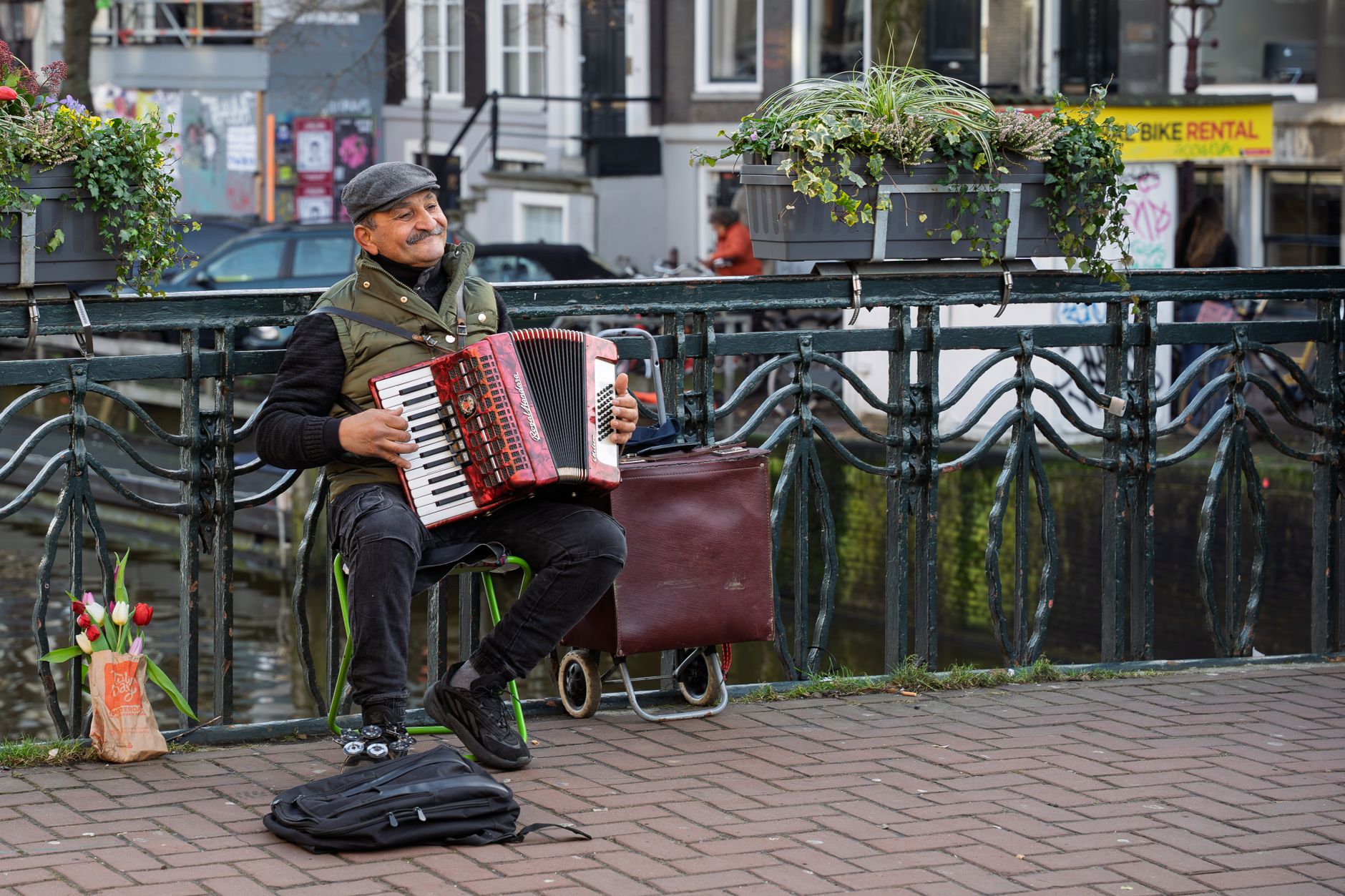
The Grachtenfestival (canal festival) is an annual classical music and jazz festival: roughly 200 concerts in 95+ locations across Amsterdam over ten days, mixing free neighborhood events with ticketed major-venue concerts. The format is unusually democratic — chamber concerts on canal barges, in private living rooms, in church gardens, and in the Royal Palace on Dam Square.
The 29th edition runs August 7–16, 2026. That opening date of August 7 means the Grachtenfestival arrives just days after the Canal Parade weekend, making the first two weeks of August a near-continuous sequence of events. Walk through the Jordaan on a Grachtenfestival afternoon and you'll hear music drifting from a garden courtyard you wouldn't have known was open. A string quartet settles onto a canal barge and begins a Brahms intermezzo while a tram slides past behind them. The festival's genius is that it uses the city as its concert hall — 95 venues means 95 chances to walk into something you weren't planning.
Free concerts require no ticket; arrive early for popular outdoor locations since capacity is first-come, first-served. Paid concerts in the Royal Palace, Fabrique des Lumières, and the main concert halls sell out before the festival opens — the full program drops in early July, and the most popular events go quickly. Check grachtenfestival.nl when the program is released.
One thing worth knowing before you buy a ticket: the Grachtenfestival and the Prinsengrachtconcert (Item 3 below) are separate events organized by different groups. A Grachtenfestival ticket does not cover the August 22 concert on the Prinsengracht.
Quick reference: 2026 dates August 7–16 (29th edition). Mix of free and paid events. Full program released early July at grachtenfestival.nl. Paid tickets for major venues: buy as soon as the program drops. Dates shift annually — confirm at grachtenfestival.nl for your travel year.
3. The Prinsengrachtconcert

The Prinsengrachtconcert is a free annual outdoor classical concert on a pontoon in the Prinsengracht canal — organized independently of the Grachtenfestival, with its own date and program. In 2026 it falls on Saturday August 22, six days after the Grachtenfestival ends.
That gap in the calendar is worth understanding. The Grachtenfestival finishes on August 16. Then, the following Saturday, Amsterdam gets one more canal music evening — a single concert rather than a ten-day festival, but one with a setting that's hard to beat. The pontoon stage sits in the Prinsengracht itself, the water reflections doubling the light from the stage, the Hotel Pulitzer's classical facade behind the performers. Shore viewing from the Prinsengracht quay is free; spots on the water, in canal boats, require advance registration through a lottery that opens in spring.
For shore viewing, arrive 1–2 hours before the main program begins at 20:00. The children's concert runs at 15:00. The canal-side quay fills steadily from late afternoon.
Quick reference: 2026 date Saturday August 22. Children's concert 15:00–15:45; main program 20:00; full event 16:00–22:30 (prinsengrachtconcert.nl, 2026). Shore viewing: free, no ticket — arrive 1–2 hours early for a good sightline. Canal boat spots: lottery-based registration at prinsengrachtconcert.nl (opens in spring). Separate from the Grachtenfestival — different organizer, different date. Dates shift annually — confirm for your travel year.
4. Vondelpark Open Air Theatre
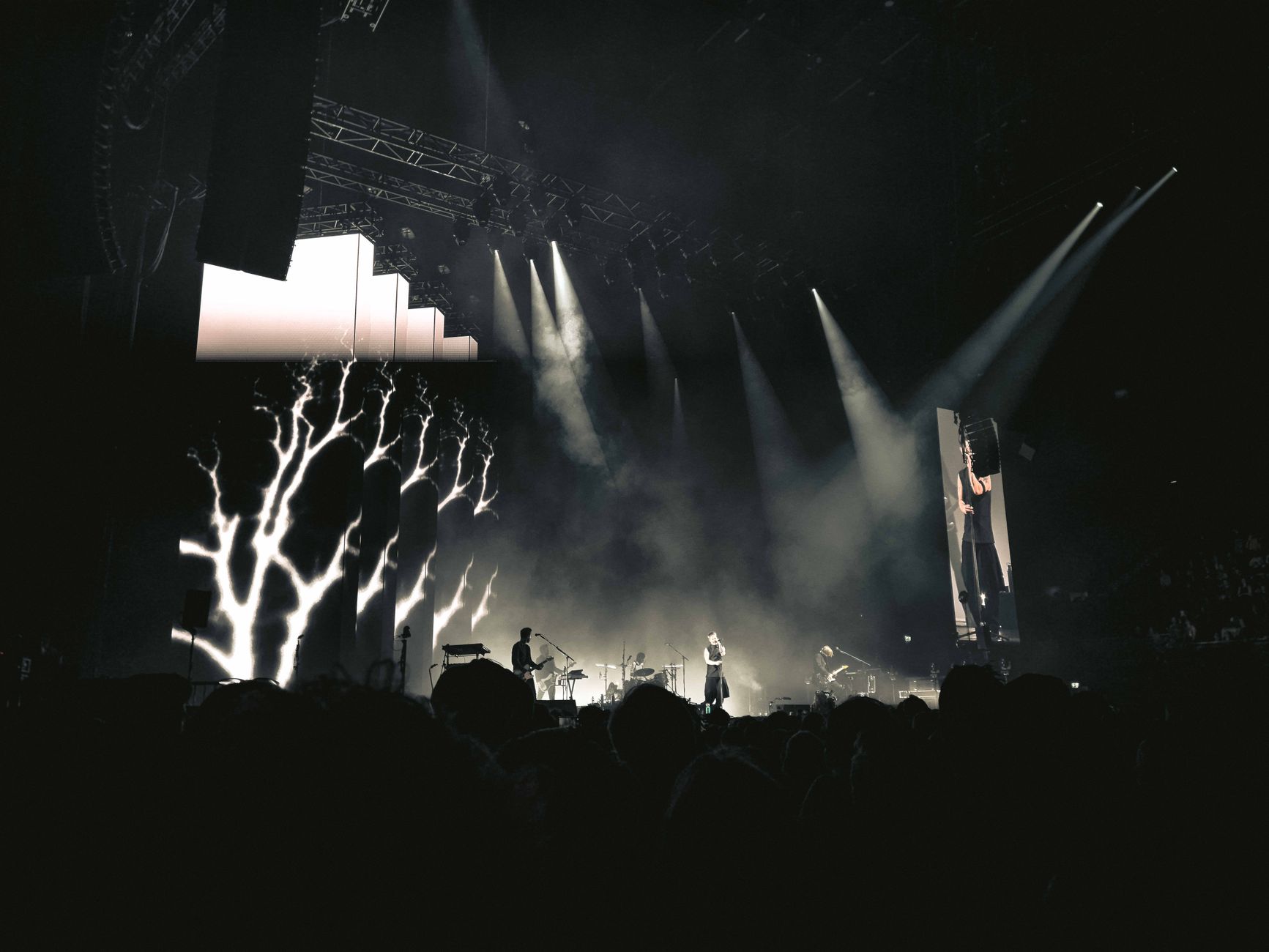
Vondelpark's Openluchttheater (Open Air Theatre) runs 100+ free performances across summer on a fixed weekly schedule — classical Sunday mornings, dance Friday evenings, comedy Saturday nights, family theater Saturday afternoons. The park itself is 47 hectares of paths, lawns, and canal-side terraces that fill with the city every sunny afternoon.
The Openluchttheater occupies a natural hollow in the park where the trees form a green amphitheater around the open stage. On a Sunday morning the classical program draws families with picnic blankets and cyclists who've locked their bikes to a railing and stretched out on the grass. A voluntary donation of around €6–11 is encouraged but not enforced; nobody checks at the gate. If the weather cooperates, this is one of the best free ways to spend a summer morning in northern Europe.
Three terraced cafés within the park are worth knowing: Het Groot Melkhuis (family-friendly, simple Dutch food, playground), 't Blauwe Theehuis (a 1930s circular pavilion with a rooftop terrace — the most distinctive building in the park), and De Vondeltuin (seasonal bar on the southern edge, local-heavy). All three fill on summer afternoons; if you want a terrace table, arrive before noon.
One practical note for early August: during the WorldPride period, Vondelpark hosts Pride Park on July 25 and sees elevated crowds through the first two weeks of August. The park is large enough that it absorbs this, but the terraces in particular are busier than normal.
Quick reference: Openluchttheater: Fridays (dance, evenings), Saturdays (family theater afternoon, comedy evening), Sundays (classical morning, pop afternoon). Free; voluntary donation ~€6–11 encouraged. Active May through mid-September. Check openluchttheater.nl for the full summer schedule.
5. Canal-side terraces and long summer evenings
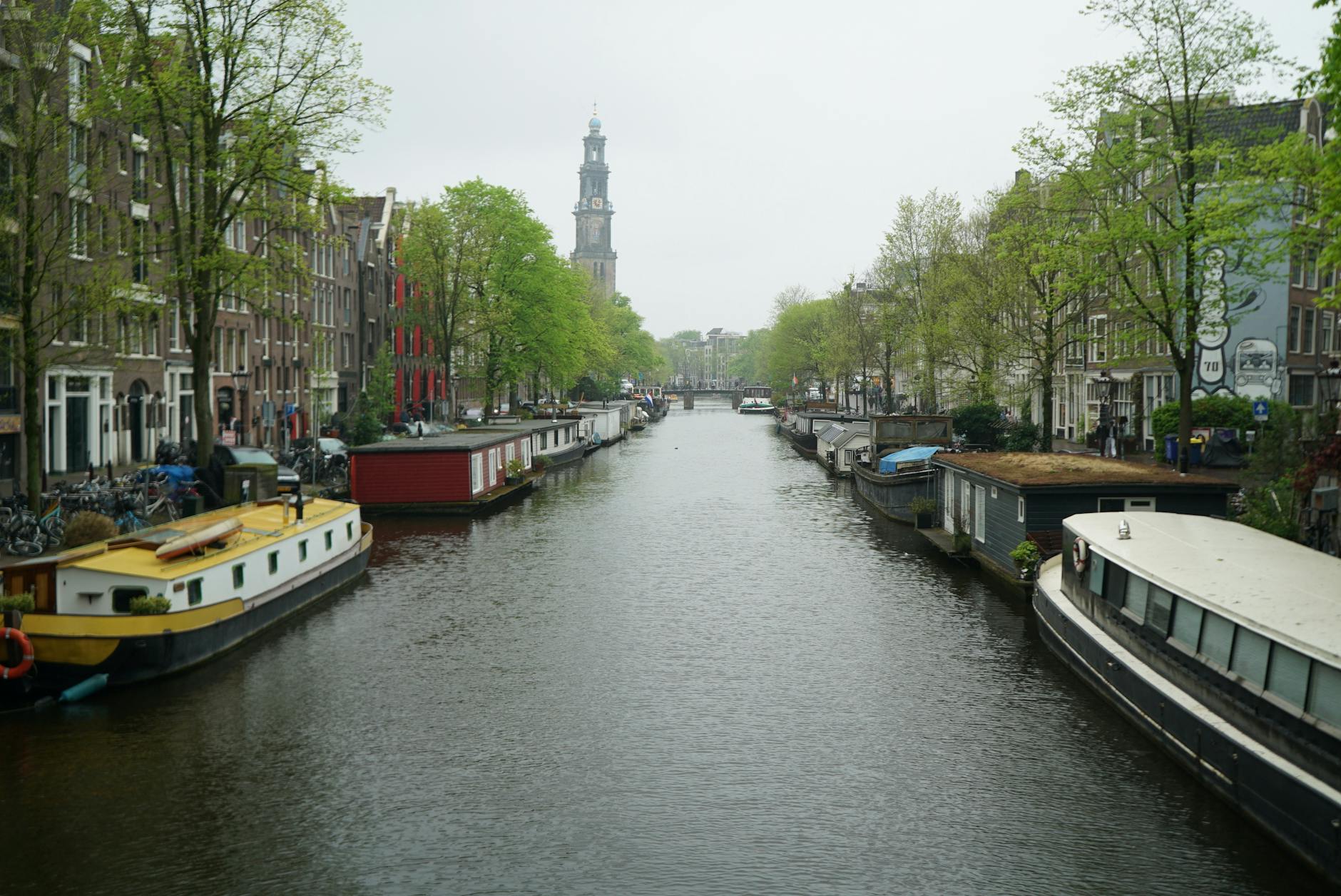
Amsterdam's summer evenings are one of the city's strongest draws: daylight reaches roughly 10pm in early August, long enough to sit on a terras (café terrace) on the Prinsengracht and watch the canal light change before dinner. The terrassen (café terraces) along the Amstel, Prinsengracht, Leidseplein, and Spui expand significantly in summer as café owners push tables into the street and onto canal-edge platforms.
For a better terrace experience than the tourist-heavy Damrak corridor, the Jordaan and the Negen Straatjes (Nine Streets — the cross-streets connecting the main canals in western Amsterdam) offer shorter queues and a higher proportion of residents than the central tourist strip. A bruin café (classic Dutch brown-paneled pub) on a Jordaan side street in the late afternoon is the right place for a beer before dinner; the light comes through the windows at an angle that turns even an unremarkable canal view gold.
Canal boat rental peaks in August. Solo pedal boats and group sloops let you move through the narrower canals at your own pace, which is the best way to understand why the Grachtengordel's UNESCO listing is deserved — the scale of the canal houses, built to lean forward so goods could be hoisted from the street to the upper floors by pulley, only reveals itself from water level. Book ahead or arrive at the rental dock by 9am on sunny weekends; popular operators fill up by 10am.
Quick reference: Canal boat rental operators: various, ~€25–50/hour for small electric boats; book ahead for weekends. Jordaan and Negen Straatjes: quieter than Damrak; best terrace experience for the city's non-event ambient life. Bruin cafés: beer €4–6. Evening light: 10pm in early August.
6. North Sea beaches — Zandvoort and Bloemendaal aan Zee
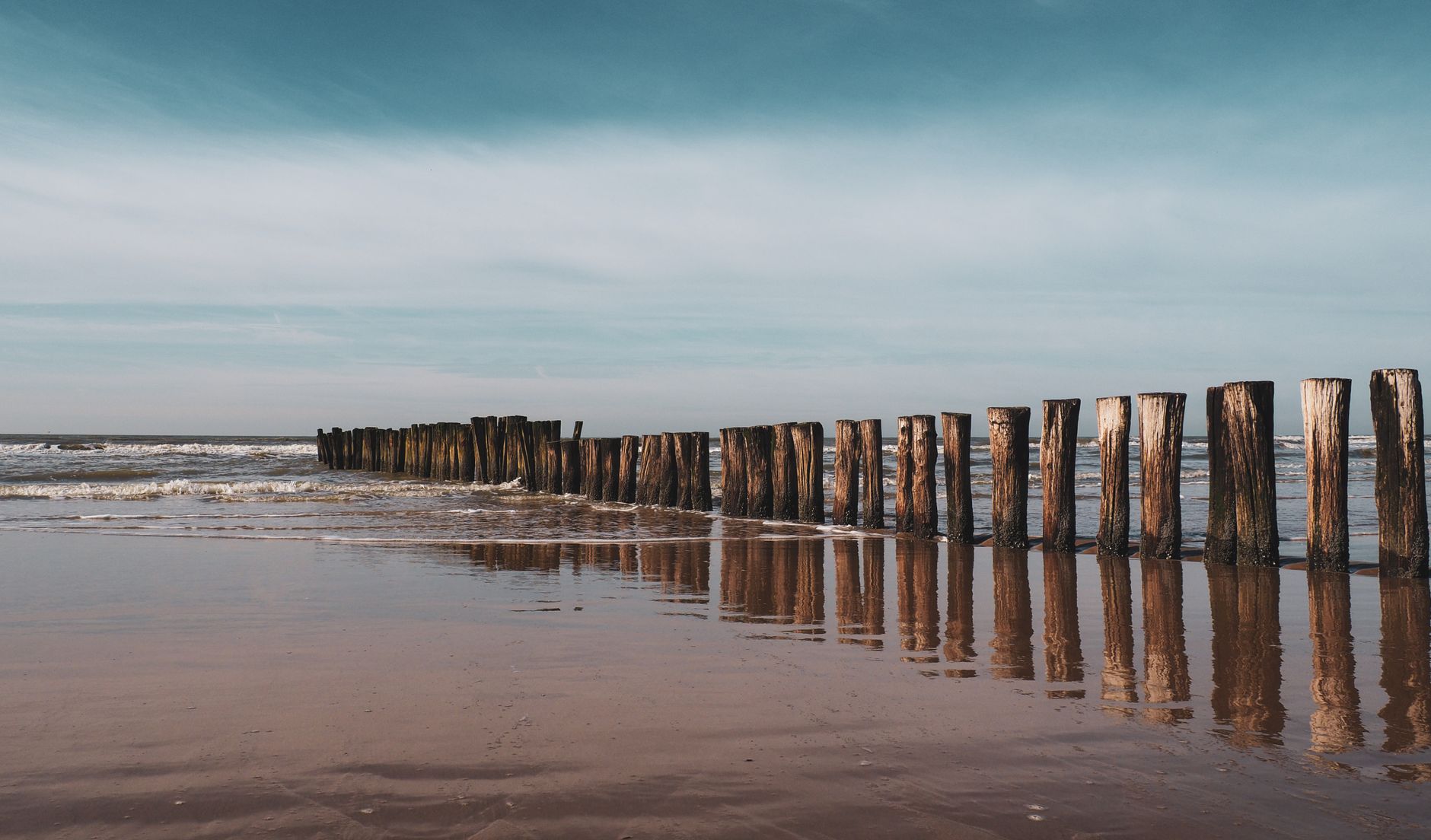
Zandvoort aan Zee is Amsterdam's nearest North Sea beach — 25 to 30 minutes by direct Sprinter train from Amsterdam Centraal — with August sea temperatures around 18°C (64°F). Cold for those who treat the Caribbean as a baseline; comfortable for anyone used to the North Atlantic.
Bloemendaal aan Zee is a 20-minute beach walk north from Zandvoort along the sand — a livelier beach-club scene than Zandvoort's more family-facing south end, and a step up in both energy and price. If you want to find a quieter stretch altogether, the Kennemerduinen coastal dunes of Zuid-Kennemerland National Park run along the south end of Zandvoort and are accessible on foot or by bike — fewer people than the main beach strip, with walking and cycling paths through the dune landscape.
Two honest caveats about the beach day trip. First: weather. Amsterdam's August sunshine is real but intermittent — roughly 14–19 rain days across the month, often short unpredictable showers rather than sustained rain. A planned beach day can easily meet an overcast sky and a 17°C sea breeze. Check the forecast that morning rather than planning the day a week out. Second: don't drive. There is no direct highway connection to Zandvoort; traffic queues on sunny summer weekends are long, and beach parking is expensive and scarce. The train is not just the sustainable option — it's the faster one.
Quick reference: Train: Amsterdam Centraal → Zandvoort aan Zee, direct Sprinter, ~25–30 min, day return ~€13 (NS, 2026). Bloemendaal: 20-min walk north from Zandvoort beach (visualtravelstory.com, 2026). Kennemerduinen: walk or bike south from Zandvoort station (travelglaze.com, 2026). Sea temperature August: ~18°C; rain days ~14–19/month (weather-atlas.com, 2026). Midweek visits calmer than sunny weekends. Don't drive: no direct highway, parking scarce (jeffontheroad.com, 2026).
7. Rijksmuseum — book before you leave home
The Rijksmuseum holds the world's largest collection of Dutch Golden Age paintings — Rembrandt's The Night Watch, four Vermeers, 2.2 million visitors a year — in a building whose entire architecture was organized around a single painting (Rijksmuseum, 2026).
That last point deserves more than a line. The Dutch Golden Age — roughly 1588 to 1672 — saw the Republic of the Netherlands become the wealthiest trading power in the world, operating from Japan to Brazil. The wealth went into paint, into collections, into commissions. The Night Watch is a militia group portrait commissioned by the civic guard of Amsterdam, the professional soldiers who kept the city's commercial order. When the Rijksmuseum was built in the 19th century, architect P.J.H. Cuypers designed the Gallery of Honour as a processional corridor, its pointed arches receding toward a single terminal wall. The painting at the end of that corridor — 363 by 437 centimeters, figures life-size and larger — was the organizing principle for the entire building. You walk through the gallery and the corridor design delivers you to the painting — the organizing principle of the entire building made visible in a single glance.
For August: online booking with timed entry is mandatory. No walk-up sales. Book 2–3 weeks ahead minimum; Tuesdays and Wednesdays are the quietest days, and arriving at 9am or after 3pm reduces the midday crowd significantly.
Quick reference: Adults €25; free under 18. Open daily 9am–5pm (closed April 27 and December 25). Timed-entry tickets: rijksmuseum.nl only, no walk-up sales. Book 2–3 weeks ahead for August. Quietest: Tuesdays/Wednesdays, 9am open, or after 3pm. The Golden Age (1588–1672) produced an estimated five million paintings in 70 years — more than anywhere else in history for that period (DailyArt Magazine, 2024).
8. Amsterdam Noord via the free IJ ferry

The free GVB ferry behind Centraal Station crosses the IJ River to Amsterdam Noord in five minutes, runs 24 hours a day, carries bikes, and costs nothing. Noord is the most different-feeling neighborhood in Amsterdam, accessible at the cost of a short boat crossing.
What's on the other side: the NDSM Wharf, a former shipyard turned cultural district where warehouse walls carry murals at a scale that dwarfs anything in the canal ring. Bars and restaurants built from repurposed shipping containers sit in the industrial landscape; the quarterly flea market fills the outdoor space. The EYE Film Institute occupies a striking 2012 cantilevered concrete building that appears to be landing over the water from above — Amsterdam's cinematheque, with screenings and an architecture worth the ferry crossing on its own. The A'DAM Tower — the ex-Royal Dutch Shell headquarters, now a music venue and skybar with a rooftop swing — has a lookout platform with one of the better elevated views of the IJ and Amsterdam Centraal. Pllek and Noorderlicht are the beach-club equivalents on this side of the water, built from containers, with terraces facing the IJ.
The contrast with the Golden Age canal belt is the point. The Grachtengordel is 17th-century order, planned and precise. Noord is 21st-century improvisation, built on the same flat delta with completely different materials. Crossing on the ferry doesn't take you out of Amsterdam; it takes you to the part that can't be replicated in the historic center.
The gateway reinforcement is here too: the Eurostar to Brussels and Paris runs from Centraal, visible across the IJ from the ferry deck. Noord sits a five-minute boat ride from one of the best-connected rail hubs in Western Europe.
Quick reference: Free GVB ferry from behind Amsterdam Centraal Station, 24/7, bikes welcome. Buiksloterweg stop: EYE Film Institute, A'DAM Tower. NDSM stop (further north): the wharf, beach clubs, flea market. EYE screenings: ~€11–14. A'DAM Tower lookout: €17.50 adults (A'DAM Tower, 2026).
9. Brouwerij 't IJ — the windmill brewery
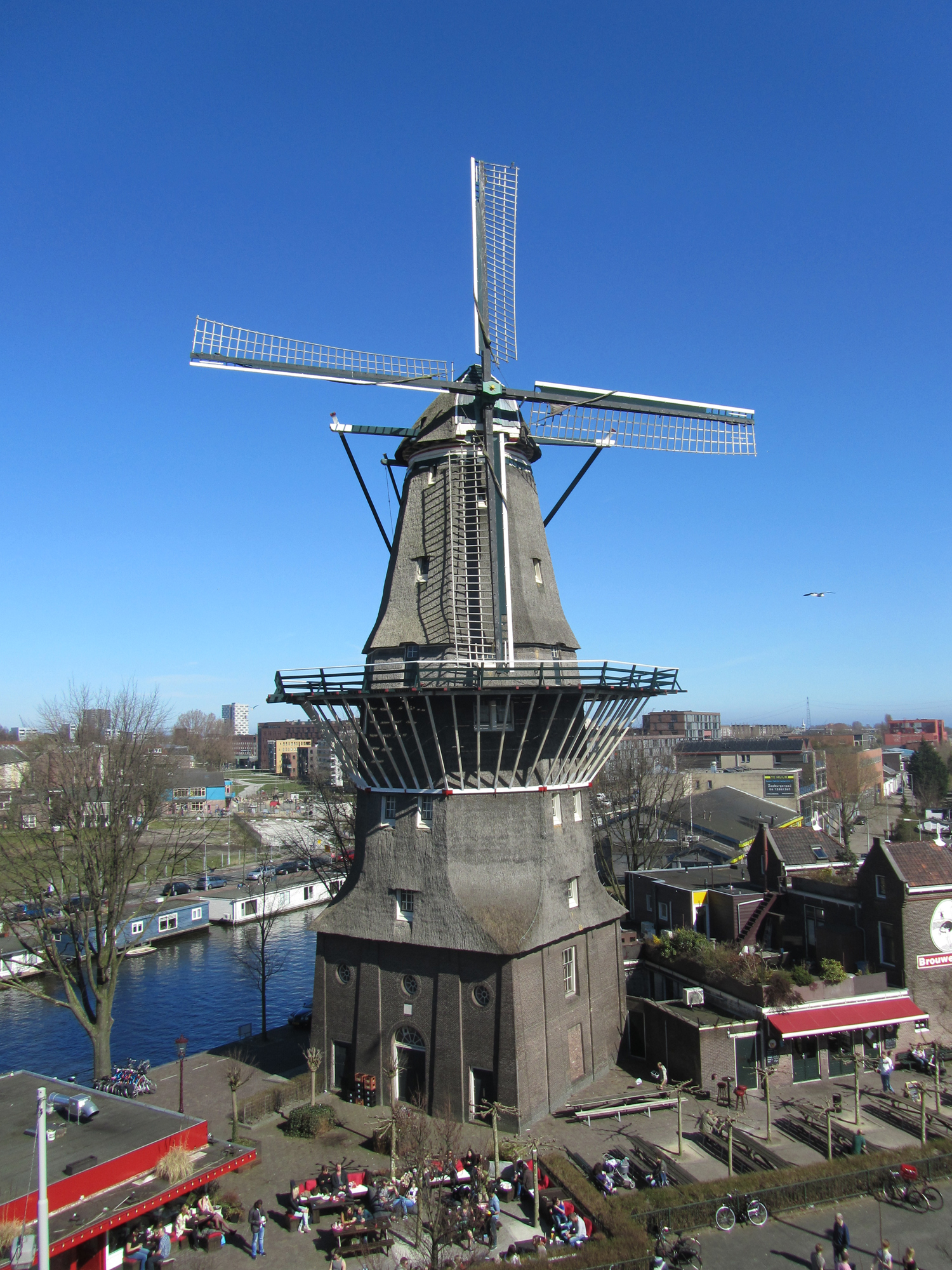
Brouwerij 't IJ is an organic craft brewery inside a 19th-century bath house built against De Gooyer windmill — the tallest post-mill in the Netherlands — in eastern Amsterdam, far enough from Centrum that the clientele skews local.
Kaspar Peterson, a chart-topping Dutch musician, founded Brouwerij 't IJ in 1985 because he was frustrated by Amsterdam's lack of robust beers. He found an unused bathhouse on Funenkade, a building whose vaulted ceilings and tile floors were designed for human hygiene rather than fermentation, and turned it into a brewery that now produces 12 standard and 3 seasonal organic beers. The windmill behind it — De Gooyer, built in 1725 — has no mechanical connection to the brewery; the two are just neighbors, the windmill looming over the brew tanks in a piece of Amsterdam geography that feels designed but wasn't. The outdoor terrace on the IJ river fills with locals on summer afternoons: bike chains piled by the entrance, dogs under the benches, a terrace smell of hops and canal air that belongs entirely to this city.
If you've already seen the Heineken Experience and want the working-brewery version of Amsterdam's beer history, this is it: smaller, quieter, and specific in a way that the big-brand attraction, designed for queues of tourists, is not.
Quick reference: Tasting room open daily 2pm–8pm (verify current hours at brouwerijhetij.nl before you go). 12 standard beers, 3 seasonal, all organic. Outdoor terrace. East Amsterdam — tram 14 from Centraal, or a 15-minute bike ride. No advance booking needed; walk in.
10. Haarlem — 20 minutes and a different city

Haarlem holds the Frans Hals Museum — the definitive collection of Golden Age civic guard portraits, the format Hals invented and Rembrandt inherited for The Night Watch — and it's 20 minutes from Amsterdam Centraal by Sprinter. Walk through a Hals room and you see the DNA of the painting at the end of the Rijksmuseum's Gallery of Honour: the diagonals, the faces turning out of the frame, the collective portrait as a form of civic pride. The connection earns the train trip even if you've already done the Rijksmuseum. The Grote Kerk (Great Church) — a Gothic church on the market square, housing the Müller organ that a 10-year-old Wolfgang Amadeus Mozart played on his 1766 visit — is a 90-second walk from the museum.
In August, Haarlem also functions as the most honest crowd-relief option available: its own canal ring, its own Golden Age weight, and a fraction of Amsterdam's tourist volume. Trains run every 15 minutes, one-way around €4.50 (Trainline, 2026).
For the WorldPride window (July 25–August 8) specifically: Haarlem is one of the most workable overflow accommodation bases for travelers who've found Amsterdam central hotels sold out or priced beyond reason. The train connection is fast enough that basing in Haarlem and day-tripping into Amsterdam for the Canal Parade or Grachtenfestival concerts is a completely viable strategy.
Quick reference: Train: Amsterdam Centraal → Haarlem, Sprinter, every 15 min, ~20 min, ~€4.50 one-way (Trainline, 2026). Frans Hals Museum: franshalsmuseum.nl for current admission and hours. Grote Kerk: check openingtimes at grotekerk.nl. Half-day from Amsterdam is comfortable; a full day allows lunch and a slower pace through the city's market square.
Practical notes
August in Amsterdam gives you the best of the city's calendar and the worst of its crowds in the same weeks — the trade-off is real and the planning layer is what makes it work. Here's what to know before you go.
Booking sequence. Museum tickets first, then accommodation, then transport. The Anne Frank House releases tickets every Tuesday at 10am Amsterdam time (CET/CEST) for visits six weeks out — they sell out in minutes in summer. Set an alarm for Monday night, log in five minutes early, and buy the moment the window opens (annefrank.org, 2026). The Van Gogh Museum and Rijksmuseum also require online timed-entry tickets (no walk-up sales); book 2–4 weeks ahead minimum for August. Grachtenfestival paid concerts: buy as soon as the program drops in early July at grachtenfestival.nl.
Getting around. OVpay — tap your contactless Visa or Mastercard (or Apple/Google Pay) on any GVB tram, metro, or bus; tap out on exit. No separate card needed. Daily cap for all GVB journeys: €10.00 (iamsterdam.com, 2026). Trams 2, 12, and 5 run the main tourist corridors; tram 14 reaches the Brouwerij 't IJ windmill brewery in east Amsterdam. For Zandvoort and Haarlem, the same contactless card works on NS intercity trains at standard fare. The free IJ ferry (Noord) taps out separately from the GVB daily cap — it's free, no tap at all.
Accommodation in August. Standard peak-season rates for mid-range canal ring hotels run €180–350 per night in a typical August (amsterdamtourism.org, 2026). For the WorldPride window (July 25–August 8), those prices spiked to €250–450/night and central availability is largely gone as of the writing of this post. Amsterdam Noord, Oost, and West neighborhoods offer 20–30% savings versus the canal ring; all are well-connected by tram. Haarlem (20 minutes by train) is the furthest-radius overflow option and the one most useful if you're visiting specifically for WorldPride.
Entry requirements and ETIAS. US passport holders currently enter the Schengen Area visa-free for up to 90 days in any 180-day period across all Schengen countries combined. ETIAS (European Travel Information and Authorisation System — a pre-travel online authorization for visa-exempt visitors, fee: €20, valid three years) was announced for a Q4 2026 launch but was not yet operational as of mid-2026 (travel-europe.europa.eu, 2026). Check the official EU travel site before your trip for the current status.
Money and tipping. Tipping in the Netherlands is appreciated but not expected at North American rates. In restaurants, 5–10% for good service, or round up to the nearest euro in cafés. Card is near-universal — most cafés, restaurants, and museum shops are cashless or card-preferred (DutchReview, 2026).
One safety note. Amsterdam is one of the safer European capitals for violent crime, but pickpocketing is active in August at Centraal Station, Dam Square, Albert Cuyp Market, and on trams 2 and 5. Keep phone and wallet in front pockets; keep bag zipped and close to your body in dense crowds. Two-person distraction is the most common method — if someone bumps into you from the front, check your pockets immediately (TravelSafe-Abroad.com, 2026).
Frequently asked questions
Is August a good time to visit Amsterdam, or will I be fighting crowds the whole time?
August is Amsterdam at peak density — long evenings, marquee events, and the Canal Parade on one side; genuinely congested streets, the most expensive hotels, and sold-out museum slots on the other. It rewards travelers who plan well ahead and book time-sensitive pieces (Anne Frank House, Rijksmuseum, Canal Parade viewpoints) before leaving home. Come prepared for that trade-off and August is one of the best months in Europe.
What exactly is WorldPride, and how is it different from Amsterdam's regular annual Pride?
Amsterdam Pride is an annual event, held every year in early August, with the Canal Parade on the first Saturday of August as its centerpiece. WorldPride is a separate global designation awarded by InterPride to a host city — Amsterdam last hosted in 2001 and is hosting again in 2026 (July 25–August 8). WorldPride 2026 is a one-off expanded edition; in 2027 and beyond, Amsterdam returns to its regular annual Pride format.
Do I need tickets for the Canal Parade, and how early should I get there?
Watching the Canal Parade is free — no ticket required. Position is everything. The most popular viewpoints (Reguliersgracht, Amstel, Keizersgracht junctions) fill up 2–3 hours before the parade starts. Arrive by 9 or 10am for a bridge spot on Canal Parade day. Come by tram or metro; cycling through central Amsterdam on Canal Parade day is difficult with 400,000 people on the quays.
How does the Grachtenfestival work — do I need to book concerts in advance?
The Grachtenfestival (canal festival) presents roughly 200 concerts across 95+ locations over ten days — canal barges, church gardens, private living rooms, the Royal Palace on Dam Square. Many outdoor neighborhood concerts are free with no ticket required; arrive early for the most popular locations. Paid concerts in major halls and the Royal Palace sell out before the festival opens — check grachtenfestival.nl as soon as the program drops in early July.
Is the Prinsengrachtconcert part of the Grachtenfestival?
No — they are separate events with different organizers. The Grachtenfestival runs August 7–16 in 2026, organized by the Grachtenfestival Foundation. The Prinsengrachtconcert falls on August 22 in 2026 — six days after the festival ends — organized independently by Stichting Prinsengrachtconcert, AVROTROS, and Hotel Pulitzer. The two share a canal-music spirit but are distinct programs. Do not buy a Grachtenfestival ticket expecting it to cover the Prinsengrachtconcert.
How do I book Anne Frank House tickets so I'm not shut out in August?
Anne Frank House tickets are released every Tuesday at 10:00 AM Amsterdam time (CET/CEST) for the period six weeks ahead. In August they sell out within minutes of release — set a phone alarm for Monday night. No walk-up tickets are available, and there are no official resellers. If you miss the Tuesday window, check annefrank.org regularly for cancellation slots closer to your travel dates.
What's the best way to get to Zandvoort beach from Amsterdam?
Take a direct Sprinter train from Amsterdam Centraal to Zandvoort aan Zee — about 25–30 minutes, day return around €13 based on recent searches (NS, 2026). Do not drive on sunny summer weekends: there is no direct highway connection, traffic queues are long, and beach parking is scarce and expensive. Midweek visits are significantly calmer than sunny Saturday and Sunday trips.