10 things to do in Reykjavik with 3 days
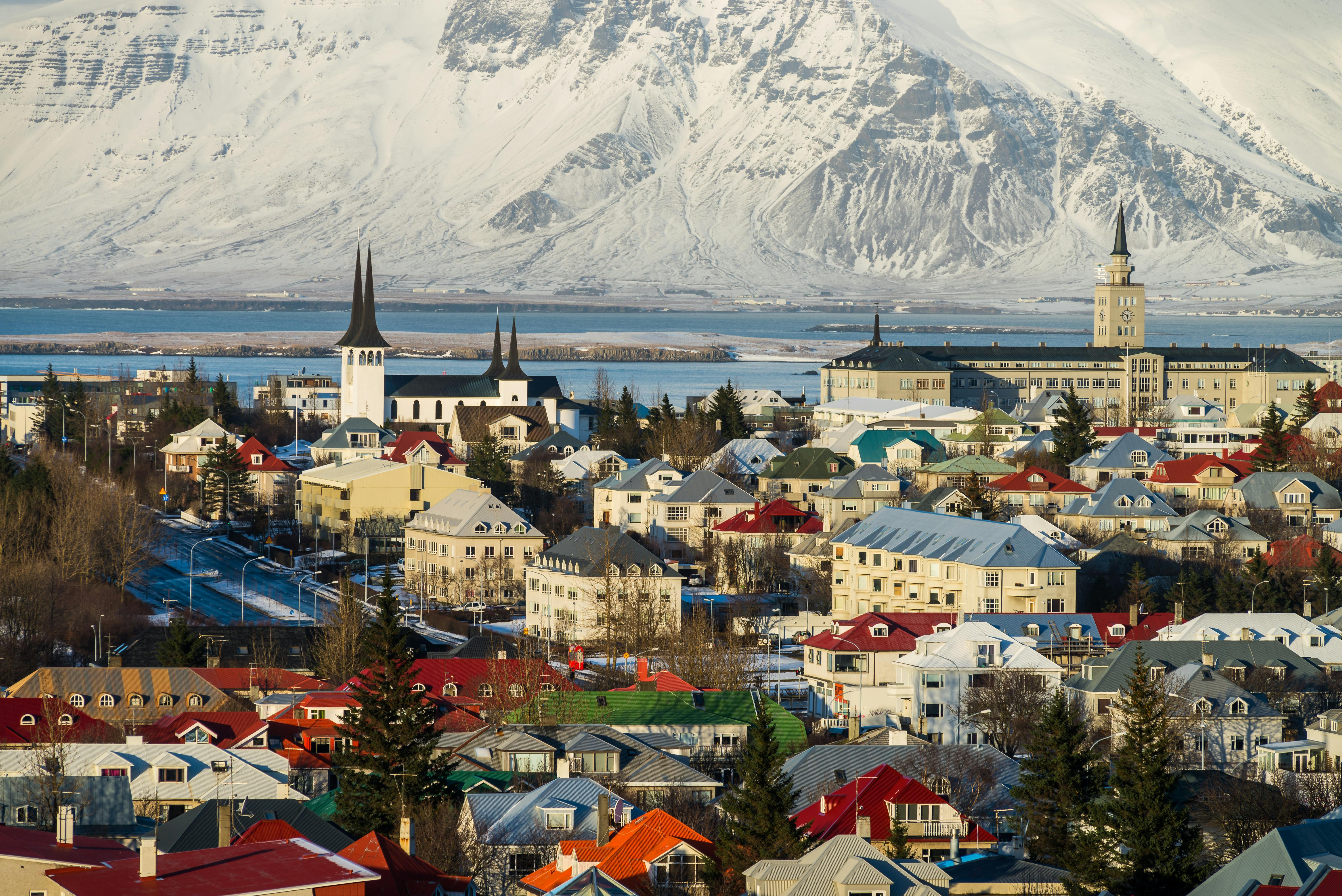
Reykjavik is the northernmost capital on earth, a low-rise grid of colored tin roofs steaming faintly with geothermal heat, pinned between a cold grey sea and a horizon of snow-streaked mountains. This is fire-and-ice country at its most domestic: the same volcanic plumbing that builds the glaciers and feeds the geysers also pipes hot water under the streets and into a swimming pool in every neighborhood. The city is small enough to cross on foot in an afternoon, and that smallness is the point — Reykjavik is the warm, walkable base you sleep in, not the trip itself.
Treat it as your way into Iceland and the three-day shape almost designs itself: one full day out to where the land cracks and erupts, one long geothermal soak, and one slow half-day on foot downtown. Most of what people fly here for lives an hour outside the city, on the far side of the lava fields. The ten things below are ranked, each with cost, time, and one honest tradeoff, and each stands on its own — read items 1, 4, and 7 in any order and pick what fits the weather and your energy.
A note on the ranking. Items 1, 2, and 3 are the highest-confidence picks. Items 4 and 9 are the editorial swaps this list owns directly: Grandi over central Laugavegur for food and atmosphere, and Vesturbæjarlaug as the locals' pool pick instead of a second spa-tier lagoon. Items 5 through 8 are the marquee stops that earn their slots on merit. Item 10 is the downtown walking spine you'll do alongside everything else.
1. Hallgrímskirkja and the tower view
Hallgrímskirkja is the 74-meter Lutheran church at the top of Skólavörðustígur — Reykjavik's defining silhouette, designed to echo the country's columnar lava, and the orientation point most visitors steer by downtown. The tower elevator gives the cleanest view over the city's colored rooftops to Mt. Esja beyond.

Start here because the building is the fire-and-ice idea rendered in concrete. The architect Guðjón Samúelsson modeled the swept grey flanks on the hexagonal basalt columns that cooling lava forms across Iceland — the same shapes you'll meet again on the Golden Circle and along the south coast — so before you've left the city you've already read the landscape's signature in a church facade. Ride the elevator and the payoff lands: a small bright city of tin roofs spread below you, and behind it Mt. Esja, a flat-topped mountain that turns from green to white as the season closes in. The deck is where the trip clicks into scale. The city is small; the land around it is enormous, and the land is most of what you came for.
Practical info. The line for the elevator builds through midday in summer; first thing in the morning, or the last hour before the deck closes, runs lighter. Inside, the church is sparer than the exterior promises — clean concrete, a vast pipe organ, more austere than ornate. Treat the tower as the headline and the nave as a five-minute pass-through on the way up.
Quick reference: church free to enter; tower elevator 1,400 ISK / ~$11 adults, 200 ISK children 7–16 (Hallgrímskirkja official, 2026); ~5,275-pipe organ; allow 30–45 minutes; 15-minute walk uphill from Harpa.
2. The Golden Circle day trip
The Golden Circle is a roughly 300 km loop covering three sites in a full day — Þingvellir National Park, the Geysir geothermal area where Strokkur erupts every few minutes, and Gullfoss waterfall. It is the cleanest single day of fire-and-ice Iceland you can do from the city.

This is the day the whole Reykjavik-as-base idea is built to deliver, so lead with what it uniquely gives you: three completely different pieces of the island, back to back, on roads that stay open all year. At Þingvellir you walk down into a literal rift — the seam where the North American and Eurasian plates are pulling apart — in the valley where Icelanders founded the world's oldest parliament more than a thousand years ago. An hour on, the ground starts to hiss and steam, and Strokkur draws a quiet, leaning crowd that gasps every five to ten minutes as it throws a column of boiling water skyward and then goes still. Then Gullfoss: a glacial river folding over two steps into a canyon, throwing spray high enough to wear at the rail. You sleep in town, you're rolling out by 8 a.m., and you're back for dinner — no Ring Road commitment required.
Two ways to do it. Self-drive gives you control over the pacing and lets you bolt on Kerið crater or the Secret Lagoon on the back half. A guided coach is the right call if your group has a non-driver, or if it's deep winter and you'd rather not steer through variable conditions yourself — and many coaches bundle a lagoon stop on the way back. The South Coast (Seljalandsfoss, Skógafoss, Reynisfjara, Vík) is the alternative day out: more dramatic, but a 10-hour push with the same drive twice. For three days, picking one, the Golden Circle is the right call for most travelers.
Quick reference: ~300 km loop, plan 6–8 hours; Þingvellir is UNESCO-listed (visible tectonic rift, seat of the oldest parliament); self-drive economy classes from ~$31–$36/day at KEF, winter SUVs much more (KAYAK / Blue Car Rental snapshot, May 2026); guided coach ~$60–$90 per person (Reykjavik Excursions, Wake Up Reykjavík, Gray Line, GetYourGuide).
3. Sky Lagoon — not the Blue Lagoon, and here's why
Sky Lagoon is the oceanfront geothermal lagoon and seven-step ritual in Kópavogur, about 15 minutes from downtown — a sea-view infinity edge where the water meets the horizon, with sauna, cold plunge, scrub, and steam all included on the Pure Pass.

The fire-and-ice thread peaks here as a body experience: you stand chest-deep in water heated from below, the cold North Atlantic an arm's length past the stone lip, steam lifting off your shoulders into air that bites. The seven steps walk you through warm and cold in turn — the cold plunge so brisk it resets your whole sense of the temperature you started in. Sky earns slot #3 because the people who write about this city keep landing on it: The Reykjavik Grapevine, Wake Up Reykjavík, and most Reykjavik writers who name a preference lean Sky over Blue, for being closer to downtown, calmer, and more structured for the entry price. Pre-booked timeslots are required, and a free shuttle runs from select downtown hotels.
Should you also do the Blue Lagoon? Two honest reasons to. It's the most-googled answer for "what to do in Iceland," and that milky-blue iconography is what a lot of travelers genuinely want to stand in; and it sits 19 km from KEF — closer to the airport than to the city — so it slots naturally onto arrival or departure day. The honest tradeoffs: it's crowded and frantic at peak hours, several writers flag it as a tourist trap, and locals don't go. One operational note before you book — check the Icelandic Meteorological Office and the Blue Lagoon status page first, because Reykjanes volcanic activity since 2021 has periodically affected access and conditions change. If Blue Lagoon on arrival or departure day fits your routing, that's a real call; if you're picking one soak from inside the city, Sky Lagoon is the default this list owns.
Quick reference: Pure Pass (most-popular tier, includes ritual) ~12,990 ISK / ~$106, Sér Pass with private changing costs more (Sky Lagoon official, May 2026); plan 2–3 hours on site; Blue Lagoon ~$60 simplest package up to ~$530 top tiers; before booking Blue Lagoon, check vedur.is and bluelagoon.com (sources: Reykjavik Grapevine; Wake Up Reykjavík; Tripadvisor traveler reports).
4. Grandi over central Laugavegur for food and atmosphere
Grandi is the old fishing-industrial waterfront on the western edge of the harbour, turned over the last decade into a creative quarter of design studios, cafés, breweries, and small museums. It's the better version of a wander-and-eat half-day than central Laugavegur, and quieter for it.

The fire-and-ice country ends at this waterline, and Grandi is where the city turns to face the cold sea it was built on. Painted warehouses that once gutted cod now hold a brewery, an art space, and an ice-cream window with a queue out the door. Bryggjan Brugghús is the brewery anchor — a working harbour-side room with house beers, a real food menu, and water views; Valdís is the ice-cream stop locals send people to, scooping in any weather, because Icelanders eat ice cream in a gale on principle. The Whales of Iceland museum and the Marshall House galleries sit along the same stretch. This is also where the food economics tilt your way: locals and longer-staying visitors increasingly spend their café-and-dinner hours out here, while central Laugavegur runs to tourist-economy menus.
The swap is direct. If you want the "walk a neighborhood, have a coffee and a dinner" afternoon, Grandi does it better than Laugavegur — which is still worth walking (Item 10), but as a strolling spine, not a sit-down food destination. One thing to skip: the FlyOver Iceland flight-simulator out here is a 25-minute show of aerial views of Iceland you could be seeing for real on a day trip. Not a scam, but if your three days already hold a Golden Circle slot, it covers the same ground in three dimensions.
Quick reference: free to wander, museum entry varies; ~15-minute walk west from Harpa along the harbour path; plan 2–3 hours, longer with a museum or a meal; the Washington Post's "One Square Mile: Grandi" feature names it the city's most-changed neighborhood of the past decade.
5. Bæjarins Beztu Pylsur (and the harbour cheap-eats note)
Bæjarins Beztu Pylsur is the hot-dog stand near the Old Harbour going since 1937, serving a lamb-pork-beef pylsur (the Icelandic hot dog) in natural casing for a few hundred krónur. In one of Europe's priciest cities, it's the cheapest substantive lunch you'll find downtown.

This little stand is a genuine national institution, not a tourist gimmick. You order "eina með öllu" — "one with everything" — and you get ketchup, sweet brown mustard, remoulade, crisp fried onion, and raw onion under the dog, the raw onion hidden at the bottom of the bun so the first bite is soft and the last one snaps. The cooks know the rhythm cold; the line moves through the lunch rush and the after-bar hours alike, locals and visitors shoulder to shoulder at the counter in the wind off the harbour. Bill Clinton ate here in 2004, the Guardian called it Europe's best hot-dog stand in 2006, and Icelanders have simply kept eating here the whole time, which is the more telling endorsement.
If you'd rather a bowl of lobster soup than a dog, Sægreifinn — The Sea Baron — at the Old Harbour is the consensus pick: a warm, plain room, a soup to thaw out over, no pretension. It surfaces in the Reykjavik Grapevine's Best Of Reykjavík dining awards across several years.
Quick reference: pylsur ~700–800 ISK / ~$6 each, cash or card; open daily, varying hours; five-minute walk from Harpa; Sægreifinn lobster soup ~2,500–2,800 ISK / ~$22 a bowl; restaurant entrées around town routinely run $30–$50, so two dogs and a soda is the fastest sub-$20 lunch in the city.
6. The Sun Voyager and Harpa waterfront walk
The Sun Voyager (Sólfar) and Harpa Concert Hall pair into a single slot here because they sit along the same harbour boardwalk and read together as one easy 60–90 minute walk. Both are free, both are always open, and between them they hold the city's two most-photographed pieces of public art and architecture.

The Sun Voyager is Jón Gunnar Árnason's gleaming steel hull on the Sæbraut waterfront, unveiled in 1990. People take it for a Viking longship; it's actually an ode to the sun and to undiscovered territory, the prow aimed north across the water at the white line of Mt. Esja. Stand at the rail at the edge of the day — sunrise or the long, slow Arctic sunset — and the sculpture and the mountain and the cold bright bay line up into a single sightline; come at flat midday and the light gives you nothing.
Walk west along the path to Harpa, the glass-and-steel concert hall that Olafur Eliasson and Henning Larsen wrapped in a honeycomb of colored panes, opened in 2011. You don't need a ticket to go in: the lobbies, the escalators, the harbour views from the balconies, and the cafés are all open to anyone. The facade is the thing to linger on — it catches and bends the daylight differently every hour, so it never looks the same on the walk back as it did on the walk out, which is why people keep drifting through it. Twenty minutes end to end at a normal pace, longer if you stop to photograph either one.
Quick reference: both free, always open; Sun Voyager unveiled 1990; Harpa opened 2011, won the 2013 Mies van der Rohe Award; total Sun-Voyager-to-Harpa walk ~20 minutes.
7. Mat Bar — the locals' restaurant pick
Mat Bar is a Nordic-Italian small-plates wine bar on Hverfisgata 26 — a wood-fired grill, local vegetables, a tight wine list, and the compact neighborhood feel that means locals book it for a Friday rather than tour buses unloading at 7 p.m.

Step in on a dark evening and the room is warm, low-lit, and full of people who clearly come back — the kind of place where the server knows the regulars and the grill throws heat you can feel from the door. The plates are small and built to share: you order three or four between two, and you pass them around. This is the realistic floor for a sit-down dinner with table service downtown that locals actually rate, and it surfaces year after year in The Reykjavik Grapevine's Best Of Reykjavík dining awards.
The honest framing matters here, because Iceland is genuinely expensive and pretending otherwise helps no one. The Mat Bar number isn't an outlier; it's just what a real dinner costs in this city. If a $100-per-person dinner is outside the budget, the move is to spend it here once and eat Bæjarins Beztu hot dogs and a market lunch on the other days — not to chase a cheaper sit-down that lets you down. The cost is the cost, and the list says so out loud rather than burying it in the practical notes.
Quick reference: small plates ~2,800–4,200 ISK / ~$23–$34 each, format expects 3–4 plates per person, so a dinner with one glass of wine lands ~$80–$130 per person all-in; reservations recommended, books up on weekends; restaurant entrées around town run $30–$50, a beer $10–$15.
8. Whale watching from the Old Harbour
Whale watching from the Old Harbour is a 2.5–3.5 hour boat trip into Faxaflói Bay, the cold water just off the city where minke whales, humpbacks, white-beaked dolphins, and harbor porpoises feed. Operators post sighting rates above 90% across both summer and winter.

What you're really buying is the cold open water itself, with the city shrinking behind you and the mountains rolling along the rim of the bay. The boat noses out, the engine drops to idle, and the deck goes quiet the way crowds go quiet when something large surfaces — the slow black arc of a minke's back, a humpback's tail standing up against the grey before it slides under. April through October is the high-confidence season, but boats sail year-round. Elding, the original Reykjavík operator, is family-owned and has the longest track record on the bay; Special Tours is a certified Vakinn Gold member working under IceWhale's responsible-watching code. Both are credible — Elding's sighting statistics are posted on its own site and worth reading before you book.
Practical info. Pre-book in summer; boats fill a week or two ahead in July and August. Bring layers whatever the season — the wind off Faxaflói Bay runs colder than the air temperature in town suggests, and there's no warming up once you're out on the water. Tours can be cancelled on rough days, so check the operator's status page the morning of.
Quick reference: classic tour 2.5–3.5 hours, ~11,500–13,500 ISK / ~$93–$110 per adult, RIB speedboats shorter and pricier; Old Harbour is a 10-minute walk from Harpa; Elding (elding.is) headquartered at Ægisgarður 5c; sighting rates above 90% summer and winter.
9. Vesturbæjarlaug — the locals' pool
Vesturbæjarlaug is one of five neighborhood geothermal pools in the Reykjavik area, and the one where locals soak in the hot pots and gossip the way they have for decades. Entry runs roughly a tenth of a Sky Lagoon Pure Pass — this is the soak that isn't priced as a spa.
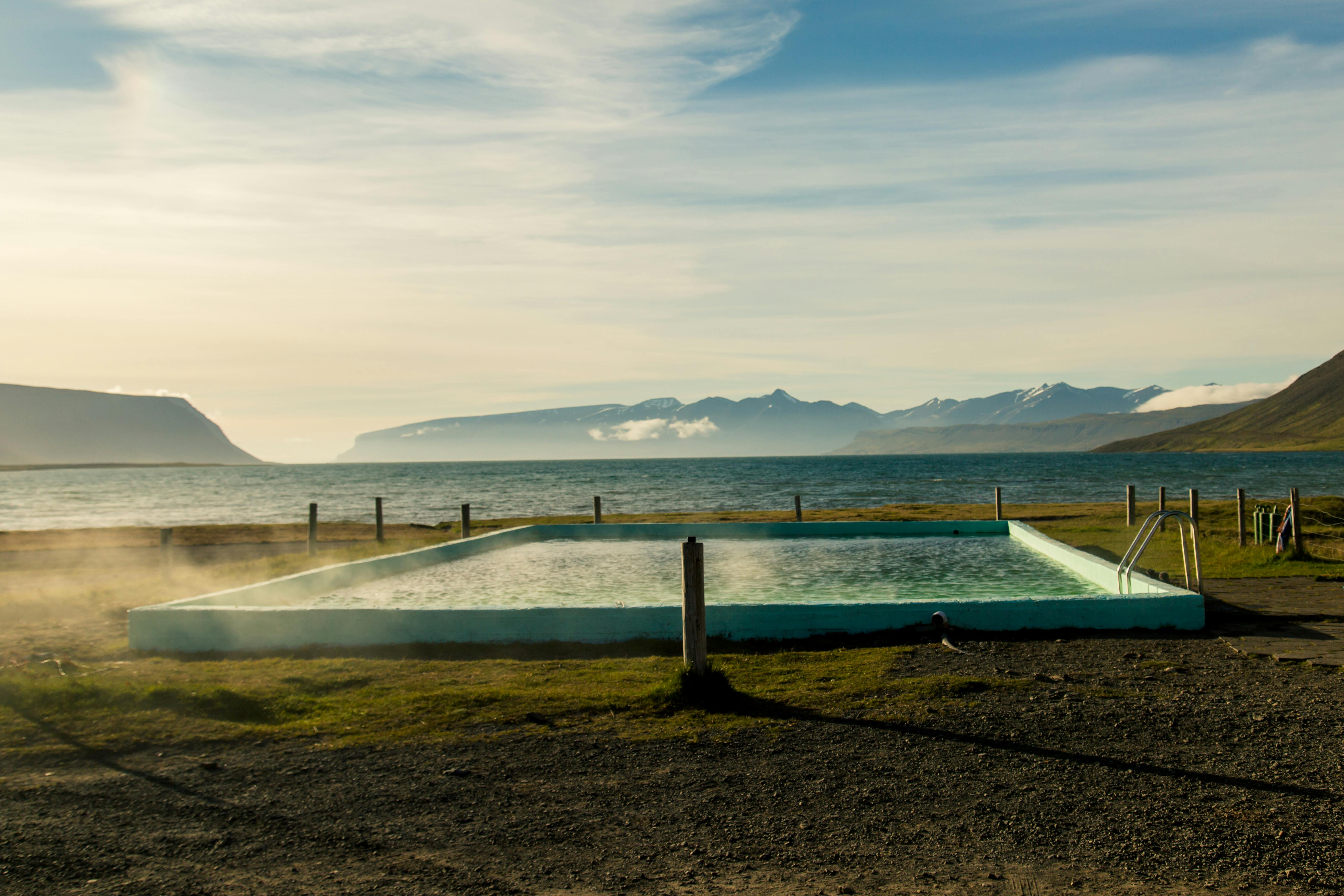
To understand Reykjavik you have to understand the sundlaug — the neighborhood swimming pool, heated by the same volcanic groundwater that warms the houses, and functioning less as exercise than as the city's living room. This is where the fire-and-ice country becomes a daily habit: parents bring kids before school, retirees hold court in the hottest pot, friends pick up arguments where they left them yesterday, all of it open-air in the snow with steam pouring off the surface. Vesturbæjarlaug is the one writers keep naming — The Reykjavik Grapevine's pools ranking, Two Scots Abroad, Lonely Planet — for its dry sauna, its hot-pot social rhythm, and the walk along Ægisíða to the coast afterward. It's small enough to feel like a neighborhood pool and warm enough to count as a real soak.
The etiquette is not optional, and it's worth getting right out of respect: bring a towel and a swimsuit, and rinse fully unclothed in the locker-room showers before you get in. That's the posted rule at every Icelandic pool, it matters to the people around you, and the on-deck staff will hold you to it. The swap is simple — if you want the genuine geothermal habit without the spa-bath price tier, this is it, and what you save against a Sky Lagoon pass funds another dinner at Mat Bar.
Quick reference: entry ~1,200 ISK / ~$10, roughly a tenth of a Sky Lagoon Pure Pass; other neighborhood pools include Laugardalslaug, Sundhöllin, Ásvallalaug, Árbæjarlaug; mandatory pre-swim unclothed shower (posted, enforced).
10. The 101 Reykjavik walking spine
101 Reykjavik is the downtown postal code — a 1–2 km grid of low, colored corrugated-iron houses, with Laugavegur as the shops-and-cafés spine and Skólavörðustígur the rainbow-painted cross-street climbing to Hallgrímskirkja. With the harbour boardwalk to Harpa, that's roughly the whole downtown story.

This is the slot that ties the list together. Most of the other items — Hallgrímskirkja, Harpa, Sun Voyager, Bæjarins Beztu, Mat Bar — sit within a 15-minute walk of each other along this spine, so you'll thread it without trying. It earns its place as permission to stop optimizing: the half-day you have left after the Golden Circle and the soak, spent just walking, ducking into a bookshop, following a wall of street art up a side street, warming up over a flat white in the rainbow-painted climb of Skólavörðustígur. The low tin houses in their candy colors are the postcard, and the murals between them are the part the postcard misses.
A few specifics. The shops along Laugavegur tilt hard toward souvenirs marked up well past their worth — generic puffin plush, stuffed-polar-bear gift shops, the lot — so calibrate. Where the street earns its slot is the coffee: Reykjavík Roasters on Kárastígur, just off Skólavörðustígur, is the consensus third-wave anchor, and worth the small detour. Treat the street the way you'd treat any tourist-dense lane in a European capital and keep an eye on your pockets.
Quick reference: free to wander; brisk loop ~1–2 hours, half-day with shopping and coffee; Reykjavík Roasters on Kárastígur is the consensus coffee pick; petty pickpocketing on Laugavegur flagged by US Embassy Reykjavík security advisories in recent years.
Practical notes
A handful of facts apply across the whole list rather than to any one item — money and tipping, getting around without a car, the KEF transfer, when to go, and what we cut. Take them once here and you won't have to think about them again on the trip.
Money. Tipping is not expected in Iceland — wages are union-negotiated and service is included in posted prices. Some tourist-area restaurants have started adding a card-machine tip prompt; locals find it slightly uncomfortable. The country is close to fully cashless, so Visa and Mastercard work everywhere, including unmanned petrol pumps (a 4-digit PIN is required). Refuse "dynamic currency conversion" prompts that offer USD pricing on card terminals — the rates are punitive.
Getting around the city. Downtown is walkable; the Strætó city buses cover the rest, and the Klappið ride-app card is easier than cash. Don't rent a car if you're staying in town — parking is metered and limited. Pick up the rental at KEF on the day you start a Golden Circle or South Coast run, and drop it the same evening.
Getting to and from KEF. The Flybus is the standard option: about 45 minutes to BSÍ central bus station, synchronized to every arriving flight. The Strætó 55 public bus is cheaper but slower, around 73 minutes, and drops at Kjóavellir roughly 150 m from the terminal. Taxis are very expensive and generally advised against unless you're splitting three or four ways. One thing not to confuse: KEF is the international airport, 50 km from downtown, while the small in-city Reykjavík Airport (RKV) handles only domestic and Greenland/Faroe flights — don't book ground transport to the wrong one.
When to go. Two seasons shape the trip. Summer (June–August) is mild, with near-round-the-clock daylight in June and every road open, and prices at their peak. Winter (November–March) is colder but milder than the latitude suggests, thanks to the Gulf Stream, with short daylight and the aurora season running late September through March. The equinox months — March, April, September, October — are the value window worth knowing: workable daylight, off-peak pricing, and aurora season overlapping the back half.
What we left off. A few honest exclusions. Perlan, the domed observation building, runs a steep ticket for what's mainly a geology-overview museum — and the Hallgrímskirkja tower already answers the panoramic-view question for a fraction of it. The Phallological Museum is a curiosity several reviewers call overpriced for what it is. The generic Laugavegur souvenir shops trade on stuffed-polar-bear iconography, though Iceland has no native polar bears. FlyOver Iceland is fine on its own terms but covers ground a Golden Circle day already shows you in three dimensions. None are scams; they just didn't earn a slot in ten.
On cost. Iceland is expensive and this list owns it rather than softening it: $30–$50 entrées, $10–$15 beer, $250–$350 a night for a mid-range summer hotel. A realistic three-day mid-range trip lands around $750–$1,050 per person excluding flights, with day tours and geothermal entries on top. The honest math is what makes the three-day shape work — long enough for the Golden Circle, a soak, and a real downtown half-day, short enough that the per-day costs don't compound into a different kind of trip.
Quick reference: Flybus ~45 min to BSÍ, 3,999 ISK / ~$32 one-way, synced to arrivals (flybus.is, May 2026); Strætó 55 ~2,400 ISK / ~$20, ~73 min, drops ~150 m from the terminal (straeto.is, May 2026); taxis 20,000+ ISK / ~$165 one-way; KEF 50 km from downtown (RKV is domestic/Greenland/Faroe only); Perlan ticket 6,490 ISK / ~$53; sample three-day spend $750–$1,050 per person excluding flights, of which Mat Bar dinner ($80–$130), Sky Lagoon Pure Pass ($106), a Golden Circle coach ($60–$90), and a Flybus round-trip ($64) is roughly $310–$390.
Planning Reykjavík? Also worth reading: Blue Lagoon vs Sky Lagoon vs local pools.
Frequently asked questions
Is 3 days enough for Reykjavik?
Three days is enough if you treat the city as a base, not a destination on its own. Plan one full-day trip out (the Golden Circle is the cleanest version at 6–8 hours), one geothermal soak at the Sky Lagoon, and one half-day of downtown walking around Hallgrímskirkja, the harbour, and Grandi. Reykjavik is small — about 137,000 people in the municipality (Statistics Iceland, 2024) — and most of Iceland's draw lives an hour outside it.
Is the Blue Lagoon worth it, or should I go to Sky Lagoon instead?
Sky Lagoon is the better default for most travelers: ~15 minutes from downtown, the 7-step ritual is included on the Pure Pass (~12,990 ISK / ~$106, May 2026), and locals reportedly choose it. The Blue Lagoon still makes sense if you want the iconic shot or you're routing through KEF — it's 19 km from the airport, closer to KEF than to the city. Check vedur.is and bluelagoon.com before booking; Reykjanes volcanic activity since 2021 has periodically affected access.
How expensive is Reykjavik for a 3-day trip?
Plan $250–$350 per night for a mid-range summer hotel, restaurant entrées at $30–$50, a beer at $10–$15, and a Flybus transfer at 3,999 ISK / ~$32 one-way (flybus.is, May 2026). A realistic mid-range three-day Reykjavik trip lands around $250–$350 per person per day excluding flights, with day trips and geothermal entry on top. Iceland is one of Europe's most expensive countries — Bæjarins Beztu hot dogs and a Vesturbæjarlaug soak are the meaningful cheap anchors.
Do I need a rental car in Reykjavik?
Not for the city itself. Downtown Reykjavik is walkable — Hallgrímskirkja, Harpa, Sun Voyager, and Laugavegur are all within a 20-minute walk of each other. You only need a car for day trips out of town: the Golden Circle, the South Coast, the Reykjanes peninsula, the Sky Lagoon, and the Blue Lagoon. The clean move is to skip the rental on city days and pick up a car at KEF for the morning of your day trip.
How do I get from Keflavik airport to Reykjavik?
The Flybus coach is the standard option: ~45 minutes to BSÍ central bus station, 3,999 ISK / ~$32 one-way, synchronized to every arriving flight (flybus.is, May 2026). The Strætó 55 bus is cheaper at ~2,400 ISK / ~$20 and runs roughly hourly, but takes ~73 minutes and drops at Kjóavellir ~150 m from the terminal. Taxis are very expensive (20,000+ ISK / ~$165 one-way) and locals advise against them unless you're splitting between 3–4 people.