
5 Days in Buenos Aires by Neighborhood
Buenos Aires sits at the base of South America the way Paris sits above the Loire — a capital whose streets are organized around walking, whose café culture runs past midnight, and whose architecture reads as confidently European without being a copy of anywhere. It is also one of the cheapest ways onto the South American continent from North America, with one-way fares from Newark and Los Angeles starting from $308–$319 (recent lows, Treverra search data, Jul–Aug 2026 window). For travelers booking three to five weeks out who want South America and aren't locked to one region, flying into EZE is simply the entry — at those fares, the math is straightforward.
But this post argues something different from the stopover case. Five days in Buenos Aires, organized neighborhood by neighborhood from the historic south to the working-class north, show a city that rewards living in rather than moving through. The tourist version of Buenos Aires is a checklist: Casa Rosada, El Caminito, a steak, a tango show. The city underneath that — the milonga (the social tango dance hall, as distinct from any dinner show) that runs until 3am in a former grain silo in Almagro, the seafood restaurant with two Michelin Bib Gourmands tucked under a railway viaduct in Chacarita, the covered flea market in Colegiales that Buenos Aires residents use to furnish their apartments — that version takes five days to reach and is worth staying for.
Why Buenos Aires Rewards a Week
Buenos Aires is the right entry for South America's southern half, and its neighborhoods — all 48 named barrios, each with a distinct social history — are the argument for staying longer once you're there.
The city proper holds 3 million people across those barrios (neighborhoods), each mapping onto a different physical texture: cobblestones and antiques in San Telmo; French Beaux-Arts mansions in Recoleta; boutique and park culture in Palermo; leather workshops and Jewish deli food in Villa Crespo; Chinese supermarkets and covered antique markets in the northern residential barrios; the most talked-about food scene in the country under a railway viaduct in Chacarita. Walking through them in sequence is not sightseeing — it is learning to read how the city is organized.
Tango is the thread that ties these layers together. Buenos Aires is where tango was invented in the late nineteenth century by working-class Italian and African immigrant communities in La Boca and the southern conventillos (tenement houses). It grew into the urban working-class culture of Almagro and Boedo in the 1920s. It moved through periods of suppression and revival, and today it lives in a network of milongas where porteños (Buenos Aires natives) dance on Thursday and Saturday nights under a set of social codes that visitors can learn and participate in, not just watch. Those codes have names: the cabeceo (a slight nod between potential partners across the room), the tandas (sets of three or four songs in one style), the cortinas (a musical break between tandas when dancers change partners). The dinner tango show (around $70–150 per person) is professional entertainment, well-executed; the milonga is culture. The difference is significant, and five days gives you time to reach both.

Day 1: The Historic South — Monserrat, Plaza de Mayo, San Telmo
Day 1 stays in the city's founding quarter, working south from Plaza de Mayo through Monserrat and into San Telmo — political and architectural history in the morning, cobblestoned market streets in the afternoon, and a neighborhood parrilla (an Argentine wood-fire grill, the local version of a steakhouse) for dinner.
Plaza de Mayo is the founding square of Buenos Aires, laid out in 1580 and the site of the country's most consequential public events for four centuries. The Casa Rosada — the executive mansion, painted its characteristic rose-pink since the nineteenth century — faces one end; the Metropolitan Cathedral anchors another; the Cabildo (the colonial-era administrative building) closes a third side. The square is not a passive monument. The Madres de Plaza de Mayo, mothers of those who disappeared during the 1976–1983 military dictatorship, have marched here every Thursday at 3:30pm since 1977 — white headscarves, photographs of their children, one of the most enduring acts of political witness in the Americas. If your Day 1 falls on a Thursday, adjusting your timing to witness the march adds something specific that no other Buenos Aires morning offers.
South along Defensa Street, San Telmo opens in a quiet way on weekdays — antique shops, worn colonial buildings, the iron-and-glass Mercado San Telmo operating since 1897. On Sundays the street turns into the Feria de San Telmo (San Telmo Sunday market), with more than 270 vendor stalls running the 10-block stretch of Defensa from 10am to 5pm: leather goods, handmade jewelry, antiques, and live tango performances at irregular intervals along the route. Arrive before 11am; the peak crowd arrives at noon and the market becomes difficult to navigate after 1pm.
La Boca and El Caminito are worth an hour or two — the corrugated-iron facades painted in blues, reds, and yellows reflect the neighborhood's Italian port-immigrant history and are genuinely specific to Buenos Aires — but visit in the morning, skip the tourist-facing restaurants on the strip itself, and don't linger after dark. The few blocks of El Caminito are the experience; the surrounding residential streets are a different matter. A taxi or Cabify is the right transport both ways.
Dinner at a neighborhood parrilla — neighborhood-priced, no English menu. El Desnivel (San Telmo, on Defensa) is the no-frills local version — no English menu, mostly regulars, the same bife de chorizo and vacío (cuts from the flank and the side of the animal, distinctive in flavor from their North American counterparts because Argentina's pampas-raised cattle are grass-fed on a different diet) that have been on the menu for decades. Argentine dinners start late — most parrillas fill after 9pm and a 7pm arrival means eating alone in a nearly empty room. Lean into it.
Quick reference — Day 1
- Plaza de Mayo: Free, open daily. Madres de Plaza de Mayo march Thursdays at 3:30pm from the square.
- Casa Rosada weekend tours: Free; book via the official site.
- Cabildo museum: Hours vary; check turismo.buenosaires.gob.ar.
- Feria de San Telmo: Sundays only, 10am–5pm along Defensa Street. Free entry. Cash preferred; many vendors give 10–20% discounts for pesos cash.
- El Caminito (La Boca): Daytime only; no Subte direct — taxi from San Telmo runs under $5 USD. Daytime visits only.
- El Desnivel (parrilla): San Telmo; full asado spread with house wine ~$20–35 USD per person. Tips in cash (pesos), 10%.

Day 2: Recoleta and Barrio Norte
Day 2 moves north into Recoleta — the cemetery, the opera house, and the 1919 theater turned bookstore that anchor the neighborhood where Buenos Aires stored its aristocratic and cultural history.
Recoleta Cemetery is one of the genuinely singular experiences in Buenos Aires. Entered through a neoclassical portico off Junín, it is a city of the dead in the most literal sense — a full grid of cobblestoned paths lined with marble mausoleums, wrought-iron gates, stained-glass chapels, and neoclassical statuary that push upward in various states of grandeur and decay. Eva Perón's tomb in the Duarte family mausoleum (Section 12) draws visitors, but the cemetery rewards wandering far beyond it. The inscriptions alone — generals, presidents, oligarchs, immigrant families who arrived with nothing and built enough to warrant a marble vault the size of a small house — form an accidental social history of the country. English-language cemetery tours depart Tuesday, Thursday, and Saturday at 11am from the main entrance.
El Ateneo Grand Splendid is the 1919 theater-turned-bookstore on Santa Fe that appears on every "most beautiful bookstore" list — and unlike many such entries, it is an actual functioning bookstore, not a museum prop. The stage is now a café; the painted ceiling, balconies, and stage curtains remain. Come on a weekday morning before the photo-seekers arrive; by early afternoon, the upper balconies fill with people pointing phones at the ceiling rather than browsing. As of January 2026, a separately ticketed "Grand Splendid Experience" adds a building-history presentation for those who want more than a browse.
Teatro Colón completes the morning. The opera house opened in 1908 with a performance of Verdi's Aïda, and its main auditorium — seven tiers, a 750-kilogram chandelier, hand-painted ceiling — has hosted Pavarotti, Callas, Domingo, and Nijinsky. National Geographic has named it one of the ten best opera houses in the world; acoustic scientists place its natural acoustics among the five best concert halls anywhere. The daytime guided tours (in English, four to five times daily) take visitors through the full building, not just the lobby, and are the most cost-effective way to see the interior. If the 2026 season has a performance that fits your schedule, the box office is on Tucumán and tickets are sold at Argentine prices.
The afternoon belongs to the neighborhood itself — Recoleta's streets are lined with Beaux-Arts and French Second Empire architecture that reflects the wealth of the Argentine elite who built here in the early 1900s. The cafés on and around Junín and Libertad maintain the European café culture that porteños take seriously: a long afternoon coffee is not an aberration, it is the correct behavior.
Quick reference — Day 2
- Recoleta Cemetery: Open daily 9am–5pm (6pm summer). Non-resident admission
24,080 ARS ($24 USD at current rates), card only at entrance. English tours Tue/Thu/Sat 11am;5,000–8,000 ARS ($5–8 USD). - El Ateneo Grand Splendid: Santa Fe 1860. Mon–Sat 9am–9pm, Sun 12pm–9pm. Free entry; Grand Splendid Experience separately ticketed. Weekday mornings recommended.
- Teatro Colón: Tucumán 1171. English guided tours 4–5 times daily; tickets via teatrocolon.org.ar or box office Mon–Fri 9am–4:45pm. 2026 season includes 80th anniversary Buenos Aires Philharmonic programming. Immersive Colón experience separately ticketed.
Day 3: Palermo and Villa Crespo
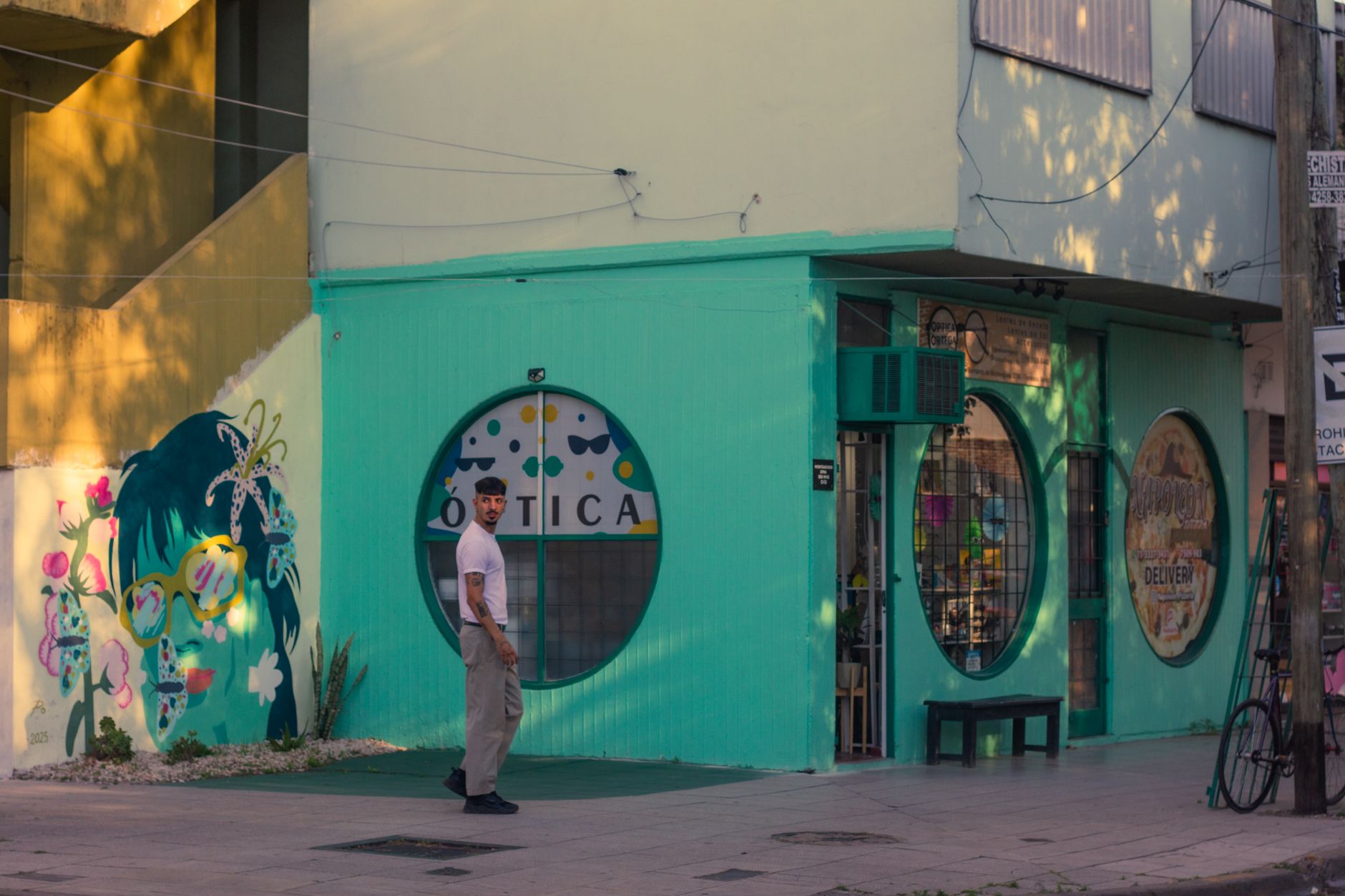
Day 3 pairs Palermo's café and boutique culture with Villa Crespo immediately to its south — leather workshops and Jewish deli food at lunch, then an evening at Chacarita's viaducto restaurant strip or a traditional milonga.
Palermo Soho and Palermo Hollywood are where Buenos Aires' 2020s cultural energy has concentrated — local-designer boutiques on the streets around Plaza Serrano and Plaza Armenia, the park-and-café culture of the Bosques de Palermo (the city's major green spaces), and the bars and restaurants that fill on weekend evenings until 2am. The neighborhood is also the practical base for most first-time visitors: safe at any hour, well-served by the Subte (Palermo and Plaza Italia stations on Line D), and within walking distance of Recoleta. It has earned its reputation; the editorial job is not to avoid it but to use it as the known starting point before crossing into the less-covered neighborhoods.
Fifteen minutes' walk south from Malabia Subte station, Villa Crespo begins. The neighborhood was called Villa Kreplaj — after the kreplach (Jewish dumplings) — by the secular Russian Jewish families who settled here after World War I, and that history sits quietly in the physical fabric and the food. Calle Murillo, between Scalabrini Ortiz and Thames, is a 10-block stretch of leather workshops and retail stores where you can smell the tannery before you see the storefronts — quality leather jackets for $60–150 USD, bags from $30–80 USD, negotiated in pesos with the people who cut and stitch them in the workshops behind the retail space. The production and retail still share the same address here, which is specific to Murillo and gone from almost everywhere else in the city.
Lunch at La Crespo — a deli serving Buenos Aires' version of Ashkenazi and Sephardic Jewish deli food: knishes, bourekas, pastrami, smoked fish, kibbeh, hummus, and Argentine-Jewish fusions. The Nosher (My Jewish Learning) describes it as one of the only places in a city with the largest Jewish community in Latin America to serve Eastern European deli specialties properly. The address has moved; verify the current Villa Crespo location via Tripadvisor or Google Maps before going.
For the evening, two options: a milonga (the milonga circuit is covered fully on Day 5, but if your schedule allows an extra night of tango, Salón Canning in Palermo runs the long-running Parakultural milonga and suits those who want a more traditional atmosphere), or dinner at Chuí in Chacarita — the open-air, plant-filled restaurant built beside the San Martín railway viaduct (Loyola 1250), where a wood-fired kitchen serves a seasonal vegetarian menu and a natural-wine list that has earned Michelin recognition two years running. The setting under the viaduct, enormous-leafed plants lit from within by fairy lights and the exposed concrete structure overhead, is specific to Buenos Aires in a way that most of the city's well-reviewed restaurants are not. Book ahead.
Quick reference — Day 3
- Palermo Soho / Plaza Serrano: Subte Line D to Palermo or Plaza Italia. Bars and outdoor seating active until 2am weekends.
- Calle Murillo leather district: Murillo between Scalabrini Ortiz and Thames. Subte Line B to Malabia (10-min walk). Most shops Mon–Sat 10am–7pm. Cash (pesos) for best prices.
- La Crespo deli: Villa Crespo, near Malabia Subte. Verify current address before visiting. Budget ~$10–18 USD per person.
- Mercat Villa Crespo: Thames 747. Daily ~11am–9pm. Budget $6–12 USD for lunch.
- Chuí: Loyola 1250, Villa Crespo / Chacarita border. Dinner nightly. Book via chui.com.ar. Budget ~$25–45 USD per person with wine.
- Salón Canning (milonga): Palermo, long-running Parakultural milonga; traditional atmosphere. Entry $10–20 USD.

Day 4: The Northern Barrios — Belgrano and Colegiales
Day 4 moves into the residential north — Belgrano for Asian street food and a colonial mansion with an Andalusian garden, Colegiales for a year-round covered antique market and the specialty-coffee circuit Buenos Aires residents use on Saturday mornings.
Belgrano is the most consistently livable neighborhood in Buenos Aires: wide tree-lined avenues, turn-of-the-century mansions converted into quiet museums, a residential scale that feels unhurried by tourist traffic. Its most vivid single block is Barrio Chino — two compact blocks of Calle Arribeños at the foot of the neighborhood, anchored by a ceremonial arch and lined with over 100 Asian-owned businesses. Chinese, Japanese, Korean, and Taiwanese supermarkets, bubble tea stands, Korean corndogs, and fresh spring rolls sit alongside Argentine kiosks in a density of sensory contrast that has no parallel anywhere else in the city. The Buenos Aires city tourism office estimates 15,000 visitors on a weekend; weekdays are calmer and the food stalls easier to navigate. Take the Subte Line D to Juramento — the station deposits you within two blocks.
Mercado de Belgrano, at Juramento and Ciudad de la Paz, operates on two parallel planes: a working-class fresh-produce floor (butchers, fishmongers, cheesemongers) and a renovated gastronomic hall with an outdoor dining patio and rooftop terrace. Lunch here among the neighborhood's professional class and families costs $8–15 USD for a full meal and offers a more honest read of how Belgrano actually functions than most tourist itineraries manage.
Museo Larreta — the century-old colonial mansion at Av. del Libertador 2373 that houses one of Argentina's most important collections of Spanish art from the Middle Ages through the twentieth century — earns an afternoon. The collection is less known than the setting: a 6,500-square-meter Andalusian garden with Moorish tile work, a wishing fountain, and a native ombú tree at its center. There is nothing else in Buenos Aires that looks like this, and the museum receives a fraction of the visitor numbers that Teatro Colón or Recoleta Cemetery draw, which means you wander through it in genuine quiet. Free admission; English tours on the last Friday of the month at 3pm.
A 15-minute walk south from Barrio Chino, or a short taxi, reaches Colegiales — sandwiched between Palermo Hollywood and Belgrano, quieter than both. The Mercado de las Pulgas (Colegiales Flea Market) at Av. Dorrego 1620, declared a Site of Cultural Interest by the Buenos Aires city legislature, holds over 160 permanent stalls under roof: twentieth-century furniture, chandeliers, art nouveau lamps, ceramics, Argentine modernist pieces. It operates year-round, Tuesday to Sunday, not just on weekends — which is what makes it genuinely useful for a neighborhood itinerary rather than a Sunday-only excursion. The quality of stock is meaningfully higher than most Latin American antique markets; mid-century European furniture turns up regularly alongside Argentine pieces.
The Colegiales café circuit runs within 10 blocks of the Mercado: Café Colegiales, Salvaje Bakery (sourdough, vegetarian options), Cigaló Specialty Coffee, and Verdin form the core of what Wander Argentina's neighborhood guide calls the highest density of independent specialty roasters per square kilometer in the city. The morning walk between them, with a slow browse at the Mercado, is the texture of a Buenos Aires Saturday that residents would recognize.
Quick reference — Day 4
- Barrio Chino: Calle Arribeños at Juramento, Belgrano. Subte Line D to Juramento. Free entry. Budget $3–8 USD for street food. Weekdays calmer; weekends crowded noon–3pm.
- Mercado de Belgrano: Juramento and Ciudad de la Paz. Produce stalls Mon–Sat 8:30am–8pm; gastronomic hall daily 11am–midnight. Budget ~$8–15 USD lunch.
- Museo Larreta: Av. del Libertador 2373. Free. Mon–Fri 2pm–7pm; weekends 10am–8pm. English tours last Friday of month, 3pm. Subte Line D to Juramento (15-min walk) or taxi.
- Barrancas de Belgrano: Free, open daily. Subte Line D to Congreso de Tucumán — station exit opens into the park. Weekend feria Sat–Sun 10am–5pm.
- Mercado de las Pulgas: Av. Dorrego 1620, Colegiales. Tue–Sun 11am–7pm. Free entry. From Palermo, taxi under $3 USD or Line B to Federico Lacroze (15-min walk).
- Colegiales café circuit: Café Colegiales, Salvaje Bakery, Cigaló, Verdin — all within 10 blocks of the Mercado. Budget ~$3–6 USD per stop.
Day 5: Chacarita and Almagro — the Food and Tango Belt
Day 5 closes in Chacarita and Almagro — the cemetery where Carlos Gardel is buried and the viaducto food strip in the morning, the landmark confitería and a real milonga at La Catedral Club at night.

Cementerio de la Chacarita earns the morning. At 95 hectares, it is the largest cemetery in Buenos Aires — much larger than Recoleta, much less visited by tourists, and built to a different social character. Recoleta holds the generals and oligarchs. Chacarita holds Carlos Gardel, tango's defining voice and the most beloved figure in Argentine popular music, alongside composers Aníbal Troilo and Osvaldo Pugliese, rock musician Gustavo Cerati, and poet Alfonsina Storni. Gardel's tomb is a living pilgrimage site — fresh flowers arrive regularly from fans who treat it as a genuine act of reverence, not a historical curiosity — and a morning visit that begins at his tomb and expands into the cemetery's vast avenues offers a different side of the city than anything in the tourist circuit. Free city-organized tours run on the 2nd and 4th Saturdays of the month at 10am; arrive early, as they fill.
After the cemetery, the viaducto food strip is a short walk toward the elevated San Martín railway tracks. The strip that runs along and under the viaduct — Chuí (if you didn't go on Day 3), Ajo Negro at Av. Córdoba 6237, and the cocktail bars, ice-cream parlors, and casual bistros that have colonized the covered ground-level space since 2017 — represents the mechanism of Chacarita's food rise, not just individual restaurants within it. Ajo Negro has earned the Michelin Bib Gourmand (recognizing outstanding quality at moderate prices) in both 2024 and 2025, with a seafood-focused tapas menu — dry-aged fish, herb-finished small plates, a precise open kitchen — that draws Buenos Aires diners willing to travel across the city for a table. Reservations are essential; book ahead at dinner. Note that multiple sources place Ajo Negro in both Chacarita and Colegiales (the address at Av. Córdoba 6237 sits on the boundary); the viaducto food cluster it belongs to is unambiguous.
In the late afternoon, cross to Almagro — three or four stops on Line B or a short taxi. The neighborhood stretches along Avenida Corrientes, Buenos Aires' theater-and-bookstore artery, and it is where tango's twentieth-century social history is embedded in brick.
Confitería Las Violetas, at the corner of Av. Medrano and Av. Rivadavia, is in continuous operation since 1884. The building was rebuilt in the 1920s with stained-glass windows, carved wood detailing, and Italian marble floors, and was designated a Buenos Aires Heritage Site in 1998 — but it functions as a café, not a museum. Carlos Gardel came here. Alfonsina Storni came here. The medialuna (a slightly sweeter, butterier Argentine croissant) and the café con leche on the menu today are the same order that has been served to pensioners and professionals and students from this neighborhood for decades. Come at noon on a weekday and the clientele is overwhelmingly local; a visitor sits alongside the full range of the city's residents without any staging. That is not something that happens at many Buenos Aires institutions. A confitería (a European-style café-patisserie in the Argentine tradition, roughly equivalent to a Viennese Kaffeehaus) is meant to be occupied slowly; Las Violetas is the right place to do it.
The evening belongs to La Catedral Club at Sarmiento 4006. The building is an 1880s ex-grain silo and dairy factory with 12-meter wooden ceilings, a giant Gardel mural at the entrance, sculptures and hanging lights, and furniture that seems to have arrived from different eras and stayed. It was declared a Site of Cultural Interest by the Buenos Aires City Legislature. Beginner tango classes run from around 7pm, and the social milonga follows around 10pm, drawing a noticeably younger and less formally dressed crowd than the traditional milonga circuit. The códigos (the unspoken social rules: the cabeceo to invite a dance, the tanda structure, the cortina signaling partner change) are explained in the beginner class; you don't need to know them before you walk in. Entry runs approximately $5–15 USD depending on the night; verify current pricing at lacatedralclub.com before going, as the historical figures may not reflect 2026 rates.
The Corrientes independent theater strip, running through Almagro between Medrano and Castro Barros, is the late-night alternative or complement. The bookshops stay open until midnight. The pizza-by-the-slice counters serve fainá — a crispy chickpea flour flatbread that is an Argentine custom alongside pizza, specific to this city and this kind of late-night street — at $2–4 USD per piece. The teatro under (independent underground theater) circuit runs Thursday to Sunday from 8pm, entirely in Spanish and for a local audience; the street life around it is accessible to anyone, and the Almagro evening pace is distinct from Palermo's bar circuit in the way that matters for a neighborhood itinerary: it's the city at work on its own terms.
Quick reference — Day 5
- Cementerio de la Chacarita: Guzmán 680. Free entry, open daily. Subte Line B to Federico Lacroze (5-min walk to entrance). Free city tours 2nd and 4th Saturday, 10am — arrive early.
- Ajo Negro (tapas): Av. Córdoba 6237, Chacarita/Colegiales boundary. Dinner only; reservations essential. Budget ~$25–40 USD per person. Michelin Bib Gourmand 2024 and 2025.
- Viaducto food and bar strip: Along the San Martín railway viaduct, Federico Lacroze corridor. Best Thursday–Saturday from 8pm. Subte Line B to Federico Lacroze.
- Confitería Las Violetas: Av. Medrano 1454, Almagro. Daily from ~7:30am. Budget ~$4–8 USD for coffee and pastry. Subte Line A to Castro Barros or Line B to Medrano (both within 5-min walk).
- La Catedral Club (milonga): Sarmiento 4006, Almagro. Open Tue–Sat; best Tue/Thu/Fri/Sat. Beginner class ~7pm; milonga ~10pm. Entry ~$5–15 USD — verify 2026 pricing at lacatedralclub.com. Subte Line B to Medrano (10-min walk).
- Corrientes theater strip: Av. Corrientes between Medrano and Castro Barros. Theaters Thu–Sun from 8pm. Bookshops open until midnight. Fainá and pizza ~$2–4 USD per piece.
Practical Notes
Buenos Aires has three operational facts worth knowing before you land: the city runs on a late-night schedule, it has two separate airports serving different functions, and money works differently here than most travel content from 2023 suggests.
Getting here and getting around. EZE (Ministro Pistarini International Airport) is 35 km southwest of the city and handles all long-haul international arrivals. The Tienda León shuttle bus costs around $11.70 USD to the Madero Terminal and takes about 50 minutes; an official taxi booked at the arrivals-hall counter runs $38–50 USD. Once in the city, the Subte (metro) runs seven lines covering the central city for under $1 USD per ride — a SUBE transit card is required and available at airport newsstands and city kiosks. Cabify and Uber are both active; most cross-neighborhood rides cost $3–7 USD. Important: AEP (Aeroparque Jorge Newbery), near the city center, is a separate airport 35 km from EZE that handles domestic and some regional routes. If your itinerary includes a domestic flight to Iguazú, Mendoza, or Patagonia, you depart from AEP, not EZE — factor a 45–60 minute taxi between airports and budget a full night in Buenos Aires before any domestic connection.
Money in 2026. Argentina's parallel exchange rate — the dólar blue that drove much of the Argentina travel coverage from 2022–2024 — was effectively eliminated when currency restrictions were lifted in April 2025. All three rates (official, MEP, blue) now sit within 2–3% of each other. Foreign Visa and Mastercard purchases apply a rate near 1,460 ARS per dollar as of mid-June 2026, which is currently competitive with cash. When a card terminal asks whether to charge in ARS or USD, always choose ARS — selecting USD triggers the merchant bank's conversion rate, which is always worse. Budget travelers should plan for roughly $50–60 USD per day; comfortable mid-range runs $100–120 USD per day — good value against US and Western European cities, but not the near-free Buenos Aires of three years ago. Tips are paid in cash (pesos, 10%) directly to the server; card tips do not reliably reach service staff.
Buenos Aires is a late city. Restaurants fill after 9pm; a 7pm arrival in an empty restaurant is not a quality signal — it means you arrived two hours early. Milongas begin around 11pm and run until 3–5am, and bars before midnight are quiet. Adjusting to the schedule by Day 2 is worth it.
Safety. Buenos Aires has a medium risk profile — violent crime against tourists is uncommon; petty theft (pickpocketing, bag snatching) is the primary concern in crowded tourist areas around the Obelisco, near Retiro station, and in La Boca after dark. Keep bags zipped and close to your body in those areas. La Boca should be visited in the daytime only. Common scams are deception-based: a substance appears on your clothing and a stranger offers to help clean it while an accomplice takes your valuables; unofficial taxi offers inside EZE arrivals charge tourist prices. Use official counters or book via app. Language: Porteño Spanish uses vos rather than tú and carries an Italian melodic quality from the city's nineteenth-century immigration wave. In Recoleta, Palermo, and San Telmo, English is widely spoken by hospitality staff; outside those areas, basic Spanish is practically useful and genuinely warmly received.
Health and entry. US passport holders do not need a visa for stays of up to 90 days — bring a passport valid for at least six months from your entry date. Carry travel insurance or basic health insurance for the trip; Argentina's public hospitals are good but foreign-patient access without coverage is complicated.
Frequently asked questions
How many days do you need in Buenos Aires?
Five days is enough to cover the historic south (San Telmo, Plaza de Mayo), the elegant north (Recoleta, Barrio Norte), Palermo's café and boutique energy, the northern residential barrios (Belgrano, Colegiales), and the Chacarita/Almagro food-and-tango belt. Three days reaches the main sights; five days reaches the city's actual texture.
What are the best neighborhoods to stay in Buenos Aires?
Palermo is the most practical base for first-timers — safe day and night, walkable to Recoleta, well-served by the Subte, and home to most of the city's independent restaurant and bar scene. Recoleta is quieter and more elegant. San Telmo suits travelers who want the cobblestone-historic atmosphere at the cost of some convenience. Budget travelers find better rates in Palermo Hollywood than in Palermo Soho.
Is it easy to get around Buenos Aires between neighborhoods?
Yes. The Subte (metro) runs seven lines covering the central city for under $1 USD per ride with a SUBE card. Palermo to Recoleta is a 20-minute walk; Recoleta to San Telmo is a short taxi. Cabify and Uber are both active and affordable — most cross-neighborhood rides cost $3–7 USD. The city is flat and walkable within each barrio.
Which Buenos Aires neighborhoods are best for food and nightlife?
Chacarita leads Buenos Aires' current food conversation — the cluster of restaurants under and around the San Martín railway viaduct (Chuí, Ajo Negro) draws the local press and Buenos Aires diners who know where to go. Palermo Hollywood has the widest range of bars and restaurants and stays lively on weekends. Almagro owns the tango-and-late-night end of the spectrum, with La Catedral Club and the Corrientes theater strip.
Is Buenos Aires expensive for US travelers in 2026?
Buenos Aires is good value — roughly 40–60% cheaper than comparable US or Western European cities — but it is no longer the near-free destination of the 2022–2023 blue-dollar era. Currency restrictions were lifted in April 2025 and rates have converged. Budget travelers should expect around $50–60 USD per day; comfortable mid-range runs $100–120 USD per day. Always pay in ARS, not USD, when card terminals ask.
Do I need travel insurance to visit Argentina?
US citizens do not need a visa for tourist stays of up to 90 days. You should carry travel insurance or basic health insurance for the trip — Argentina's public hospitals are good but access as a foreign patient without coverage is complicated. Bring a passport valid for at least six months from your entry date. The 90-day stay can be extended once through the National Immigration Office.