
5 days in Rio de Janeiro: the open-jaw gateway into South America
A 5-day stay in Rio de Janeiro is enough to cross the city you came to see and reach the city that lives underneath it — the one that runs from the granite peaks above Corcovado down through the beach neighborhoods of the Zona Sul and into the port district where samba was born. It's also the right length for something more tactical: a five-day stay fits cleanly inside an open-jaw ticket — flying into one city and home from another, so you never retrace the same ground — that sets up the rest of South America without a backtrack. Fly into Galeão (GIG), spend five days in Rio, and leave from Buenos Aires or continue to Iguazú Falls without retracing a single flight path.
Why Rio as your South America gateway
Rio de Janeiro is the most recognizable entry point into South America for travelers flying from North America, and for many US East Coast routes, it is also one of the cheapest. That fare spread makes Rio competitive with São Paulo as a Brazil entry point — and what tips the decision is not the price but the trip shape Rio enables.
The most common pattern: fly into GIG, five days in Rio, then choose a branch. Branch A takes a domestic flight from Santos Dumont (SDU) to Foz do Iguaçu and crosses into Argentina at the Falls. Branch B catches a direct flight from GIG to Buenos Aires, making the full Atlantic-coast arc. In both cases, you land in Rio, move south or west, and fly home from a different city — that's the open-jaw logic at work, and Rio is the right place to begin it.
For travelers whose route runs toward the Amazon or the Pantanal, São Paulo or a direct regional connection is more efficient. Rio's gateway case is strongest for the coastal and southern South America arc. See also our guide to Buenos Aires for how that leg continues.
Quick reference — Gateway fares
- GIG from New York metro area: from around $370 one-way (KAYAK and Expedia, June 2026)
- GIG from Miami: from around $300 one-way (KAYAK and Expedia, June 2026)
- SDU → Foz do Iguaçu (IGU): from around $130 one-way, 1h 40m on Azul or LATAM (Rome2Rio / Expedia, June 2026)
- GIG → Buenos Aires (EZE): from around $170 one-way, 5h 45m direct (Rome2Rio / LATAM data, June 2026)
Day 1: Cristo Redentor and Santa Teresa
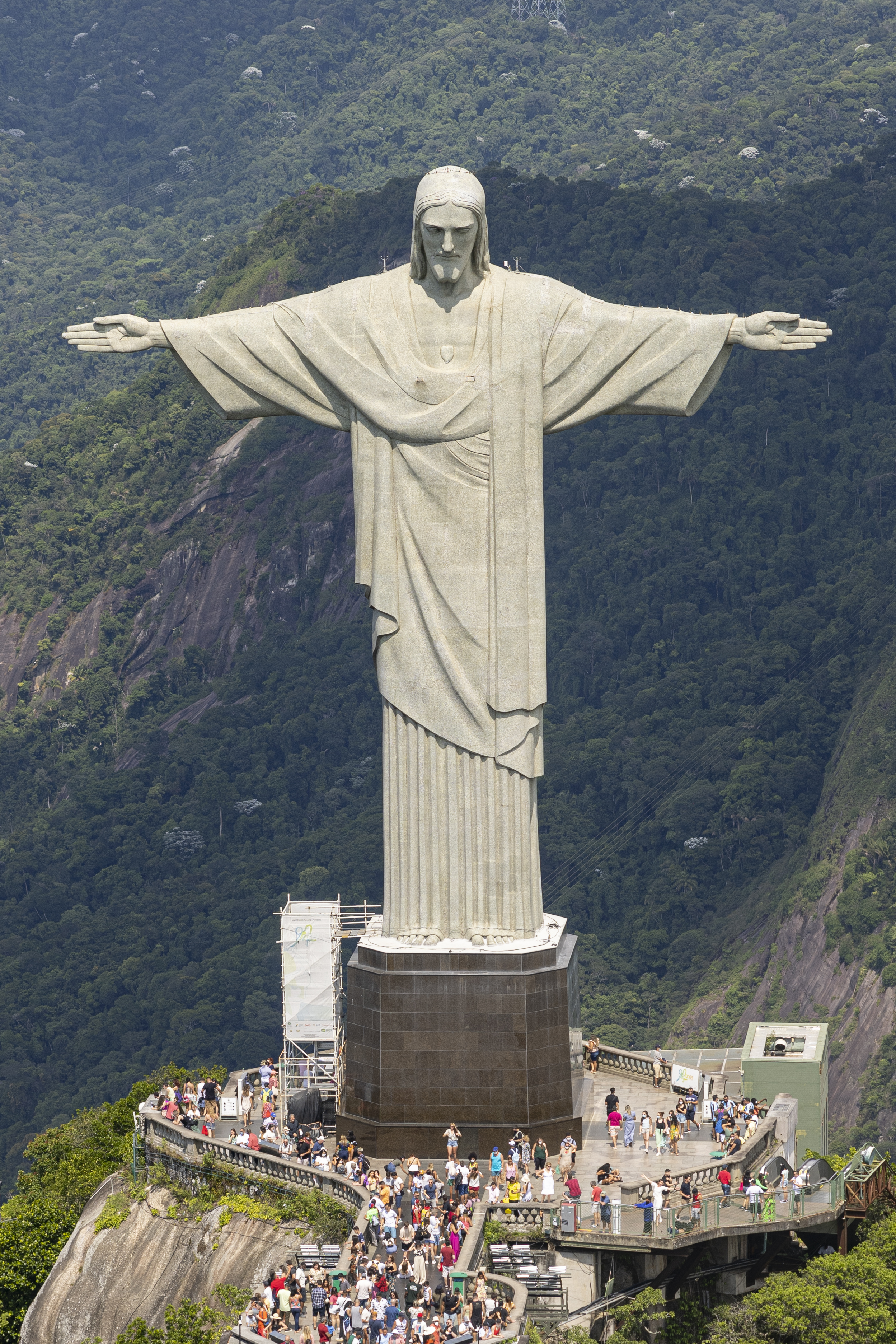
Day 1 rises early and rises literally — the cog train to Corcovado at 8am, before the clouds that roll in by midmorning and the 3,000+ daily visitors who fill the platform by eleven. The afternoon moves down into Santa Teresa, and the night closes in Lapa.
The case for going first thing: standing on the Corcovado platform at 710 meters above Guanabara Bay, you see the whole shape of Rio laid out beneath you — the bay sweeping north, the open Atlantic to the east, Sugarloaf rising from the water on the left, and the beach arc of Zona Sul curving away to the south. The statue at your back is remarkable engineering; the view at your feet is the reason you came. Morning light and thin crowds are not minor details — they're the difference between a revelation and an expensive queue. Pre-book 2–3 days ahead at christ-the-redeemer.com; the train sells out.
Before the train, coffee in the Cosme Velho neighborhood at the base of the mountain. The street vendors start at dawn; a few small cafés open by 7am. The area is quiet — a residential pocket that tourists pass through and almost never notice.
After Corcovado, descend into Santa Teresa, Rio's hillside neighborhood of 19th-century colonial mansions, cobblestone streets, and a density of artists and independent restaurants that the beach zones don't match. Stop at Parque das Ruínas — a free public park built around the shell of a destroyed mansion, with a rooftop bar and a view across Guanabara Bay that rivals anything you paid for that morning. The park closes on Tuesdays; plan accordingly.
Walk down from Santa Teresa toward Lapa via the Escadaria Selarón — a 215-step staircase covered in more than 2,000 tiles collected by Chilean-born artist Jorge Selarón from over 60 countries, assembled over three decades as his personal tribute to Brazil. He added tiles until his death in 2013; the work continues. The steps are free, open continuously, and most striking in early evening when the streetlights catch the mosaic.
Lapa in the evening means the Arcos da Lapa — 18th-century aqueduct arches rising 64 meters above street level — lit against the night sky, the street below filling with outdoor samba from around 9pm. Street caipirinhas (cachaça, lime, sugar, and ice — Brazil's national cocktail, brewed from sugarcane spirit) cost R$10–15 from the vendors who set up along the Arcos. Rio Scenarium, three floors of antiques and live samba on Rua do Lavradio, is the covered-venue alternative when the rain comes. Get there from your accommodation and get home by Uber — street cabs in Lapa at night carry documented fare-manipulation risk.
Quick reference — Day 1
- Corcovado cog train (Trem do Corcovado): R$109 adults, R$68 children 6–11 (christ-the-redeemer.com, 2026). Book 2–3 days ahead; time-slot entry. Best window: 8–9am. Closed in dense fog — check forecast.
- Alternative to the cog train: free hike via the 3.5km uphill trail from Parque Lage through Tijuca Forest; monument access ticket still required at the top.
- Van access via authorized operators: R$85–95.
- Parque das Ruínas: free, closed Tuesdays, bar on premises.
- Escadaria Selarón: free, open continuously. Rua Joaquim Silva / Rua Pinto Martins, Lapa.
- Lapa samba (street): from ~9–10pm around Arcos da Lapa. No cover, no entry.
- Rio Scenarium: Rua do Lavradio 20, Lapa. Cover charge varies; check before arriving.
- Transit: Uber to and from Lapa. Avoid street taxis in the area at night.
Day 2: Morro Dois Irmãos and Ipanema
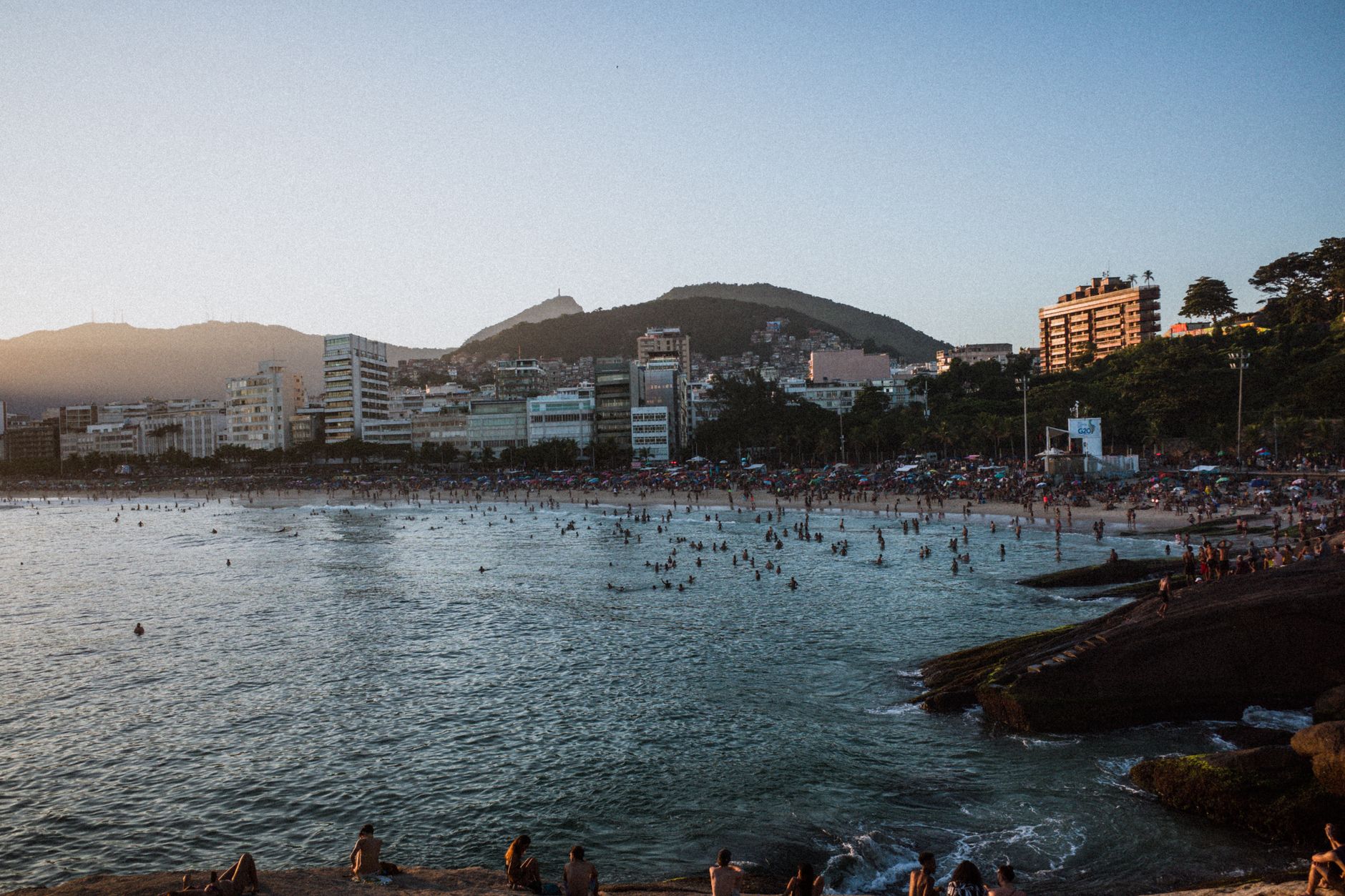
Day 2 trades the elevated perspective of Corcovado for a hike that earns the same kind of view on foot — the summit of Morro Dois Irmãos above Vidigal, with the whole Zona Sul arc spread below. The afternoon settles at Ipanema beach, and the sunset at Arpoador closes it.
Start before 9am. Uber to the Vidigal entrance on Avenida Niemeyer; a moto-taxi carries you the last stretch to the trailhead for around R$5–10. The Morro Dois Irmãos hike runs 1.5km through the Vidigal community and into Tijuca National Park, climbing to 533 meters with a panoramic view across Ipanema, Leblon, the Lagoa Rodrigo de Freitas, and the open Atlantic. Allow 2.5–3 hours round-trip. Go well before noon, bring water; the trail is unpaved in sections, easy to moderate. A licensed local guide, available through the community, is recommended for a first visit — several operate in Vidigal, directing their fees directly into the neighborhood economy. Vidigal itself has a functioning local economy worth a moment: cafés, hostels, bars. It's not a backdrop.
Descend to Ipanema for late morning. Posto 9 is where the beach has its most social character; Posto 8 is the traditional LGBTQ+ gathering point. Leave your phone and valuables at the hotel — beach theft is real, and Ipanema is not an exception. The beach vendors sell água de coco (coconut water), mate (a chilled yerba-mate tea sold along the beach), and food; the beach has its own rhythm if you're willing to settle into it.
The Arpoador sunset is the Day 2 close. The rock platform at the western end of Ipanema beach, 20–30 minutes before the sun hits the horizon — a crowd assembles, silently at first, and when the sun drops below the water the Dois Irmãos peaks to the right catch the last light and the crowd applauds. It's a small, specific Rio ritual that hundreds of guidebooks describe and almost none explain: it's not performance, it's something the city does for itself. You happen to be there.
If Day 2 falls on a Saturday: the feijoada (Brazil's national dish — slow-cooked black beans with pork ribs, smoked sausage, and dried beef, served with white rice, farofa, collard greens, and orange slices) is traditionally Saturday food. Bar do Mineiro in Santa Teresa has served it since the 1980s, a neighborhood botequim (neighborhood bar) with cash payments and no pretension. The feijoada takes at least two hours to eat properly — order, settle in, do not rush. If Day 2 is not a Saturday, the same logic applies to your first Saturday, wherever it falls.
Quick reference — Day 2
- Morro Dois Irmãos hike: no entry fee. Trail starts northwest corner of Campo do Vidigal soccer field. 2.5–3 hours round-trip. Go before noon. Water and sun protection required. Licensed local guides available in Vidigal.
- Uber to Vidigal entrance: Avenida Niemeyer. Moto-taxi from entrance to trailhead: ~R$5–10.
- Ipanema beach: free. Leave valuables at hotel. Best: morning to early afternoon.
- Arpoador sunset: 20–30 min before sunset, stand on the rock platform at the Arpoador end of Ipanema (maukatravels.com, 2026).
- Bar do Mineiro (feijoada, Sat/Sun): Rua Paschoal Carlos Magno 99, Santa Teresa. Cash preferred.
- Caipirinha at Academia da Cachaça: Rua Conde de Bernadotte 26, Leblon. 80+ cachaça labels.

Day 3: Botanical Garden, Parque Lage, and Sugarloaf at sunset
Day 3 makes the case for Zona Sul's quieter geography — a 137-hectare botanical garden in morning light, a free park at the foot of the mountain, and Sugarloaf's cable car at golden hour. Cristo and Sugarloaf are on separate days by design: both demand specific lighting and specific timing, and both are significantly worse when compressed into a shared day.
Jardim Botânico do Rio de Janeiro opens at 8am. Foreign visitors pay R$80 (as of July 2025, gov.br/jbrj — a price that several review sites still cite incorrectly; check jbrj.eleventickets.com before arriving). Founded by Dom João VI in 1808, the garden now holds over 9,000 plant species across 137 hectares, from the famous avenue of Imperial Palms to the bromeliads and orchid houses toward the back. On a weekday morning before 10am, it's lightly attended in a way that feels incongruous for a city of Rio's scale. The transition from cultivated garden to the beginning of Tijuca National Park at the back fence is abrupt and atmospheric.
Adjacent, and free: Parque Lage, a public park built around a 19th-century Italianate mansion with a central pool and overhanging palms. The mansion courtyard is the image that circulates — and it earns its circulation. The café inside the mansion makes a reasonable second coffee. Parque Lage is also the starting point for the forest trail up Corcovado, the unhyped alternative to the cog train: 2–3 hours through the Atlantic Forest canopy, with howler monkeys audible overhead, and a monument access ticket required at the top. Fit visitors who walk up arrive at a summit noticeably less crowded than those who came by rail.
Afternoon: lunch in the Jardim Botânico / Gávea neighborhood, which has good options within walking distance. Then the Pão de Açúcar cable car for sunset.
Book the Sugarloaf ticket ahead — sunset slots sell out 3–4 weeks ahead in peak season via bondinho.com.br. The ride ascends in two stages, first to Morro da Urca (a mid-summit with its own views and a less crowded pause), then the final cable car to the 396m granite summit. From the top as the sun drops: Corcovado glowing to the southwest with Cristo visible against the sky, the bay spreading north, the Atlantic opening east, and below you the city connecting it all. This is the view that explains Rio's geography to itself.
Quick reference — Day 3
- Jardim Botânico: foreign visitors R$80 (gov.br/jbrj, July 2025). Hours: Mon/Tue/Thu/Fri/Sat/Sun 8am–5pm; Wed 11am–5pm. Tickets: jbrj.eleventickets.com (Pix or credit card).
- Parque Lage: free, open daily 8am–5pm. Estrada Jardim Botânico 414, Jardim Botânico neighborhood. Café on premises.
- Corcovado forest trail from Parque Lage: free to walk, monument access ticket required at top (see Day 1 Quick reference for pricing). Allow 2–3 hours. Fit visitors only; trail is steep and unpaved.
- Pão de Açúcar cable car: tickets from R$255 adults (bondinho.com.br, 2026). Book sunset slot 3–4 weeks ahead in peak season. Arrive 30–45 min before target cable car. Base station: Praia Vermelha.
Day 4: Botafogo and Pedra do Sal
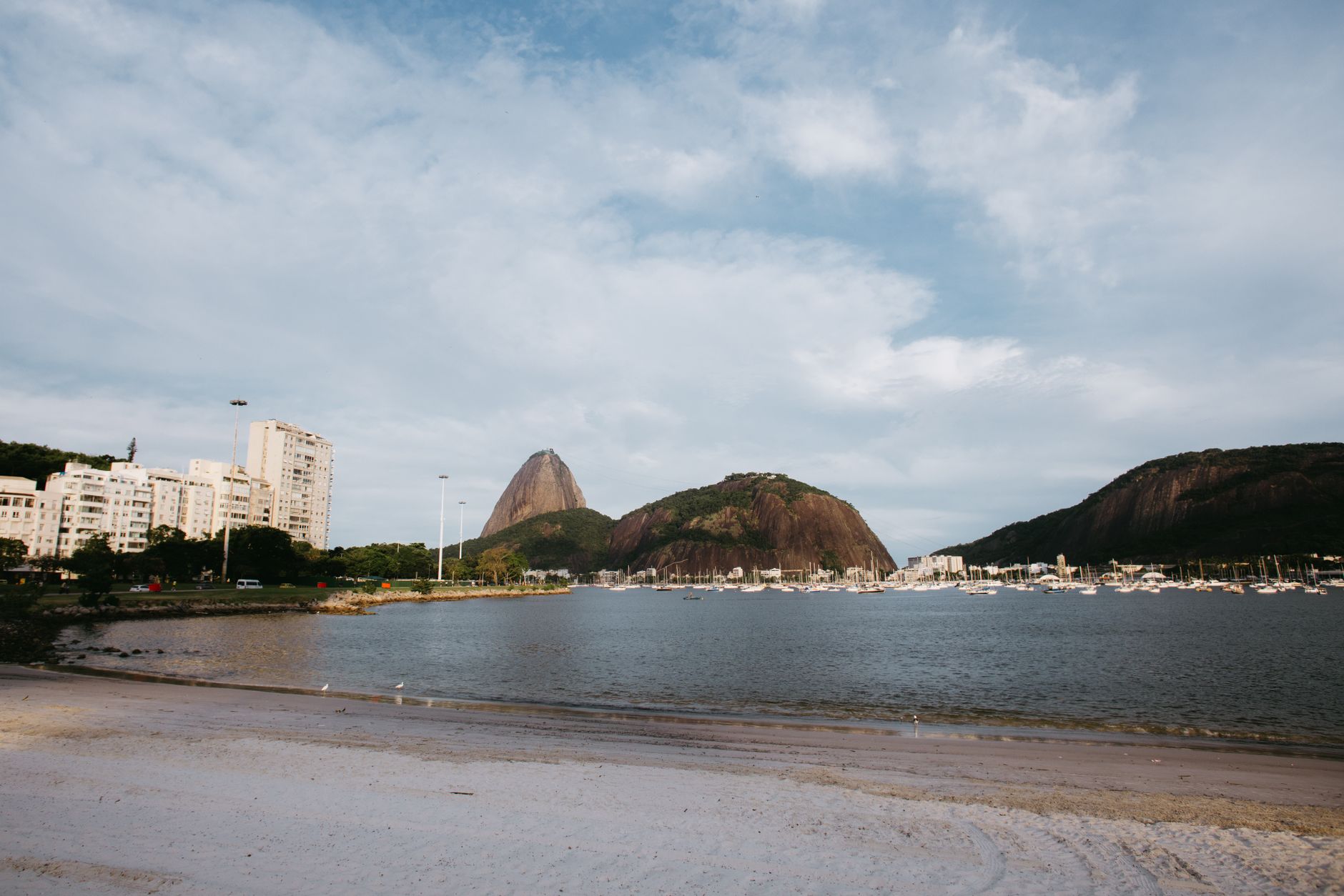
Day 4 is the argument for five days over three — not more landmarks, but a different layer of the city: Botafogo's food streets at prices and a pace the beach zones don't match, and the port district holding, on Monday and Friday nights, Rio's oldest outdoor samba roda.
Botafogo sits between Copacabana and Centro, a neighborhood that younger Cariocas (Rio residents) treat as the city's main weeknight eating district and that English-language itinerary guides barely mention. The streets around Rua Nelson Mandela and Voluntários da Pátria hold craft breweries, contemporary bistros, and Japanese-Brazilian fusion restaurants at prices notably below Ipanema and Leblon. Walk Voluntários da Pátria from the Cobal food market end northward — the market itself is a cluster of outdoor restaurants and bars popular with locals and well-priced. Order something at a table rather than takeaway; the neighborhood's character comes through in the pace of a long weeknight dinner.
The evening depends on the day of the week. If Day 4 falls on a Monday or Friday, take an Uber to the Largo do Pedra do Sal in the Gamboa neighborhood — the Porto Maravilha area of Rio's port district — and arrive by 9pm.
Pedra do Sal traces to African-Brazilian community roots in the port zone dating to when Gamboa was the center of Rio's enslaved and freed African population in the 19th century. The enslaved men and women who worked the port gathered at the stone — the pedra do sal, the salt stone, where cargo was unloaded — and the music made there became the direct ancestor of what became samba. What happens on Monday and Friday nights at Largo do Pedra do Sal is that tradition carried forward outdoors, free, without a stage or a set list: a rotating core of musicians, the roda forming around them, and a neighborhood crowd that knows the songs. It starts late (9–10pm) and runs until the street empties. It is not a tourist show. You do not need to know the music to stand inside it.
If Day 4 does not fall on a Monday or Friday, Lapa's outdoor samba or Rio Scenarium are the evening alternatives. Pedra do Sal is not available on other nights.
Quick reference — Day 4
- Botafogo food streets: Rua Nelson Mandela and Voluntários da Pátria corridor. Cobal do Humaitá (Rua Voluntários da Pátria 446) is the market cluster — outdoor restaurant seating, open evenings.
- Botafogo pricing: beer R$8–15; mains R$35–65 at most spots — roughly 30–40% below Ipanema equivalents.
- Pedra do Sal: Largo do Pedra do Sal, Gamboa neighborhood (Porto Maravilha area). Monday and Friday nights only. Free. Starts 9–10pm. Uber from Botafogo ~15 min.
- Alternatives (non-Mon/Fri): Lapa outdoor samba from ~9–10pm around Arcos da Lapa; Rio Scenarium (Rua do Lavradio 20, Lapa).
Day 5: Copacabana, Centro, and planning the exit
Day 5 moves between Rio's most famous beach and the civic center that most visitors skip, and ends with the practical work of planning what comes next. It's a deliberately lighter day by design — the onward journey needs thinking, not just walking.
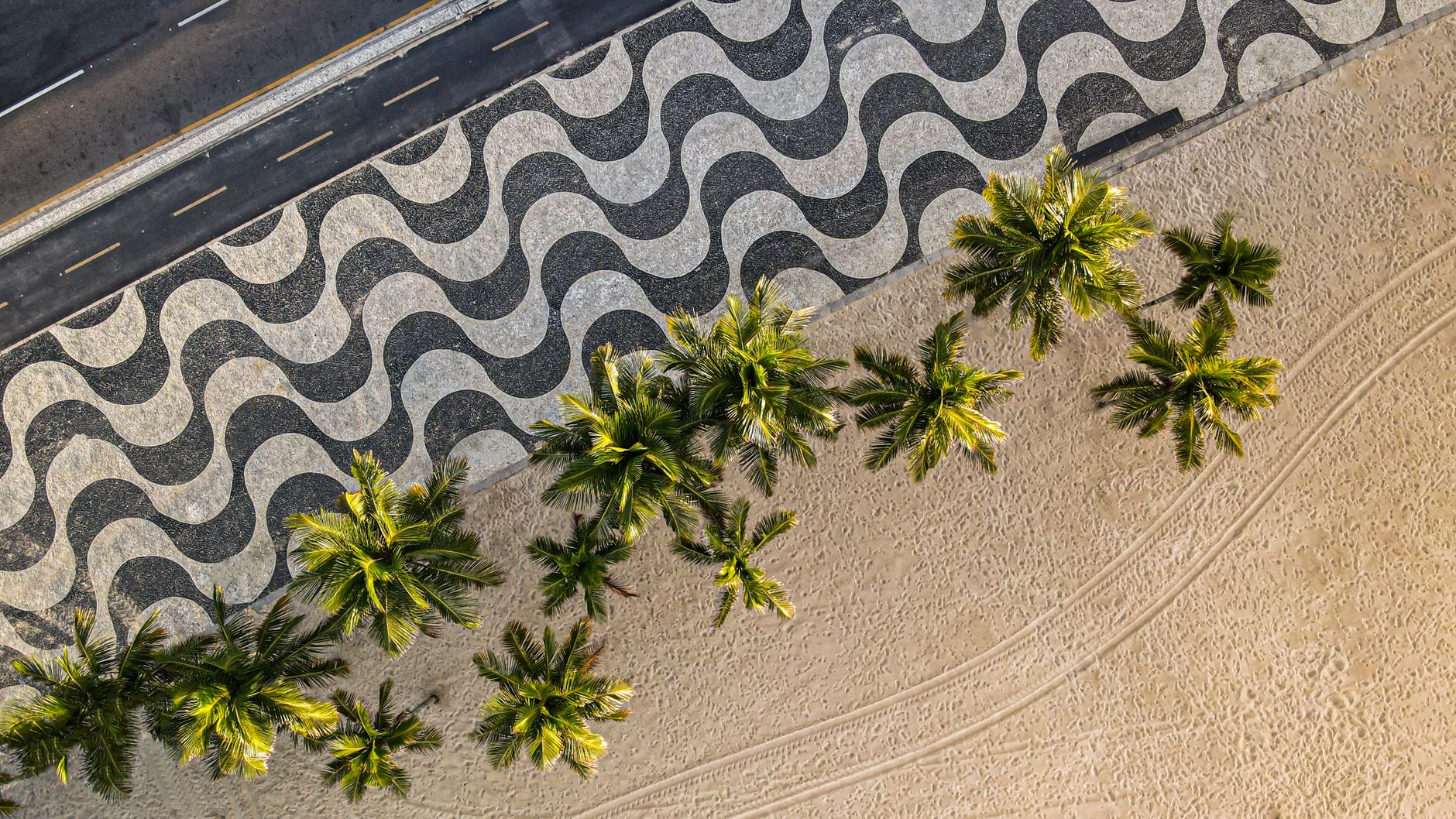
Walk Copacabana in the morning, before the heat peaks. The 4km crescent matters for a specific reason: its scale tells you something about Rio that Ipanema's contained stretch doesn't. The beach runs from the rocky point at Leme in the northeast to Arpoador in the southwest, with distinct character shifts along the way — the quieter stretches near Leme are different from the concentrated tourist hotel section in the middle and the more local Posto 6 area near Arpoador. The honest framing: walk Copacabana for the scale; base in Ipanema for the experience. Copacabana's beachfront at night in certain stretches carries higher petty-crime risk than Ipanema's equivalent.
Midday: head to Centro, the civic and historical district that functions as a different city from Zona Sul on weekdays (active and dense) and a different city again on evenings and weekends (mostly deserted after 7pm — worth avoiding after dark). The Cinelândia area holds the neoclassical Museu Nacional de Belas Artes and the Teatro Municipal, Rio's opera house. The Arcos da Lapa in daylight look different from their nighttime samba context — the Roman scale of the 18th-century aqueduct reads more clearly in the afternoon sun.
If a match is scheduled at Maracanã on your Day 5, that's worth reprioritizing the afternoon. A live match — even a state league fixture in the Campeonato Carioca, not a Copa Libertadores night — is an experience that puts you inside one of South America's loudest stadium environments. Flamengo or Fluminense home games are the most accessible; a Fla-Flu derby (Flamengo vs. Fluminense), when the scheduling lands, is the loudest environment the stadium produces. Tickets via official club websites (Flamengo.com.br, Fluminense.com.br), R$50–200 for domestic league games. This option is schedule-dependent — check the fixture calendar before committing Day 5 to it.
The day's real purpose is exit planning, which the Onward section below handles in detail.
Quick reference — Day 5
- Copacabana walk: best before 10am. Note Leme section (quieter), middle hotel strip, Posto 6 near Arpoador (more local).
- Museu Nacional de Belas Artes: Av. Rio Branco 199, Centro. Closed Mondays; check hours before visiting.
- Teatro Municipal Rio: Praça Floriano, Centro. Tours available; check riotur.rio for schedule.
- Arcos da Lapa (daytime): walking distance from Cinelândia metro.
- Centro safety note: well-traveled during business hours; avoid after 7pm.
- Maracanã (if a match is on): tickets at Flamengo.com.br or Fluminense.com.br. Domestic league R$50–200. Schedule-dependent.
Onward to Iguazú, Buenos Aires, or São Paulo
The open-jaw exit from Rio completes the arc you started when you flew in — you've moved through the city, from the hilltops to the beach zones to the port district, and now you leave through a different door entirely. Here's how each onward leg actually works, starting with the airport distinction that most travelers get wrong.
The two airports — state this clearly: your onward domestic flights leave from Santos Dumont (SDU), not Galeão (GIG). SDU is in Centro, roughly 30 minutes from Zona Sul by Uber. GIG, where you arrived, is north of the city — 45–75 minutes from Ipanema depending on traffic. These are separate airports serving separate routes. If you are flying to Iguazú or São Paulo, you go to SDU. If you are flying to Buenos Aires internationally, you go to GIG.
Iguazú Falls (IGU): domestic flight from SDU on Azul, LATAM, or GOL, roughly 1h 40m. One-way fares from around $130 based on recent search summaries (Rome2Rio / Expedia, June 2026). Multiple daily departures; book 3+ weeks out for better fares. This is the most common first extension from Rio, and our guide to the Brazilian side of Iguazú Falls covers what to do once you land. Note: the Argentine side requires crossing into Argentina with your passport, which is straightforward but adds a step.
Buenos Aires (EZE): direct flight from GIG on LATAM, GOL, or Aerolíneas Argentinas, roughly 5h 45m. One-way fares from around $170 based on recent search summaries (Rome2Rio / LATAM data, June 2026). This is the clean open-jaw completion: fly into Rio, leave from Buenos Aires, and the whole Atlantic coast of South America runs between your arrivals and your departure gate.
São Paulo (GRU or CGH): domestic flight from SDU on LATAM, Azul, or GOL, roughly 1h 25m, from around $85–130 one-way (Rome2Rio, June 2026). The bus is an option (6h 30m, from around $11–29 with Penha or Expresso Central, via Terminal Rodoviário Novo Rio) — cheap and long. São Paulo works as either a destination in its own right or a hub for connecting south toward Mendoza or Patagonia.
Build at least 2 hours before domestic departure from SDU if coming from Copacabana or Ipanema, and 3 hours before international departure from GIG.
Practical notes
Rio de Janeiro needs a short, specific round of pre-trip homework: the Brazil e-Visa (US$80.90, apply 48–72 hours out), the GIG-versus-SDU airport distinction for your onward leg, a baseline on where the real safety risk concentrates and where it doesn't, and how cash and cards work on the ground.
Entry — US travelers. As of April 10, 2025, US passport holders require a Brazil e-Visa: valid 10 years, multiple entry, stays up to 90 days, fee US$80.90, standard processing 48–72 hours (up to 10 business days in peak periods). Apply at brazil.vfsevisa.com before travel. Verify current requirements there before you book — the fee and the timeline are sourced from US Embassy in Brazil / VFS Global, 2025, and these details can change. Canadian travelers face the same requirements (Wego Travel Blog, 2026). Most EU member states retain visa-free access for 90-day stays under Brazil's reciprocal arrangements, extended most recently to Denmark, France, Hungary, and Ireland as of February 2026 — but agreements are bilateral and vary by nationality, so EU travelers should verify their specific passport's status at the Brazilian consulate or IATA Travel Centre, not through third-party aggregators (visahq.com, 2026).
Safety. Rio's safety reputation is real in specific contexts and significantly overstated in others. The Instituto de Segurança Pública (ISP) reported a 12% decrease in violent incidents for Q1 2026 versus Q1 2025; Ipanema and Leblon recorded zero homicides in Q1 2026 (vanguardattache.com, 2026; ISP via riotimesonline.com, 2026). The practical risk concentrates in four specific scenarios: beach theft (leave phones, cameras, and valuables at the hotel when going to the beach — no exceptions); Centro after dark (avoid after 7pm); favela areas not on the tourist circuit (Complexo do Alemão, parts of Rocinha, Cidade de Deus — Canadian and UK government advisories flag these); and phone snatching in crowded street markets and busy intersections. For the rest: Uber at night, phone in your pocket on the street, valuables in the hotel safe. That handles the vast majority of tourist-area risk.
Getting around. Uber and 99 (Brazilian rideshare, often cheaper than Uber) cover most inter-neighborhood movement reliably. The MetrôRio Line 4 covers Zona Sul well — Jardim Oceânico to Ipanema/General Osório to Copacabana/Cardeal Arcoverde to Botafogo and into Centro. Walking is comfortable within Ipanema, Copacabana, and Botafogo neighborhoods during the day. Street taxis in tourist areas carry fare-manipulation risk; use rideshare apps or licensed radio-taxi stands at major hotels.
Money. 1 USD ≈ R$5.14 (exchange-rates.org, June 2026); for planning, R$5.00 per USD is a reasonable working figure. ATMs are widely available in Zona Sul and Centro — use bank-branch ATMs during business hours; standalone ATMs in public spaces carry card-skimming risk. Restaurant bills in most sit-down spots include a 10% taxa de serviço (service charge), legally optional but conventionally paid if service was adequate. R$200–300 cash per day covers food and transit comfortably.
Seasons. Rio's dry season runs May–October — best weather for hiking and outdoor activities, with June–September the most reliable. December–March brings reliable afternoon thunderstorms (3–5pm) and 30–32°C heat: plan landmark visits for mornings, not afternoons. Carnival falls late January–early March and drives hotel rates 3–5x with months-long advance booking requirements. April–May and September–October offer the most useful balance of good weather and manageable prices.
Feijoada timing. Feijoada is traditionally eaten on Saturdays and Wednesdays — Bar do Mineiro in Santa Teresa and Academia da Cachaça in Leblon both serve it. If your Saturday is free, plan dinner there; it takes at least two hours and earns every minute.
Portuguese. Portuguese is necessary outside the tourist circuit — and basic phrases earn real goodwill from Cariocas, who are not accustomed to Spanish-defaulting visitors. In Zona Sul restaurants, hotels, and major attractions, English is reliable. Outside Zona Sul, do not assume it.
Frequently asked questions
Is 5 days enough for Rio de Janeiro?
Five days is enough to separate the landmark mornings that three-day visitors have to compress, reach into the Botafogo food district and the port district's samba nights, and leave with a concrete onward plan. Days 4 and 5 are where the longer stay earns itself — not more of the same circuit, but a different layer of the city.
How do I get from Rio's airport (GIG) to Ipanema or Copacabana?
From Galeão (GIG), your fastest options are Uber or a licensed taxi — around R$70–100 by rideshare, R$100–130 by fixed-rate taxi, taking 45–60 minutes depending on traffic. The BRT Transcarioca bus to Vicente de Carvalho metro station works for around R$11 total but requires a transfer and takes longer. No direct metro line runs from GIG to Zona Sul.
What is feijoada — and where do I eat it in Rio?
Feijoada is Brazil's national dish: slow-cooked black beans with pork ribs, smoked sausage, and dried beef, served with white rice, farofa (toasted cassava flour), collard greens, and orange slices. It's traditionally eaten on Wednesdays and Saturdays. In Rio, Bar do Mineiro in Santa Teresa is the neighborhood classic, serving feijoada on Saturdays and Sundays since the 1980s.
Do US citizens need a visa to visit Brazil?
Yes. As of April 10, 2025, US passport holders require a Brazil e-Visa, valid 10 years with multiple entries, allowing stays up to 90 days. The fee is US$80.90 and standard processing takes 48–72 hours. Apply at brazil.vfsevisa.com. The previous era of visa-free US access ended with this change — budget time and the fee before you fly. Source: US Embassy in Brazil / VFS Global, 2025.
How do I get from Rio to Iguazú Falls?
Fly from Santos Dumont airport (SDU) — not Galeão — to Foz do Iguaçu (IGU), roughly 1h 40m on Azul, LATAM, or GOL. One-way fares start from around $130 based on recent search summaries. SDU is in Centro, about 30 minutes from Zona Sul by Uber. Multiple daily departures run; book three or more weeks out for better fares.
What is Pedra do Sal, and when does it happen?
Pedra do Sal is one of Rio's oldest samba traditions — an outdoor samba roda (circle) in the Gamboa neighborhood of the port district, traced to African-Brazilian community roots that date to when the port was the center of Rio's enslaved population. It runs on Monday and Friday nights only, starting around 9–10pm, free to attend, at Largo do Pedra do Sal. More locally rooted than Lapa's samba circuit.
What is the difference between GIG and SDU — which airport do I use?
Galeão (GIG) is Rio's international airport and handles long-haul domestic routes — you fly in from North America here. Santos Dumont (SDU) handles short-haul domestic routes to São Paulo, Iguazú, Brasília, and others — you depart from here for your onward South American leg. They're in different parts of the city: GIG is north, SDU is in Centro. Getting between them takes about 30–40 minutes by Uber.