
5 Reasons to Fly Into Brussels Instead of Paris or Amsterdam
Brussels is the calmest way into Western Europe — a walkable capital of gilded guildhalls and Art Nouveau townhouses where the airport train reaches the centre in about 20 minutes and four capitals sit within two hours by rail.
Here's the honest part, up front: Brussels usually doesn't win the fare search. Paris and Amsterdam are mega-hubs with dense nonstop competition from the US, and on June 2026 snapshots they frequently priced lower than Brussels on the transatlantic leg (Going.com, 2026). Paris usually wins the fare search; Brussels wins the trip. As the opening leg of a multi-city Western Europe trip — fly in once, then train to Paris, Amsterdam, London, or Cologne — Brussels is the entry point that makes everything after the flight easier.
So no, Brussels isn't the cheapest city to fly into Europe, and the case for it doesn't need that claim. We've seen round-trips from New York as low as roughly $230 on flexible off-peak dates, with typical shoulder-season fares around $490–$700 (momondo / KAYAK / Expedia snapshots, June 2026) — sometimes below what Paris or Amsterdam shows for the same dates, often not. This case is for flexible travelers booking three to eight weeks out who are building a multi-city trip; if you only want Paris, or only want Amsterdam, or you're booking inside two weeks, the mega-hub nonstop is usually your better play — take it without a second thought. For everyone else, here are five reasons to start the trip in Brussels.
1. The 20-minute transfer
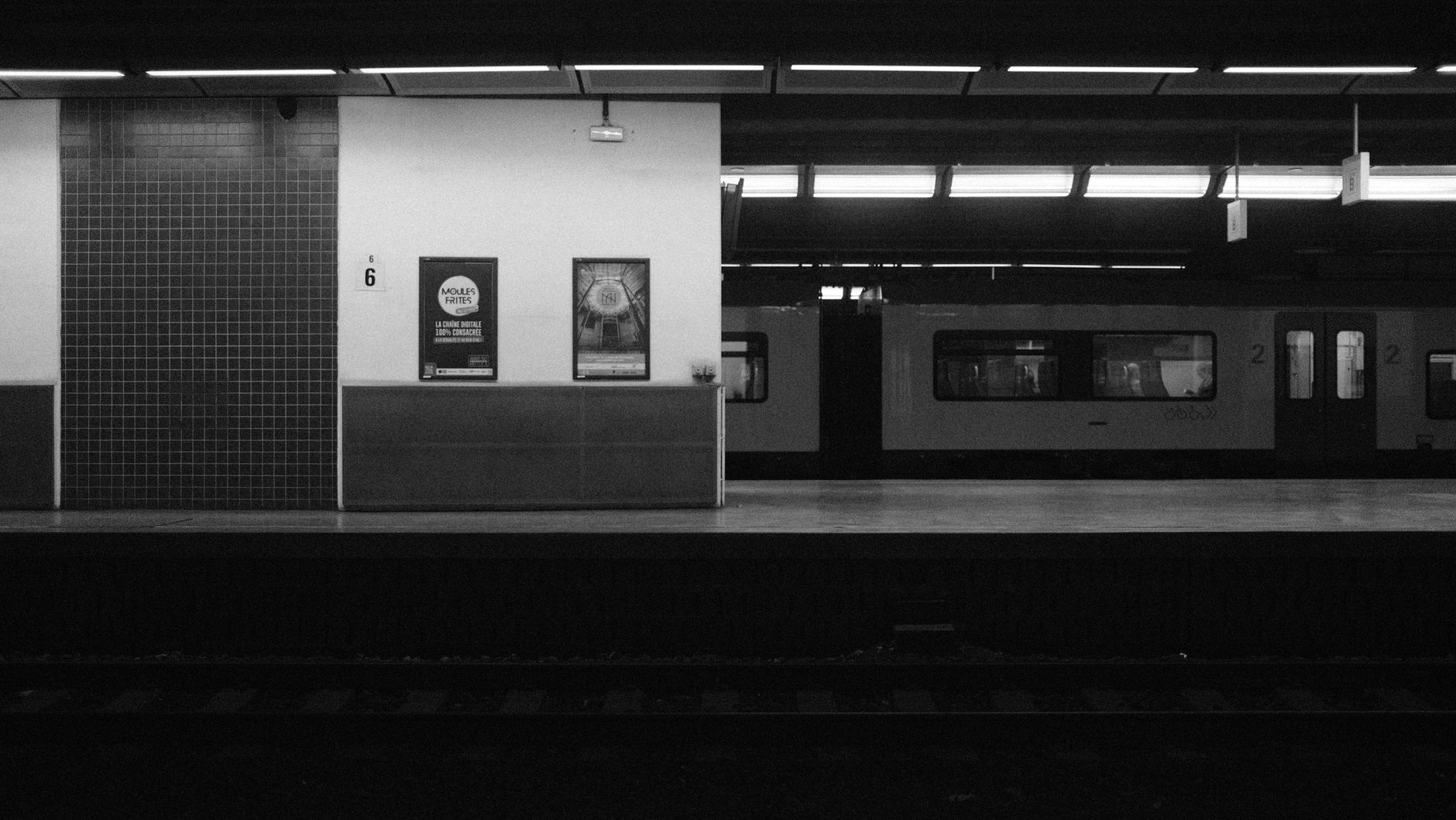
From the platform directly beneath Brussels Airport, the train reaches Brussels-Central in 17 to 20 minutes, runs every ten minutes or so from about 5 a.m. to around midnight, and costs about €11 one way (Brussels Airport / SNCB, June 2026).
That number deserves a second look, because it's the difference between starting your trip and recovering from your flight. You land, follow the signs down to the station — it sits under the terminal, no shuttle, no second ticket queue — and you're dropping bags in the city centre within about an hour of wheels-down. The fare lands around €11 because Belgian Railways folds a mandatory airport supplement into the ticket (SNCB, June 2026); buy at the machine or in the app and you're done.
This is the trade Brussels offers instead of a cheaper fare: the arrival slog never happens. Jet lag is real on day one, and a 20-minute train into a compact, walkable centre is worth more at that exact moment than it looks on paper. The airport itself is mid-sized — around 25 million passengers a year, the home hub of Brussels Airlines, with 200-plus destinations (Brussels Airport, 2026) — big enough for one-stop connections from most US cities, small enough that the walk from gate to train stays short.
2. Four countries by rail in under two hours
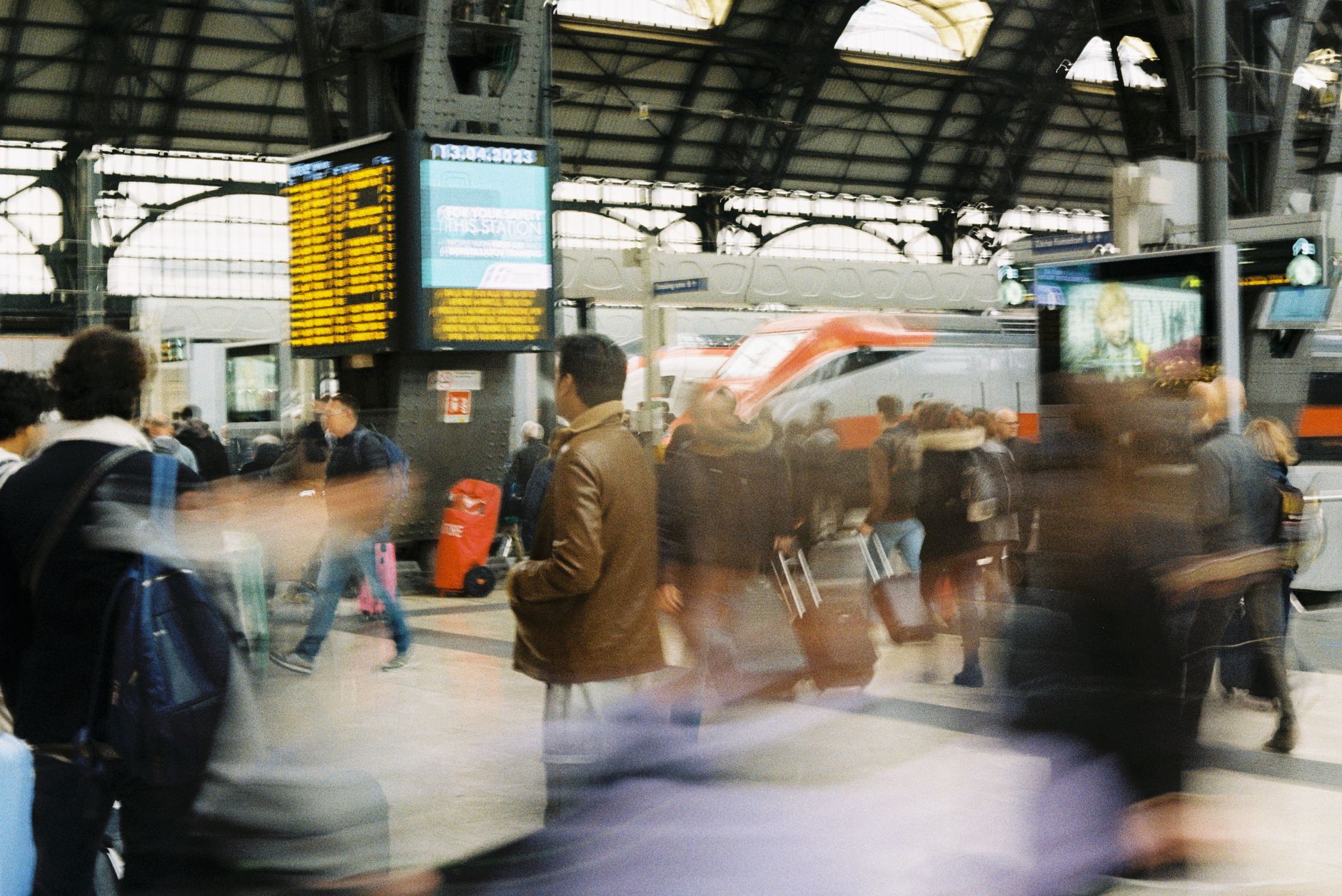
From Brussels-Midi, direct high-speed trains reach Paris in about 1h22 (from €29), Amsterdam in about 1h52 (from €25), London in about 1h52, and Cologne in about 1h50 — four countries, all direct, no second flight (Eurostar / Trainline / Rail Europe, June 2026).
No other Western European entry point puts four capitals inside a two-hour ring this cleanly. Paris runs 22 to 23 trains a day from Brussels-Midi; Cologne drops as low as €12 on Deutsche Bahn advance fares and pivots you onward to Frankfurt or Düsseldorf (Eurostar / Omio, June 2026). The shape this unlocks is the trip Brussels was built for: Brussels → Ghent or Bruges → Amsterdam → Paris, flying home from Paris on an open-jaw ticket, with every leg on rails.
Two booking realities keep it smooth. The cheapest Eurostar buckets sell out on Fridays, Sundays, and around French holidays — reserve the onward leg the same day you book the flight, and arrive at Midi 30 to 45 minutes before departure for the security and passport flow (Eurostar, June 2026). And if London is on your ring, you'll need a UK ETA before boarding from 25 February 2026 — details in the practical notes below.
3. A calmer first 48 hours in Europe
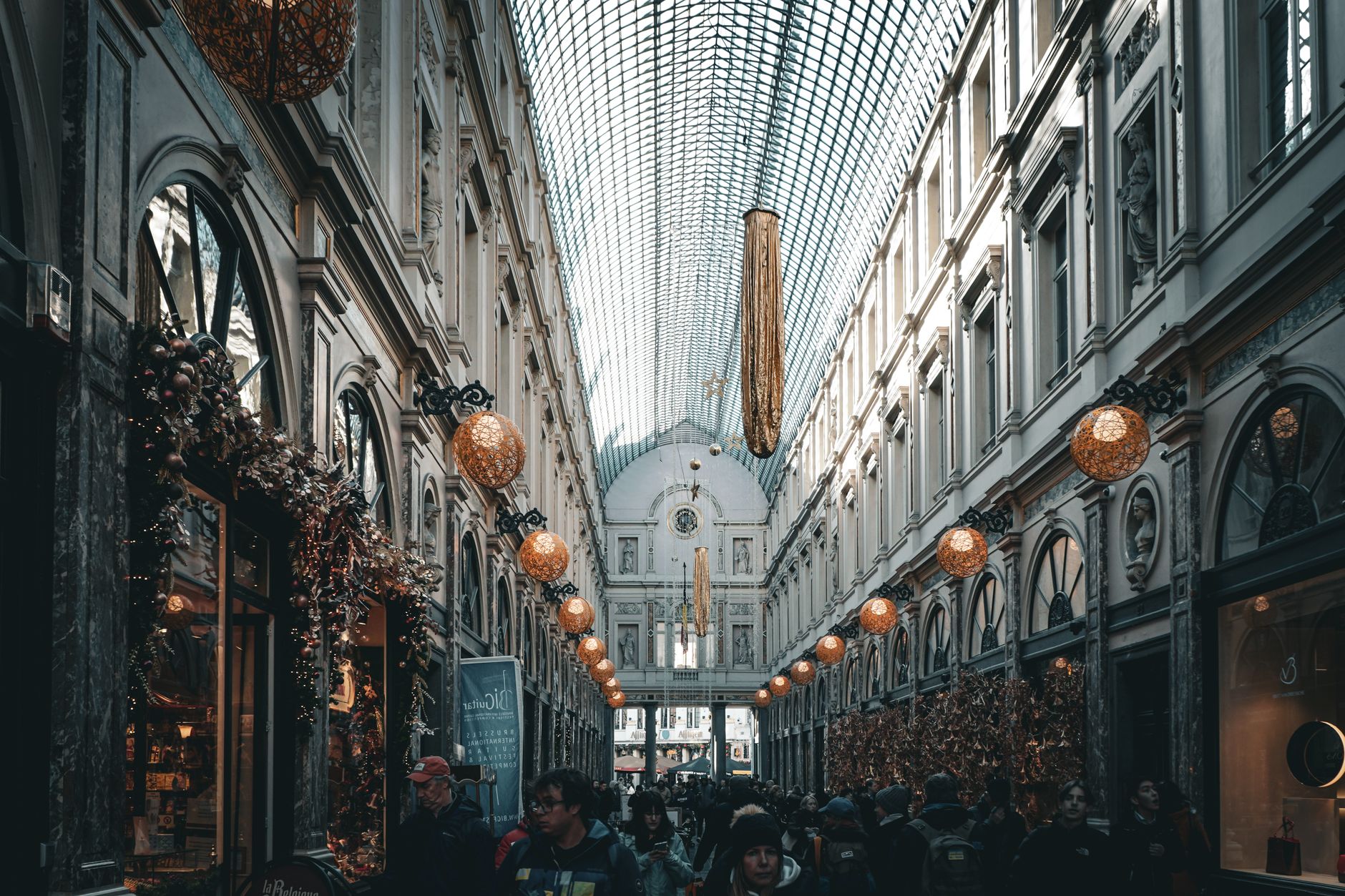
Your first two days in Europe land softer in Brussels: a compact, walkable centre, bilingual French-Dutch signage, English widely spoken, and tipping already included in the bill — less friction at exactly the jet-lagged moment you want less friction.
Give it two real days; travelers who treat Brussels as a one-day layover consistently report it undersold the city (Next Level of Travel, 2026). Day one is the centre. See the Grand Place, UNESCO-listed since 1998, just after sunrise, when first light hits the gilded guildhalls and the square is empty — by midday it's wall-to-wall tour groups. Walk two minutes to the Galeries Royales Saint-Hubert, the 1847 glass-roofed arcade, then uphill to the Sablon for chocolate without the crowds (Like a Local Guide, 2026). Manneken Pis is a 61-centimetre statue behind a barrier on a busy corner — worth two minutes as folklore, not a highlight to build a morning around.
Day two is the city most one-day visitors never see. Brussels is the birthplace of architectural Art Nouveau, and the Horta Museum in Saint-Gilles — Victor Horta's own house and studio, one of four of his town houses on the UNESCO World Heritage list — has a light-flooded stairwell worth the roughly €12 admission on its own (Horta Museum / UNESCO, 2026). Around it, Saint-Gilles and Ixelles are where everyday Brussels happens: the Marolles flea market on Place du Jeu de Balle runs from dawn to about 14:00, and Place Flagey hosts a weekend food market beside the Art Deco "paquebot" (ocean-liner-style) building. The bilingual signage takes one mental adjustment — Brussels-Midi and Brussel-Zuid are the same station — and the official STIB-MIVB transit app handles the rest in English.
4. Flemish day trips under €10
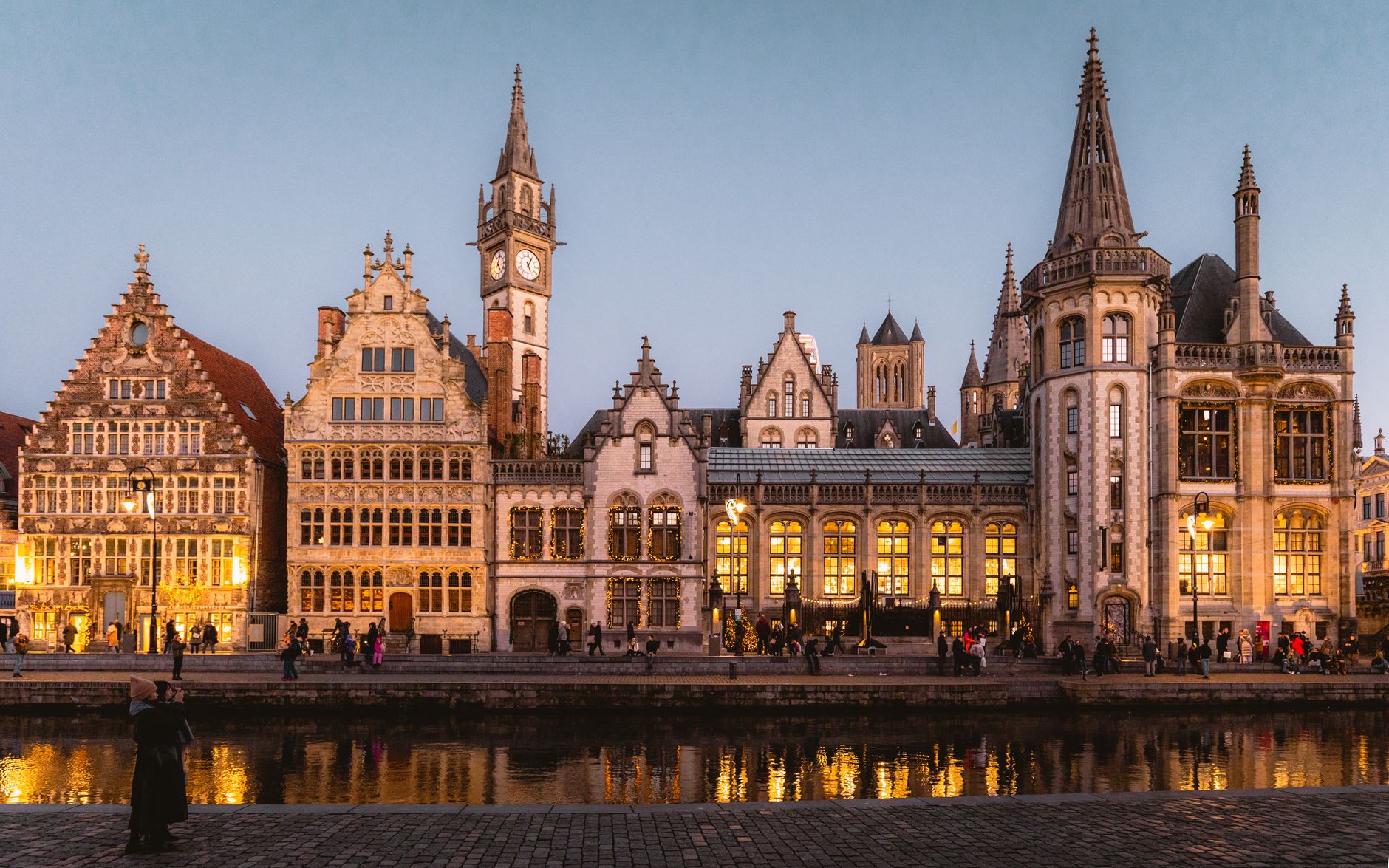
Ghent is 30 to 40 minutes from Brussels, Bruges about an hour, Antwerp 40 to 50 — each under €10 each way on frequent trains that need no advance booking; buy a one-way at the station and go (SNCB, June 2026).
Ghent is the honest first pick. Bruges gets the postcard fame — canals, a preserved medieval core, the "Venice of the North" label — but it's also the more touristed of the two, while Ghent gives you the medieval beauty plus a living university city around it (EarthTrekkers, 2026). The Graslei waterfront in late-afternoon light is the picture you came for. If you can't choose, don't: Ghent and Bruges are about 30 minutes apart by train, and one long day covers both. Antwerp is the alternative for fashion, diamonds, and Baroque.
The logistics barely register. Belgian domestic fares are fixed, trains run all day, and there's nothing to reserve — for a jet-lagged second or third day, that's exactly the right amount of friction: none. It's also a remarkably cheap day out: a round-trip to Ghent runs under €20 (SNCB, June 2026).
5. The food and beer are the point

Brussels eats and drinks like a city twice its size: double-fried frites from a proper friterie (a street frites stand, also called a fritkot), lambic (the city's spontaneously fermented sour beer) at a working brewery, and two distinct waffles.
Start with the frites. The tourist mistake is a €12 sit-down plate near the centre; the better move is a real stand — Maison Antoine on Place Jourdan is the institution, Frit Flagey and Friterie de la Chapelle the local favorites — where €3 to €5 buys a cone fried to order (Like a Local Guide / We Love Brussels, 2026). Bring cash; the stands often prefer it.
The beer story runs deeper than the famous bar. Delirium Café holds a Guinness record for the sheer number of beers it stocks, and it's a genuinely fun scene — but it's a tourist institution, not the real Brussels beer experience. That's Cantillon, a family brewery in Anderlecht making lambic, gueuze, and kriek — the spontaneously fermented family of beers unique to Brussels — the same way since 1900; the tour and tasting run about €10–€12 and are worth booking ahead (Cantillon, June 2026). Moeder Lambic in Saint-Gilles curates Belgian beer like a wine list, and Belgian beer culture as a whole sits on UNESCO's intangible-heritage list (UNESCO, 2016).
Two honest warnings. Rue des Bouchers, the restaurant strip beside the Grand Place, is the textbook tourist trap — touts, English-only menus, inflated bills (Bacon is Magic / Like a Local Guide, 2026); eat in Saint-Gilles, Ixelles, or the Marolles instead. And the "Belgian waffle" you know from North America doesn't exist here. Belgium has two: the Brussels waffle (light, rectangular, and crisp) and the Liège waffle (denser, with caramelized pearl sugar) — and locals buy them plain from a street stand for €3–€4, not buried in whipped cream for €12 (The Brussels Times / Like a Local Guide, 2025–2026).
Practical notes
A few logistics make the Brussels entry work better: book the onward train when you book the flight, treat Brussels-Midi as a transit point rather than a base, and check the new EU and UK travel authorizations before you go.
The onward leg first. Cheapest Eurostar fares to Paris and Amsterdam sell out on Fridays, Sundays, and around holidays (Eurostar, June 2026), so reserve it early — it's the half of the trip that rewards planning. Belgian rail occasionally runs reduced timetables on national strike days; check belgiantrain.be and eurostar.com before depending on a specific departure.
Treat Brussels-Midi as a place you pass through. It's the Eurostar terminus and also the city's pickpocket hotspot — if you arrive there with luggage, hop a local train two minutes to Brussels-Central and skip the surrounding streets, especially after dark (World Nomads, 2026). Stay around Sainte-Catherine, the Sablon, or Saint-Gilles instead.
Paperwork is changing in 2026. ETIAS, the EU's online travel authorization for visa-exempt visitors, is expected to launch in late 2026 — €20, valid three years, free for under-18s and over-70s; check the official site, travel-europe.europa.eu/etias, before your trip rather than relying on a date (EU official, checked June 2026). If your rail ring includes London, you also need a UK ETA (£20, valid two years) from 25 February 2026 — a separate, UK-only requirement; without it you're refused boarding at Midi (Eurostar / UK Government, 2026).
The small stuff: pull €50–€100 in cash on arrival — frites stands, markets, and Cantillon prefer it — and don't look for a tip line, because there usually isn't one; service is legally included, and a euro or two in cash covers genuinely good service (Wise / Rick Steves, 2026). May and September are the consensus best months — mild, around 18–19°C, fewer crowds — and if low fares matter most, the cheapest months from New York skew to November and January (momondo, 2026). Either way, the value of entering Europe here was never the airfare. It's the 20-minute transfer, the two-hour rail ring, and two calm days on the ground before the trip fans out.
Planning Brussels? Two more guides worth a look: 3 days in Brussels and four countries within two hours by train.
Frequently asked questions
Is it cheaper to fly into Brussels than Paris or Amsterdam from the US?
Often, no. Paris and Amsterdam are mega-hubs with denser nonstop competition from the US, and in June 2026 snapshots they frequently priced lower than Brussels on the transatlantic leg (Going.com, 2026). Brussels wins on what happens after landing: a roughly 20-minute airport train and direct trains to Paris, Amsterdam, London, and Cologne in under two hours, which makes it the stronger entry for a multi-city trip rather than a single-city one.
How do I get from Brussels Airport to the city centre?
Take the train — it leaves from a station directly beneath the terminal, reaches Brussels-Central in 17 to 20 minutes, and runs every ten minutes or so from about 5 a.m. to around midnight. Budget about €11 one way; the ticket folds in a mandatory airport supplement (Brussels Airport / SNCB, June 2026). There's no need for a taxi or shuttle unless you're traveling at unusual hours.
How many days do you need in Brussels?
Two real days, not the one-day layover many itineraries suggest — travelers consistently report that a single day undersells the city (Next Level of Travel, 2026). Use day one for the centre — the Grand Place early, the Galeries, the Sablon — and day two for the Art Nouveau quarters of Saint-Gilles and Ixelles plus Cantillon. A third day fits a Ghent or Bruges day trip before your onward train.
Can I do a day trip to Bruges or Ghent from Brussels?
Easily — it's one of the best reasons to base in Brussels. Ghent is 30 to 40 minutes away, Bruges about an hour, both under €10 each way on frequent trains with no advance booking needed (SNCB, June 2026). The two cities are about 30 minutes apart, so one long day can cover both. Ghent is the better pick if you want medieval beauty with fewer crowds.
Is Brussels worth visiting?
Yes — its grey-Eurocrat reputation undersells it badly. Brussels has a UNESCO-listed central square, the birthplace buildings of architectural Art Nouveau (four Victor Horta town houses, UNESCO-listed in 2000), Belgium's strongest single-artist museum in the Magritte, a beer culture recognized as UNESCO intangible heritage, and the densest short-haul rail connections of any Western European capital. Give it two days and it reads as surreal, walkable, and seriously good at food.