A day in Libourne from Bordeaux
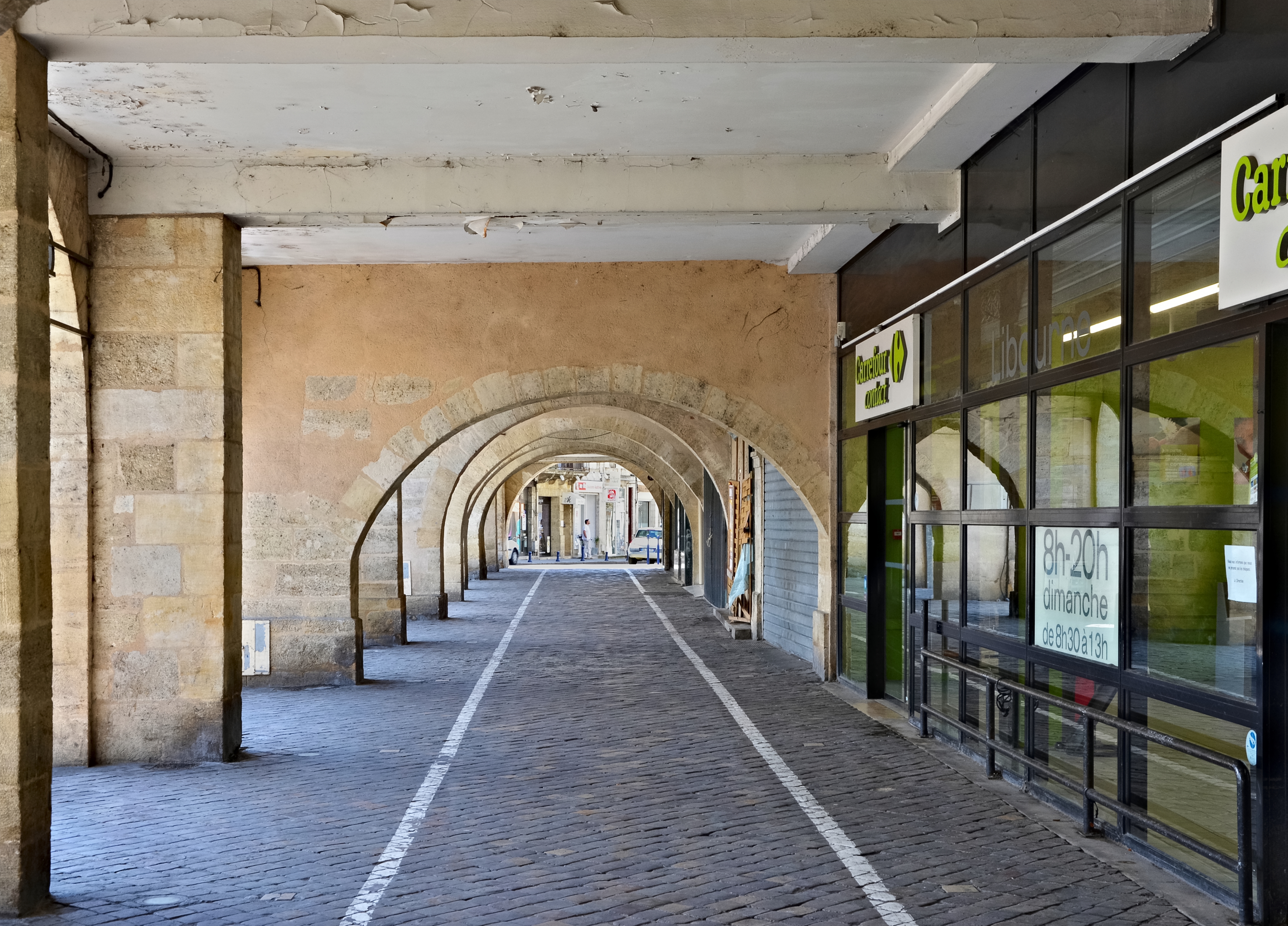
You're flying into Bordeaux, and Libourne is the right-bank market town twenty-five minutes up the line — a thirteenth-century bastide (a planned medieval new town, laid out on a grid around an arcaded square) whose Friday market is one of the biggest in the Gironde, set on the Dordogne where the great Pomerol and Saint-Émilion wines have been bought, sold, and shipped for two centuries. A Libourne day trip from Bordeaux earns its place not for another sweep of vineyards but for something the polished center of Bordeaux can't offer at the same human scale: a working town, a real market, and the riverside quarter where the right bank's wine is actually traded.
That is the honest case, and it comes with an honest boundary. Most travelers meet the name Libourne only on a station platform, because Saint-Émilion — the UNESCO village with the monolithic church — is one stop and seven minutes further down the same track, and it photographs better. If your single goal is that medieval-village postcard, get back on the train. Libourne offers a different thing: the everyday life and the commerce that the postcards leave out, with the appointment-only world of Pétrus and Le Pin sitting quietly up the road.
Why Libourne earns a day from Bordeaux
Libourne is the trading floor of Bordeaux's right bank — the market town and river port where the wines of Pomerol, Fronsac, and Saint-Émilion have long been handled, not just grown. That commercial story is the thing you cannot get in central Bordeaux or in tiny, tourist-facing Saint-Émilion, and it is what makes the day distinct.
Start with the obvious draw. Three mornings a week the arcaded Place Abel Surchamp fills with one of the largest open-air markets in the Gironde — Cap Ferret oysters, sheep's-milk cheese dusted with Espelette pepper, regional produce, the ordinary trade of a town that shops here rather than performs for visitors. It snakes into the side streets and spills under the arches where the café tables sit. Bordeaux's grand center has nothing at this scale and this everyday register; Saint-Émilion is too small and too tourist-facing to come close.
Then there is the river. Libourne is the furthest-inland navigable port on the Dordogne, roughly a hundred kilometers from the sea, and after the Pont de Pierre opened in 1824 the quays filled with deep wine warehouses — the chais (riverside cellars where wine is stored and aged) — from which right-bank barrels were floated downstream to Bordeaux and out to the world. Établissements Jean-Pierre Moueix, the house that turned Pétrus into the most famous name on the right bank after it took the wine's exclusive selling rights in 1945, still works from Quai du Priourat today. This is where the right bank does business, and it is genuinely Libourne's to tell.
Getting there from Bordeaux
Reaching Libourne is about as easy as a day trip gets: direct TER trains from Bordeaux Saint-Jean run the trip in roughly 25 minutes, the faster services in about 20, with well over twenty departures each direction through the day. Tickets are cheap and walk-up — around €5–€10 one-way in second class, with no advance booking needed; buy them at the station or on the SNCF Connect or Trainline app (SNCF Connect, 2026). From Libourne's station, the bastide center is a flat ten-minute walk.
The wrinkle is the wine country, not the town. Rail effectively only delivers you to the town itself and, one stop on, to Saint-Émilion's station — and even there the village is a 1.5-kilometer uphill walk or a small paid shuttle from the platform. Pomerol has no public transport and no village to walk to at all. The appellation (a legally defined wine-growing area) is a plateau of small roads with no real center, and its estates open by appointment only — Pétrus does no tours whatsoever. So the realistic shapes are simple: take the train in for the town and the market, and treat right-bank tasting as a pre-booked add-on reached by car, taxi, bike, or a booked tour; or, if vineyards are the whole point of your day, drive from Bordeaux on the A89 in about 35–40 minutes, which is the only way to direct yourself between châteaux. Set that expectation before you go, so no one arrives by train expecting to stroll into a great estate.
A day in Libourne
A good Libourne day runs on the market in the morning and the river in the afternoon: land on the square as the stalls hit full swing, eat under the arcades, then walk the quays and the wine-trade quarter before an evening train back. Four or five unhurried stops fill the day, all of them within a flat ten-minute radius.
Place Abel Surchamp and the bastide arcades
Begin on the central square, the heart of the thirteenth-century bastide grid, ringed on all four sides by stone arcades with the fifteenth-century town hall on one edge and café tables under the arches. It is the town's living room and the single best place to feel what Libourne is. On a market morning the whole space is in motion; on a quiet day it is still a fine place to sit with a coffee and watch a real town go about its business.
Give yourself a few minutes to find the bastide logic — the straight streets running off each corner of the square, the way the grid was drawn in one go around 1270 rather than tangled together over centuries. That deliberate plan is the English-founder's signature, and it is the reason the center is so flat and so easy to walk.

The Friday market
Time the whole day around this. Three mornings a week — Tuesday, Friday, and Sunday, with Friday by far the biggest — the square hosts a market that has run here for centuries and fills its roughly three thousand square meters before spilling into the surrounding streets. A covered market runs Tuesday through Sunday for the days you miss the open-air one.
This is the reason to come. Walk it with cash and an appetite: oysters shucked at the stall, cheeses and charcuterie, nougat, fruit and vegetables trucked in from the surrounding Gironde. It is unhurried and unstaged, the trade of people who live here. Aim to be on the square between about 9 a.m. and 1 p.m. for the peak, then settle in for lunch at one of the arcade cafés or a riverside bistro just off the square — the natural pairing with a market morning.

The Dordogne quays and the wine-trade quarter
After lunch, walk down to the river. The quays are where Libourne's wine-trade story is written into the buildings: the deep nineteenth-century chais along the waterfront, the négociant quarter (a négociant is a wine merchant who buys, blends, ages, and ships wine), and the working headquarters of JP Moueix on Quai du Priourat. None of it is a ticketed attraction — Moueix is a business, viewed from the outside — but a slow walk past the warehouse fronts is a free and atmospheric way to understand how the right bank turned its Merlot into a global name. This is the part of the wine country that the vineyard tours skip: not where the wine is grown, but where it was bought, sold, and floated out to the world.
If tasting the wines themselves is the goal, this is the spot to be honest with yourself about. Pomerol and its neighbors — Lalande-de-Pomerol, Fronsac — are right-bank Merlot appellations (richer and earlier-drinking than the Cabernet blends of the left bank), and the good news is you cannot taste them in central Bordeaux. The catch is everything above: no village, no walk-ups, appointment-and-transport only. Book an estate visit in advance and arrange a car, a taxi, a bike, or a tour from Libourne or Bordeaux; the harvest weeks of mid-September to mid-October are the most atmospheric time to do it, with the caveat that picking can limit access.
Tour du Grand Port
At the north end of the wine quarter stands the Tour du Grand Port, the last surviving gateway of Libourne's medieval fortifications, a classified monument looking out over the river. It is an exterior-viewing stop rather than a museum, and it takes only a few minutes, but it ties the town's English-port founding to something solid you can stand beneath — the point where the bastide met the water and controlled who came up the Dordogne. Fold it into the quays walk; it sits naturally at the end of it.
Musée des Beaux-Arts et d'Archéologie
Close the afternoon, or duck in if the weather turns, at the small fine-arts and archaeology museum above the town hall on the square. It is free, and it is a surprisingly strong stop for a town this size, with European works spanning the fourteenth to twentieth centuries and names including Toulouse-Lautrec, Rodin, and Foujita. The local thread worth knowing: the painter René Princeteau, a Libourne native, was an early mentor of the young Toulouse-Lautrec — a quiet connection almost no visitor expects to find here. Check current opening hours before you rely on it (Michelin Green Guide, 2025).
Back to Bordeaux
Direct TER trains from Libourne to Bordeaux Saint-Jean run into the evening, with the last direct services falling in the 21:45-and-later band and later mainline options often running beyond that. The exact final departure shifts by day and season, so confirm it on SNCF Connect for your date and leave a buffer. The walk from the square back to the station is a flat ten minutes.
You flew into Bordeaux, and Libourne earned a day for the things the city and the famous village don't have: a real market on a medieval square, and the riverside quarter where the right bank's wine has been traded for two hundred years. If you still have an afternoon and want the postcard too, Saint-Émilion is one stop on — but budget for the uphill kilometer-and-a-half from its station, and treat it as a bonus rather than a guarantee. Done as its own thing, the morning in Libourne is the part you'll remember.
Practical notes
The single rule that makes or breaks the day is simple: come on a market morning, ideally Friday, with Sunday as the fallback if a Friday won't fit. On a quiet weekday the town is pleasant but thin, and the market is the whole point — be on Place Abel Surchamp by mid-morning to catch it at its fullest, and bring cash for the stalls (cards are normal in cafés and restaurants). Lunch on or just off the square pairs naturally with the market.
The Pomerol reality bears repeating because it surprises people: there is no village to visit and no transit to the vineyards, and the great estates do not do walk-up tourism. If right-bank tasting is on your list, book an appointment in advance and sort out a car, taxi, bike, or tour before you arrive. Treat it as a planned add-on, not something you can improvise once you step off the train.
A few smaller notes. The bastide center and the quays are flat and easy underfoot — gentler than Saint-Émilion's steep cobbles, which makes Libourne the kinder right-bank option if you'd rather not climb. In the warm months, the tourist office runs short Dordogne river cruises from the quays, a low-commitment way to see the inland-port setting from the water. French is the working language; you'll find some English in tourism and wine settings, less than in Bordeaux city — a smile and a few words go a long way in a town that isn't built for tourists. And on money: round up at cafés, leave a few percent at a sit-down meal, nothing expected for taxis.
Frequently asked questions
Is Libourne worth visiting, or is it just the train change for Saint-Émilion?
It is worth a day on its own terms, but only if you want the right thing. Libourne is a working market town and the trading center of the right-bank wine country — the big Friday market, the riverside warehouses, the arcaded square. If your one goal is the Saint-Émilion postcard, ride on through.
How do I get from Bordeaux to Libourne, and how long does it take?
Direct TER trains run from Bordeaux Saint-Jean to Libourne in about 25 minutes, with well over 20 services a day each direction. Fares are walk-up, around €5–€10 one-way in second class. The town center is a flat ten-minute walk from Libourne station (SNCF Connect, 2026).
When is the Libourne market, and which day is best?
The open-air market on Place Abel Surchamp runs Tuesday, Friday, and Sunday mornings, and a covered market runs Tuesday through Sunday. Friday is the big one — among the largest in the Gironde — so time your day for Friday, with Sunday as the fallback. Aim to be there mid-morning, roughly 9 a.m. to 1 p.m.
Can you actually visit Pomerol wineries like Pétrus or Le Pin?
Not on a walk-up basis. Pomerol has no village and no public transport, and the famous estates — Pétrus does no tours at all — don't receive casual visitors. Right-bank tasting means a pre-booked appointment at an estate that takes visitors, reached by car, taxi, bike, or an organized tour (Cellar Tours, 2026).
What is a bastide, and why is Libourne called an English town?
A bastide is a planned medieval new town, usually laid out on a tidy grid around an arcaded central square. Libourne was founded around 1269–1270 under English rule and named for Roger de Leybourne, a lieutenant of Edward I — Leyburn became Libourne over time (Tourisme Libournais, 2025).
Libourne or Saint-Émilion — which should I do from Bordeaux?
Different days. Saint-Émilion is the medieval village with the monolithic church and ramparts; Libourne is the flat, lived-in market town and the wine-trade hub. If you want one postcard, choose Saint-Émilion. If you want a real-town morning and the commercial story of the right bank, choose Libourne. Doing both well in one day is tight.
Is one day enough for Libourne?
Yes — a day is the right amount. A market morning on the square, lunch under the arcades, an afternoon along the wine-trade quays and the museum, and an evening train back fills the day comfortably. There is no Libourne-specific reason to stay overnight; any case for that is really a wider wine-country trip.