A weekend in Ávila from Madrid
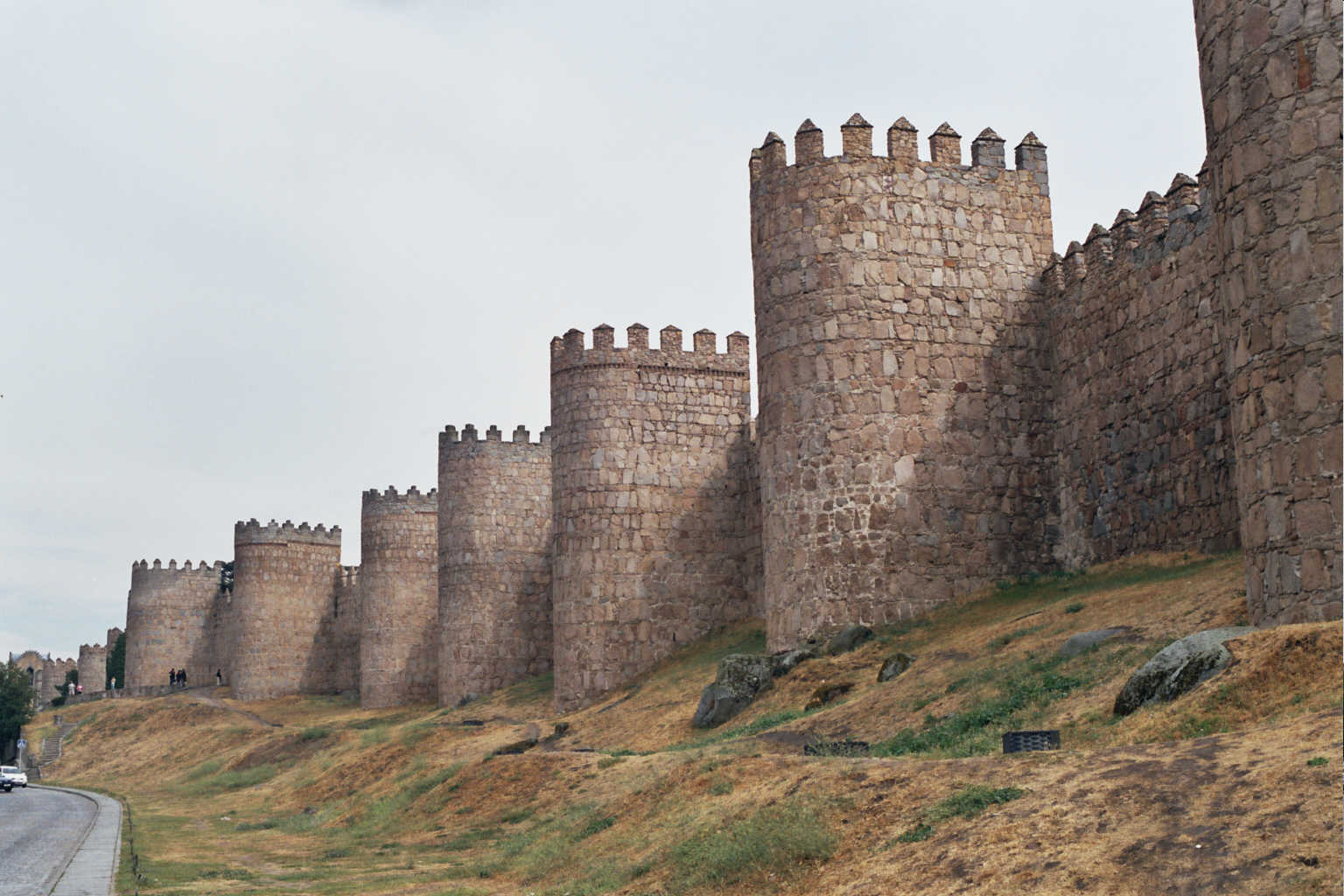
Ávila's city walls have been standing since 1090. You're flying into Madrid — here's why Ávila earns a weekend. Most travelers who come at all do it in a day: the train in the morning, the walls and cathedral by noon, a quick lunch, the train back. That is enough to understand what Ávila is. It is not enough to understand what it feels like after the day-trippers leave — when the honey-colored granite comes up under the uplighting and the streets inside the walls go quiet in a cold that has everything to do with being at 1,132 metres above sea level. That silence and that light are what a night here earns you. And the second morning opens the Monasterio de la Encarnación — the Carmelite convent where Teresa de Ávila actually lived, was prioress, and wrote — in a way that can't be rushed between a train schedule and the wall walk.
Ávila is not a city that performs for you. The stone is grey and honey-colored, the aesthetic is Castilian and serious, and the atmosphere is more austere than the tourist shorthand of "walled medieval city" suggests. Toledo has the Greco paintings; Segovia has the fairy-tale alcázar. Ávila has something different: the most complete medieval defensive circuit in Spain, a fortified cathedral, a St. Teresa literary geography with two sites that tell one coherent story, and a beef culture — the chuletón de Ávila (a thick beef T-bone from local Ávila cattle, seared over oak embers) — that is taken seriously in a way that outlasts the visit. That is the case for two days here.
Getting to Ávila from Madrid
The direct Renfe Media Distancia (regional rail) train from Madrid Chamartín-Clara Campoamor to Ávila is the cleanest option: no changes, around 1h 44m–1h 55m, with roughly 14–17 departures per day in each direction and fares from €9.25 each way (Trainline.com, June 2026).
The Ávila station is a 10–15 minute walk from the old-town walls on flat ground, or a short taxi ride (roughly €5–€7). For the outbound journey, take the morning train to give yourself a full first day inside the walls. The last return from Ávila to Madrid departs around 22:00–22:30 — check the exact time at renfe.com on your travel day, as schedules vary seasonally.
The bus alternative runs from Madrid's Estación Sur (Méndez Álvaro metro) with up to 21 daily departures and a journey of around 90 minutes at €12–€16 each way. The Ávila bus station deposits you closer to the old town than the train station; the trade-off is the Méndez Álvaro metro connection from Madrid's central zones, which adds 30–40 minutes to your door-to-door time. By car via the AP-6 toll road, the trip is about 113 km and 1h 15m without traffic — useful if you want to reach Los Cuatro Postes on Day 2 without relying on a taxi.
Quick reference — Getting there:
- Train (Renfe Media Distancia): Madrid Chamartín → Ávila; 1h 44m–1h 55m; from €9.25 each way; ~14–17 trains/day. Book at renfe.com or Trainline. (Trainline.com, June 2026)
- Bus (ALSA): Madrid Estación Sur (Méndez Álvaro) → Ávila; ~90 min; €12–€16 each way; up to 21 departures/day. (Busbud.com, June 2026)
- Car (AP-6): ~113 km; ~1h 15m; parking outside the walls.
- Station to walls: 10–15 min walk or taxi (~€5–€7).
- Last return (train): approximately 22:00–22:30 — verify at renfe.com.

Day 1 — The wall walk, the fortified cathedral, Teresa's birthplace, and the illuminated evening circuit
Day 1 moves from the ramparts at morning — stork nests at eye level, the plateau visible in every direction — through the fortified cathedral and a chuletón lunch, and ends at the exterior perimeter walk after dark when uplighting changes the stone entirely.
The city walls — Murallas de Ávila
The most complete medieval defensive circuit in Spain encloses the entire Ávila old town in a 2.5 km perimeter of honey-colored granite, 12 metres high, with 88 semicircular towers and nine monumental gates — built between 1090 and the 14th century and still standing fully intact, a UNESCO World Heritage designation since 1985. Arrive early and climb before the 14:00–16:00 free-access window fills with day-trippers.
The walkable section is 1.5 km, accessible in three segments at different gates. What the rampart does that the streets below cannot is give you the spatial logic of the city from above: looking east toward the cathedral apse built into the fortifications, looking west over the Castilian plateau stretching flat in every direction to a horizon that seems too far away for the altitude. At eye level: stork nests occupying the tower ledges, unhurried, the nesting-pole silhouettes visible against the morning sky. The street plan below has barely shifted its spatial logic since the 12th century. Allow 45–60 minutes, more if the light is good.
Quick reference — City walls:
- Hours: Summer (July–Aug) 10:00–21:00; spring/autumn 10:00–20:00; winter (Oct 29–Mar 22) 10:00–18:00; closed Mondays in winter.
- Ticket: €3.50 standard, €2 reduced; free daily 14:00–16:00 except public holidays.
- Tip: Do the wall walk in the morning before the free-access afternoon window. (avilaturismo.com, 2025; inspain.org, 2025)
The Cathedral of Ávila
The architectural fact that earns its own paragraph: the Cathedral of Ávila's apse — the rounded eastern end housing the high altar — is physically built into the defensive wall. From outside the city, what you see is a fortress tower; from inside the nave, you're standing in one of the first Gothic cathedrals in Spain. The transition from Romanesque construction began in the 12th century, and the result is a building that is simultaneously a place of worship and a piece of military engineering, the two functions fused rather than adjacent.
Inside, the nave is lit by the local sandstone called piedra sangrante (the red-ochre stone quarried in the region, stained deep amber by iron deposits) — not vivid, exactly, but atmospheric in low light in the way that ochre stone is: warm without being warm, the color working on you slowly. The altarpiece by Vasco de la Zarza is worth stopping in front of. Allow 45–60 minutes.
Quick reference — Cathedral:
- Hours: Tue–Sun (verify seasonal hours at avilaturismo.com).
- Ticket: approximately €7 — verify the latest admission fee at avilaturismo.com before visiting. (avilaturismo.com, 2025)
The Convento de Santa Teresa
A 17th-century Baroque convent built over the house where Teresa de Cepeda y Ahumada was born in 1515 — the opening entry point in a two-site story about one of the major figures in Spanish intellectual history. This is where the narrative thread starts.
Teresa entered a Carmelite convent in Ávila at age 20, wrote the Interior Castle and The Way of Perfection while in and around the city, founded 17 reformed Carmelite communities, and navigated the politics of Counter-Reformation Spain in a way that no woman in any comparable position had managed before her. The Catholic Church recognized her in 1970 as the first female Doctor of the Church. The convent museum here gives you the origin — her birthplace, early relics, manuscripts — in a context that makes the Monasterio de la Encarnación on Day 2 land properly. Allow 30–45 minutes.
Quick reference — Convento de Santa Teresa:
- Hours: Daily; church free, museum €2.
- Location: Plaza de la Santa, 2 — inside the walled old town. (turismocastillayleon.com, 2025)
Chuletón de Ávila lunch
The chuletón de Ávila — a thick T-bone steak from local Ávila cattle, seared over oak embers and served blushing rare — earns the same seriousness here that boquerones earn in Málaga or percebes earn in Galicia: this is the thing Ávila is producing that you cannot replicate elsewhere in the same way. The Carne de Ávila PGI (Protected Geographical Indication) designation is a European food certification; the beef is specific to the province's high-altitude cattle and has a buttery texture that is distinct from standard Spanish asador fare.
Restaurants on and around the Plaza del Mercado Grande serve it at lunch without the prices of a Madrid asador. Bococo is the local recommendation with a reservation on weekends; Los Candiles and Bar Sur are alternatives within easy reach. Half portions are available at some restaurants if you want to eat light before the evening walk. Lunch service runs 13:30–15:30; book ahead at Bococo on a Saturday.
Quick reference — Chuletón lunch:
- Bococo: Plaza del Mercado Grande area; book ahead on weekends.
- Budget: €25–€40 per person with wine; half portions available. (devourtours.com, 2024)
Evening: the illuminated walls exterior walk
After dinner, the case for staying overnight becomes a tangible thing: the city walls after dark are lit by a focused uplighting system that renders the honey-colored granite in a quality of light that doesn't exist at noon. The colour of the stone, the precision of the uplighting, the silence after day-trippers clear — these are specific and worth naming, because they are what makes the difference between an understanding of Ávila and a memory of it.
Walk the exterior perimeter — free, no closing time, no tickets — as the old town streets inside the walls go quiet. The temperature drops with the altitude in a way that is not unpleasant when you are dressed for it: cold air, close stone, the towers measured out in the lamplight. This is the evening that earns the overnight.
Where to stay overnight
For most visitors, staying inside or just outside the old-town walls is the obvious choice: the city is walkable and quiet, and proximity to both Day 1's evening walk and Day 2's morning start matters in a city this size.
The Parador de Ávila (inside the walls, a 16th-century Renaissance palace attached to the medieval wall itself) is the best-in-class option — atmospheric, well-located, and often available at €120–€180 per night depending on season. Several mid-range hotels within or just outside the walls run €60–€90 per night. Two nights is the right scope; the city does not carry a third day's itinerary without reaching outside its core.

Day 2 — Teresa's convent, yemas, and Los Cuatro Postes at golden hour
Day 2 opens at the Monasterio de la Encarnación — where Teresa actually lived, served as prioress, and wrote — before day-trippers arrive, then moves to a yemas (Ávila's signature egg-yolk and sugar confections) stop and out to Los Cuatro Postes for the panoramic view.
Monasterio de la Encarnación — the overnight differentiator
The reason to spend a second morning in Ávila rather than the first is this: the Monasterio de la Encarnación sits 10 minutes outside the old-town walls, opens at 09:30 on weekdays (10:00 weekends), and rewards an unhurried two hours — which is precisely what the day-tripper arriving at 11:00 and navigating the wall-walk cannot give it.
This is where Teresa entered the Carmelite order at age 20 in 1535, where she later served as prioress and where she wrote major portions of her work. Her preserved cell is here — modest, whitewashed, completely legible as the space of a serious working life. So is the communication window through which she and St. John of the Cross, confined to opposite sides of the grille during her term as prioress, conducted the spiritual exchanges that shaped both of their writing. The museum holds letters, manuscripts, and personal objects; the convent itself is still active. The Day 1 visit to the Convento de Santa Teresa — her birthplace — was the beginning of this story. The Encarnación is where she actually lived it.
Allow 45–60 minutes minimum. The walk from the old town to the monastery is pleasant and flat; taxis are available if you prefer.
Quick reference — Monasterio de la Encarnación:
- Hours: Mon–Fri 09:30–13:00, 16:00–18:00; Sat–Sun and holidays 10:00–13:00, 16:00–18:00.
- Ticket: €2 standard, €1.50 reduced.
- Location: 10-minute walk outside the old-town walls; Paseo de la Encarnación. (inspain.org, 2025; avilaturismo.com, 2025)
Yemas de Santa Teresa — the box for the return journey
Near the Convento de Santa Teresa in the old town, pick up a box of yemas de Santa Teresa (small egg yolk and sugar confections — Ávila's most traditional sweet, made from egg yolks, sugar, and lemon zest, round-rolled and lightly glazed). They are specific to Ávila in the way that a product with a genuine regional tradition is specific: you can find versions elsewhere, but the association here is real and the quality at the good shops is straightforwardly good.
La Flor de Castilla (Plaza José Tomé) and Chuchi Pasteles are the two most recommended shops. A box of six runs €4–€6. Buy them here rather than in Madrid.
Los Cuatro Postes — the whole city from outside
From inside the walls, you read the fortifications at human scale — tower by tower, gate by gate, the stone close in. From Los Cuatro Postes, 500 metres north of the city on the N-403 road, the entire circuit becomes legible at once: the full 2.5 km perimeter counted out against the Castilian plateau, the towers in sequence, the cathedral apse resolved into the wall, the altitude of the plateau clear against the surrounding landscape.
The monument itself is a 16th-century grouping of four Doric columns and a stone cross, a stopping point on the camino from Salamanca. What draws visitors is the view. Come in late afternoon for the best light on the honey-colored stone — the same warm sidelight that the Los Cuatro Postes framing has produced in photographs for decades, a view that is genuinely as good as its reputation. The ÁVILA letter installation nearby has become a standard stop; arrive before 17:00 on a summer Saturday if you want the view without a crowd.
By car: 5 minutes from any parking point near the north gate. By taxi from the old town: €5–€8 return, most drivers will wait. On foot: 15 minutes from the Puerta del Puente (north gate) — manageable but slightly exposed on the road shoulder.
Quick reference — Los Cuatro Postes:
- Access: Free, open viewpoint, no closing time.
- Getting there: 500m from the north gate on N-403; 5 min by car/taxi, 15 min walk.
Back to Madrid
Ávila's train station is a 10–15 minute walk from the old-town walls — or a short taxi ride if you have bags — and the direct Renfe Media Distancia service runs back to Madrid Chamartín in under 2 hours. You're flying into Madrid; the excursion loop closes cleanly.
The last train from Ávila to Madrid departs around 22:00–22:30, giving you a long afternoon after Los Cuatro Postes. Verify the exact final departure at renfe.com on your travel day — timing varies by day and season, and missing the last direct service means a bus or an overnight you didn't plan for. An earlier departure (18:00–20:00) works well if you want to be back in Madrid for dinner; the Chamartín–city-centre metro connection is direct.
Quick reference — Return:
- Ávila station to old town: 10–15 min walk or taxi (~€5–€7).
- Train: Direct Renfe Media Distancia to Madrid Chamartín; under 2 hours.
- Last departure: approximately 22:00–22:30 — verify at renfe.com. (Trainline.com, June 2026)
Practical notes
Before you leave Madrid, a few logistics that shape the overnight visit: the altitude gap between the two cities changes what you pack; the wall walk has a seasonal closure on Mondays; the cathedral admission price shifts periodically; and the last direct train home has a hard cutoff.
Altitude and temperature. Ávila at 1,132m runs 5–8°C cooler than Madrid year-round. In winter (November–March), nights regularly drop below 0°C with possible frost. In spring and autumn, evenings on the walls are cold enough to require a layer even when the afternoon felt mild. In summer (July–August), daytime temperatures reach 20–25°C but evenings cool quickly. Pack a mid-layer for any visit outside July–August; pack a proper winter coat for November–February.
Wall timing. The wall walk closes on Mondays between October 29 and March 22. Planning a winter visit on a Monday means missing the main draw. The free 14:00–16:00 access window is the busiest; do your wall walk in the morning.
Cathedral price. Admission is approximately €7 as of 2025 — verify the up-to-date price at avilaturismo.com before visiting, as prices are periodically updated.
Festival timing. The Fiesta de Santa Teresa (October 8–17, feast day October 15) is the city's main annual event: processions, concerts, fireworks, and yemas at every counter. Accommodation books out; reserve 4–6 weeks ahead. The Festival Medieval (September, dates vary annually) brings a second surge — check the calendar at avilaturismo.com and book early.
Language. Spanish (Castilian) is universal. English is spoken in most tourist-facing restaurants and hotels but less consistently than in Madrid.
Quick reference — Practical notes:
- Altitude: 1,132m; 5–8°C cooler than Madrid; sub-zero winter nights.
- Wall walk closed: Mondays Oct 29–Mar 22.
- Cathedral admission: ~€7 — verify at avilaturismo.com. (avilaturismo.com, 2025)
- Fiesta de Santa Teresa: Oct 8–17; book accommodation 4–6 weeks ahead.
- Last train to Madrid: ~22:00–22:30 — verify at renfe.com on travel day.
- Visa: Spain is Schengen; US/EU passport holders enter visa-free. (US State Department, 2025)
- Currency: Euro (€).
Frequently asked questions
Is Ávila worth a weekend over a day trip from Madrid?
A weekend unlocks what a day trip can't reach: the illuminated walls after dark, the slower rhythm of the walled city once day-trip crowds leave, and a proper morning at the Monasterio de la Encarnación without competing against your wall-walk timing. The Parador de Ávila, inside the walls, is one of the most atmospheric overnight options in the Madrid excursion circuit.
How do I get from Madrid to Ávila?
The direct Renfe Media Distancia (regional rail) train from Madrid Chamartín-Clara Campoamor to Ávila takes 1h 44m–1h 55m and costs from €9.25 each way (Trainline.com, June 2026). Around 14–17 trains run daily in each direction; the last return from Ávila departs around 22:00–22:30 — check the exact schedule at renfe.com on your travel day. Advance booking secures the lowest fares.
Can I walk on top of Ávila's city walls?
Yes — 1.5 km of the wall is open for walking in three sections, accessed at different gates. Standard hours are 10:00–20:00 in spring and autumn (10:00–21:00 July–August, 10:00–18:00 winter). The walls close on Mondays between October 29 and March 22. Ticket €3.50; a free-access window runs daily from 14:00–16:00 (except public holidays). Confirm current hours at avilaturismo.com before you go.
What makes the Monasterio de la Encarnación different from the Convento de Santa Teresa?
The Convento de Santa Teresa stands on Teresa's birthplace — a Baroque shrine to her origins. The Monasterio de la Encarnación is where she actually lived for more than two decades: it holds her original cell, the communication window through which she spoke with St. John of the Cross, and a collection of manuscripts and personal objects. It's a quieter, more direct encounter with the historical Teresa.
What should I eat in Ávila?
The signature dish is the chuletón de Ávila (a thick T-bone steak from local Ávila cattle, seared over oak embers), served blushing rare and specific to the province's high-altitude beef culture. Look for the Carne de Ávila PGI (Protected Geographical Indication) designation on menus. Budget €25–€40 per person with wine. For sweets, pick up yemas de Santa Teresa (small egg yolk and sugar confections, Ávila's most traditional sweet) from a pastry shop near the Convento de Santa Teresa.
What is the cold like in Ávila compared to Madrid?
Ávila sits at 1,132m above sea level — one of the highest provincial capitals in Spain — and runs consistently 5–8°C cooler than Madrid year-round. In winter, temperatures regularly drop below 0°C at night with possible frost. Even in late spring or early autumn, evenings on the walls call for an extra layer. Pack accordingly; the cuisine is calibrated to the altitude for good reason.
What are yemas de Santa Teresa?
Yemas de Santa Teresa are small, round egg yolk and sugar confections — Ávila's most iconic sweet, traditionally associated with the feast of Santa Teresa on October 15th. They're made from egg yolks, sugar, and lemon zest, rolled into balls and given a thin sugar glaze. You'll find them year-round at pastry shops throughout the old town, particularly at La Flor de Castilla and Chuchi Pasteles. A box of six costs around €4–€6.
When is the best time to visit Ávila from Madrid?
Spring (April–June) offers comfortable temperatures of 15–22°C, clear skies for the wall walk, and wildflowers on the surrounding plateau — the most reliable visiting window. October 8–17 brings the Fiesta de Santa Teresa, Ávila's main annual festival, with processions and fireworks; book accommodation 4–6 weeks ahead. Winter is quieter and cold (sub-zero nights), but the austere Castilian landscape in low light has its own quality for travelers who don't mind layers.