
A weekend in Bergerac from Bordeaux
You're flying into Bordeaux, and you've blocked out a weekend trip from Bordeaux for somewhere that isn't more of the grand city. Ninety minutes east by direct train, the Dordogne river runs through Bergerac — a walled old town of timbered houses, a wine that is genuinely not Bordeaux, and just south of it a Renaissance château standing over slopes that make one of France's great golden wines. A single day handles the town. The reason to stay the night is everything outside it: the vineyard countryside you can only reach with a car. You're flying into Bordeaux — here's why Bergerac earns a weekend.
The honest split is simple. Day one is the river town, and the direct train delivers all of it — the medieval lanes, the wine house in an old cloister, a long Périgord lunch, the slow evening after the day-trippers have gone. Day two is the half a day trip leaves behind: Château de Monbazillac over its noble-rot slope, a dry-wine estate that shows the other side of this wine, and a medieval market village twenty minutes out. That second day is the whole case for an overnight.
Why Bergerac is worth two days, not one
Bergerac rewards an overnight because its best half — the vineyard countryside south of town — sits beyond the reach of a single train-bound day, and only a car and a second morning bring it within reach. The town is one trip; the wine country around it is another, and a weekend stitches the two together.
Start with the wine, because it is the thing most people get wrong before they arrive. Bergerac is its own appellation — the legally defined area whose name a wine is allowed to carry — and it is not Bordeaux, even though it sits barely over the line. When France drew the modern boundaries of the Bordeaux growing area in the last century, it tied them to the Gironde department line, and Bergerac, just inside the Dordogne, lost the right to the Bordeaux name and had to build an identity of its own (Bergerac wine, Wikipedia, 2025). Same grapes, different place: the inland climate runs more continental, with colder winters and hotter summers, so the reds come out softer and fruitier than their Gironde cousins. This is the case for the detour — a wine you cannot taste in Bordeaux by that name, in a river town the grand city doesn't contain.
Then there is the sweet wine, which is the reason the second day exists. South of town, the slopes of Monbazillac make a late-harvest golden white where autumn river mists bring noble rot — botrytis, a benign fungus that shrivels the grapes on the vine and concentrates their sugar — onto Sémillon and Muscadelle, picked by hand in pass after pass through the rows. It is the kind of wine usually filed under Sauternes; Monbazillac is its quieter, cheaper neighbor, and the château that crowns the vineyard is half medieval fortress, half Renaissance show-off. You cannot do that on a train. That is what a weekend buys.
Getting there from Bordeaux
The town runs on one direct train and the countryside on a car, so a Bergerac weekend takes both — the rail line for day one in the old town, wheels for day two in the vineyards.
TER Nouvelle-Aquitaine operates roughly fifteen direct services a day between Bordeaux Saint-Jean and Bergerac, no transfers, on the Bordeaux–Sarlat line, and from the station it's about a twelve-minute walk down into the riverside center.
For day one, the train is the cleaner choice — flat walk in, no parking, no fuss. The first departure leaves Bordeaux around 05:33, so you can be in Bergerac for a long morning. For day two, you want wheels. Château de Monbazillac sits about 7 km south of town, up on the slope, with no useful public line to it, and the small wineries are scattered through the countryside. A weekend built around the vineyards effectively wants a car anyway, which also widens where you can stay. If you arrive by train, you can still reach the château by a short taxi or a rented bike for the uphill ride — but the more wine country you want, the more a car earns its keep.
Quick reference
- Rail: Bordeaux Saint-Jean → Bergerac, direct TER Nouvelle-Aquitaine, ~1h10–1h25, ~15 services/day each way; from ~€10 one-way, roughly €20 round-trip 2nd class; book on SNCF Connect, the TER site, or Omio (TER Nouvelle-Aquitaine / SNCF Connect / Omio, 2026).
- Drive: ~120 km / 75 mi via the A89 and local roads, about 1h15–1h30; parking at the edge of the old town (Dordogne travel guides, 2025).
- Last train back: last Bergerac → Bordeaux Saint-Jean departure around 20:11 — verify on the day (SNCF Connect / Omio, 2026).
Day 1: The Cyrano river town
Day one is the walkable, car-free half of the weekend — the medieval quarter, the wine house, the Cyrano squares, and a long Périgord lunch, all on foot from the station and all of it doable on the train alone.
The Vieux Bergerac
The Vieux Bergerac is the medieval old town by the river — timbered houses, narrow lanes, small squares — and an hour or two on foot here carries both the wine-trade history and the town's odd literary face.
You walk into timbered houses, narrow stone lanes, small squares, and terraces, many of the old facades restored and protected. It is human-scale in a way Bordeaux's grand center is not, and you feel that the moment you turn off the main street and the noise drops away. An old woman waters geraniums from a first-floor window over a lane barely wide enough for a café table. There's no single sight to tick off here; the quarter itself is the thing, and wandering it with no plan is the point.

The Cyrano squares
Two small squares carry the town's literary face — Place Pélissière and Place de la Myrpe — each with a statue of Cyrano de Bergerac, and together the best café-terrace pause in the old town.
You sit under the long-nosed hero of Edmond Rostand's play, on Place Pélissière with its 2005 figure or Place de la Myrpe with an older one from 1977. Be straight with yourself about the connection, though: Cyrano is fictional, and the real Savinien de Cyrano never lived in Bergerac. The town simply adopted him. The squares are a terrace-and-photo stop, not a deep historical site — and they're better for it, because nobody's pretending otherwise.
The Maison des Vins
The Maison des Vins de Bergerac, in a 17th-century cloister above the river, is the single best place to taste the range of this wine without a car — and it sets up everything you'll see in the vineyards tomorrow.
Inside the old cloister you can taste across the dry whites, the soft reds, and the sweet Monbazillac side by side, with staff to walk you through how the appellation works — the legally defined area whose name a wine is allowed to carry — and what makes each one different. Taste widely here on the first day. A pourer will set the sweet Monbazillac next to a dry white from the same grapes and let you feel the gap yourself, which is a better introduction to this wine than any sign. The terrace over the Dordogne is where you'll want to sit with the last glass.
A Périgord lunch
Lunch in Bergerac is not a filler stop but half the reason to come — this is foie-gras-and-duck country, and a sit-down meal of the Périgord larder is part of the trip, not a pause in it.
The old town holds both a Michelin-starred table, L'Essentiel, near the cathedral, and an unfussy local-product room, Quai 24. Either way you're eating the regional larder — duck, foie gras, truffle, walnut — the same ingredients you'll see piled on the market stalls and folded into the country cooking all weekend. Book L'Essentiel ahead, especially on a Saturday; the dining room is small and the lunch menu fills.
The river and the market
In the warm months the Dordogne and the Saturday market round out the day — a river cruise that ties the wine and the old bargemen's trade together, and a market that lays out the Périgord larder.
The gabarres de Bergerac run traditional flat wooden river barges from the old bargemen's port, a roughly fifty-minute cruise with commentary on the town, the river trade, and the wildlife, with longer summer trips that add on-board tasting; the boats run April through October only. If your weekend lands on a Saturday, the big market spreads around the church in the morning — a cheesemonger calls out the day's cabécou, the goat cheese stacked in little discs — alongside butchers, foie gras, and walnuts, with a covered hall, the Halles, open mornings every day but Monday. As the afternoon trains pull out, the old town empties of day visitors and slows; the evening terraces are the first reward for staying the night.
Quick reference
- Vieux Bergerac: free to wander, allow 1–2 hours; compact and flat (Pays de Bergerac Tourisme, 2026).
- Maison des Vins / Cloître des Récollets: ~140 Bergerac and Duras labels to taste and buy; check current hours on the Quai Cyrano site (Quai Cyrano / Vins de Bergerac et Duras, 2026).
- Lunch: L'Essentiel fixed-price lunch around €43, point-in-time, book ahead; Quai 24 mid-range (Urban Bliss Life, 2025; Guide du Périgord, 2025).
- Gabarre cruise: April–October; ~50 min standard, summer options ~1h30 for ~€15 or ~3h30 for ~€20 with tasting (Gabarres de Bergerac, 2026).
- Markets: big open market Saturday mornings; covered Halles mornings except Monday (Pays de Bergerac Tourisme, 2026).
Where to stay overnight
Where you sleep depends on what the weekend is for — an in-town room if the old quarter is the draw, a country guesthouse if the vineyards are — and either way you book ahead, since lodging here is thin.
If day one is the priority, an in-town three-star near the old quarter — Hotel de France or the Originals City Hôtel de Bordeaux among them — keeps everything on foot. If the wineries are the point, a restored country guesthouse out among the vines makes more sense, and a car makes it workable. Harvest weekends fill, so reserve early. Two nights is the right length here — one for the town, one for the country — and there's no need to stretch it further.
Day 2: The vineyard countryside
Day two is the half the train can't reach — the château, a dry-wine estate, the scattered country cellars, and a market village, all a short drive out of town and all of it the reason you stayed the night.
Château de Monbazillac
The morning belongs to Château de Monbazillac, about 7 km south of Bergerac on its vineyard slope — the visual and gustatory heart of the sweet-wine story, and the one stop a day trip simply can't deliver.
The 16th-century building is half medieval fortress, half Renaissance flourish, and the tour covers both the sweet-wine story and the château's Périgord history before a guided tasting. This is where noble rot stops being a word and becomes a thing you can taste: a guide pours the golden, honeyed wine and explains how autumn mists off the river bring the fungus that shrivels the grapes and concentrates their sugar, so pickers go through the rows in pass after pass taking only the affected berries. You taste it where it's grown, looking back over the Dordogne valley toward town. Reach the château by car, a short taxi, or a bike for the uphill ride; there's no foot route.

Château Tour des Gendres
From the sweet wine, go and find the dry: Château Tour des Gendres, an organic estate near Ribagnac, is the honest counter to Monbazillac — and arguably the better-value discovery of the whole weekend.
The de Conti family makes fresh, fruity dry reds — merlot, malbec, cabernet franc — and crisp whites from the same grapes Bordeaux uses, aged in steel and old wooden tuns. The dry side of this wine is genuinely under-told, overshadowed by the golden Monbazillac everyone leads with, and tasting the two back to back is the whole story of the appellation in an afternoon. Confirm a visit ahead of time; this is real countryside, not a walk-in cellar door, and someone has to be there to pour.
The country cellars
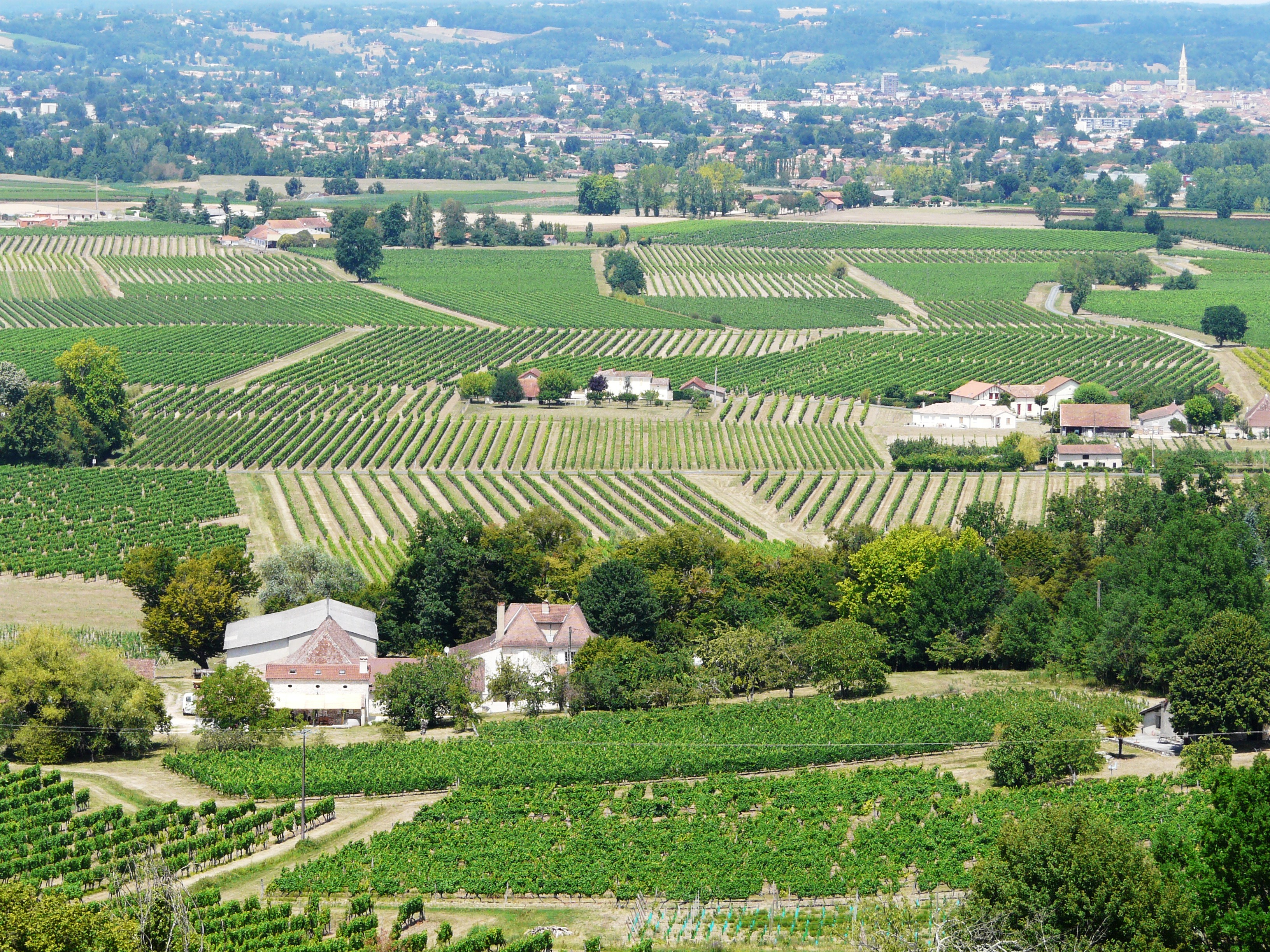
Between the two big names, the back roads south of Bergerac are dotted with small, welcoming cellars — the unhurried, no-appointment side of a wine weekend that only opens up once you have a car.
These are family estates where the person pouring is often the person who made the wine, and an afternoon of drifting between two or three of them is its own reward. There's no list to follow; a hand-painted "dégustation" sign on a country lane is invitation enough. This is exactly the loose, map-optional wandering a single rail-bound day can never give you — and the reason a car turns a town visit into a wine-country weekend.
Issigeac
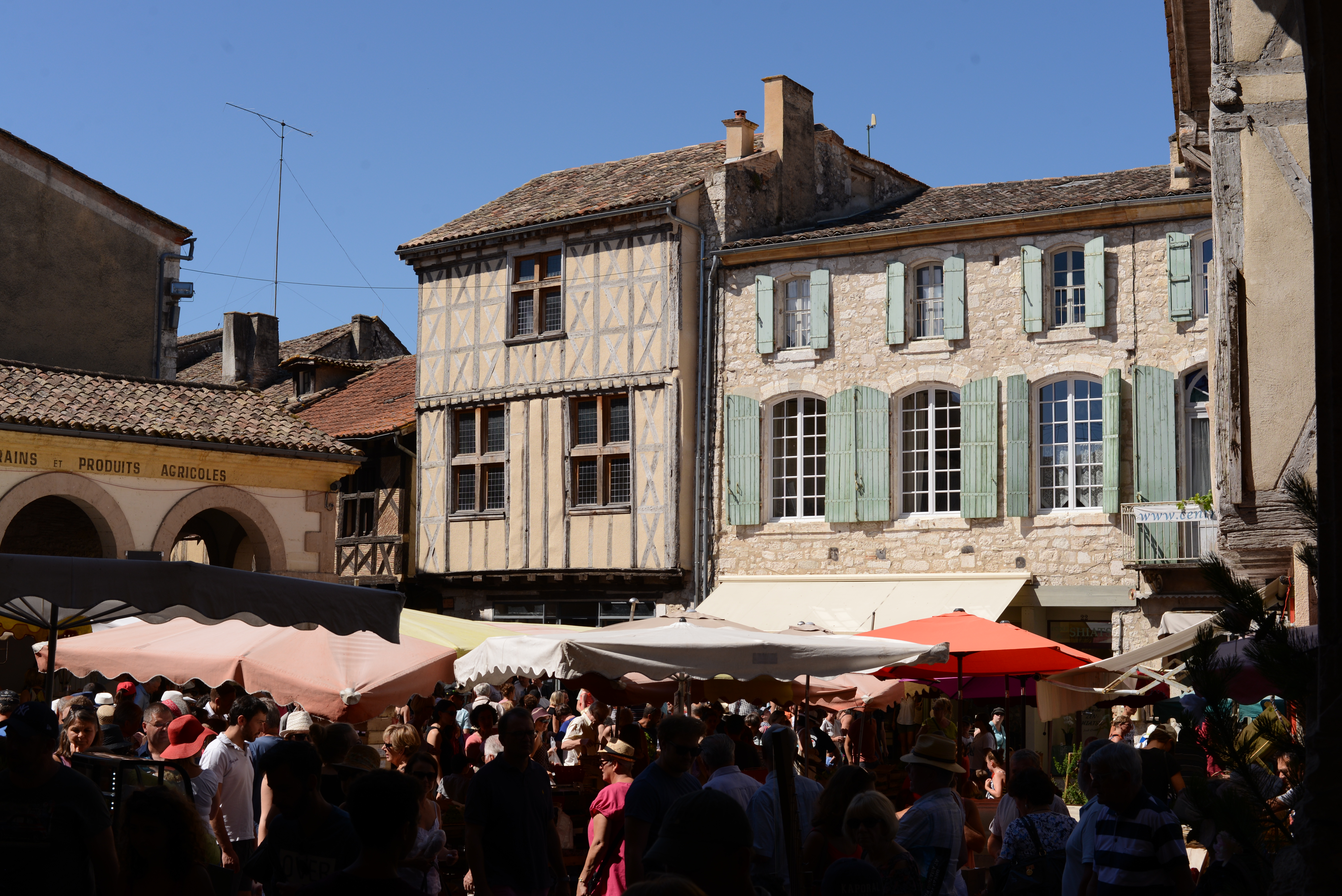
If your weekend straddles a Sunday, give the late morning to Issigeac, a circular medieval village about twenty minutes from Bergerac with one of the southwest's best Sunday markets — a denser, more intensely local scene than Bergerac's own.
You park at the edge and walk in under the old arcades, where stalls wrap the concentric lanes and a vendor splits open a melon to prove its ripeness before he'll sell it. It is the kind of stop that only works with a car and a slow morning, which is to say it only works on a weekend. Go early; by noon the lanes are shoulder to shoulder.
Quick reference
- Château de Monbazillac: ~7 km south of town, by car/taxi/bike; entrance ~€12, a hosted ~30-min three-wine tasting around €5+, visit ~1.5 hours; French tasting sessions ~11:30 / 14:30 / 16:30, an English session some months — confirm when booking (Château de Monbazillac official site, 2026).
- Château Tour des Gendres: organic ~30-ha estate near Ribagnac; dry reds and whites; confirm visit arrangements in advance, car needed (Château Tour des Gendres official site, 2026).
- Country cellars: scattered small estates south of Bergerac; many welcome walk-in tastings, a car is essential (Dordogne travel guides, 2025).
- Issigeac: ~20 min by car; market Sunday mornings (Guide du Périgord, 2025; Lost in Bordeaux, 2025).
Back to Bordeaux
You're flying into Bordeaux, and Bergerac sends you back with the half of its wine country that a day trip never gets to — the château over the noble-rot slope and the dry estate that answers it. The return is easy: the direct TER runs back to Bordeaux Saint-Jean through the day, with the last departure around 20:11, so a Sunday-evening train back to the city is no trouble. If you've kept the car, drop it in Bordeaux and let the train do the work next time.
What the overnight bought you is the part of the trip that doesn't fit a clock: the second day in the vineyards, the slow evening after the day-trippers left, the two faces of a wine most people never realize isn't Bordeaux at all.
Practical notes
A Bergerac weekend runs on two simple facts — the town is rail-clean and the countryside is not — and a few seasonal ones that decide what the trip can actually be. Plan around them before you book.
The car question. You can do the whole town on the train, but the second day's payoff — Château de Monbazillac, the countryside wineries, Issigeac — has no public line. Rent a car for the vineyard half, or budget for a short taxi to the château and a bike for the rest. Confirm a realistic taxi fare locally rather than relying on a fixed number.
Timing the trains. The last Bergerac → Bordeaux departure is around 20:11; verify it on SNCF Connect on the day before you cut a Sunday dinner fine. Booking is straightforward online, and walk-up is generally fine on regional TER.
Season changes the trip. April–June and mid-September–October are the two best windows — mild weather plus, respectively, the river-and-market season or the wine harvest, when the vines are working and some estates host harvest tastings. Summer is hot inland; front-load outdoor walking to the morning. Winter is quiet and cheaper, but the gabarre boats stop and the château runs reduced hours, so confirm openings first.
Money and food. Card is widely accepted; carry some cash for market stalls. Tipping is modest — round up at cafés, a few euros at a sit-down meal. English is spoken in the wine houses and hotels but less universally than in Bordeaux city, so a few words of French go further out here. And come hungry: between the foie gras, duck, truffle, and walnuts, the Périgord table is half the reason to stay.
Frequently asked questions
Is Bergerac worth a weekend, or is a day trip from Bordeaux enough?
A day handles the town — the old quarter, the wine house, a Périgord lunch — all of it on the direct train. A weekend earns its second day with the vineyard countryside you need a car to reach: Château de Monbazillac, a dry-wine estate, and the Issigeac Sunday market. If the wine country is the point, stay over.
How do I get from Bordeaux to Bergerac, and do I need a car?
A direct TER train runs Bordeaux Saint-Jean to Bergerac in about 1h10–1h25, roughly 15 services a day, around €20 round-trip. You do not need a car for the town. You do need one for the second day — the château and the countryside wineries sit outside Bergerac with no public line to them.
Is Bergerac wine the same as Bordeaux wine?
No. Bergerac is its own appellation — the legally defined wine area whose name a wine may carry — over the line from Bordeaux in the Dordogne. The two use the same grapes, but Bergerac lost the right to the Bordeaux name when France tied the Bordeaux area to the Gironde department boundary. The inland climate makes the reds softer and fruitier.
What is Monbazillac wine?
Monbazillac is a sweet white wine from the slopes just south of Bergerac — a late-harvest wine made from Sémillon and Muscadelle grapes left on the vine until autumn river mists bring noble rot. It is often described as a quieter neighbor to Sauternes, the famous sweet wine over in the Gironde.
What is noble rot, and why does it matter for Monbazillac?
Noble rot, or botrytis, is a benign fungus that shrivels ripe grapes and concentrates their sugar. Autumn mists off the Dordogne settle on the Monbazillac slopes and bring it on, and pickers go through the vines in successive passes, taking only the affected berries. That painstaking harvest is what makes the wine golden and intensely sweet.
How do I get to Château de Monbazillac from Bergerac?
The château sits about 7 km south of Bergerac, up on the vineyard slope, with no useful public-transport line to it. From town it is a short taxi each way, a rented bike for the uphill ride, or a ten-minute drive if you have a car. This is the main reason the wine-country weekend wants wheels.
When is the best time of year for a Bergerac wine-country weekend?
April through June and mid-September through October are the two prime windows — mild weather, and either the river-and-market season or the wine harvest. Summer runs hot inland and busy. Winter is quiet and cheap but the river boats stop and the château runs reduced hours, so confirm openings before you rely on them.