A weekend in Cuenca from Madrid
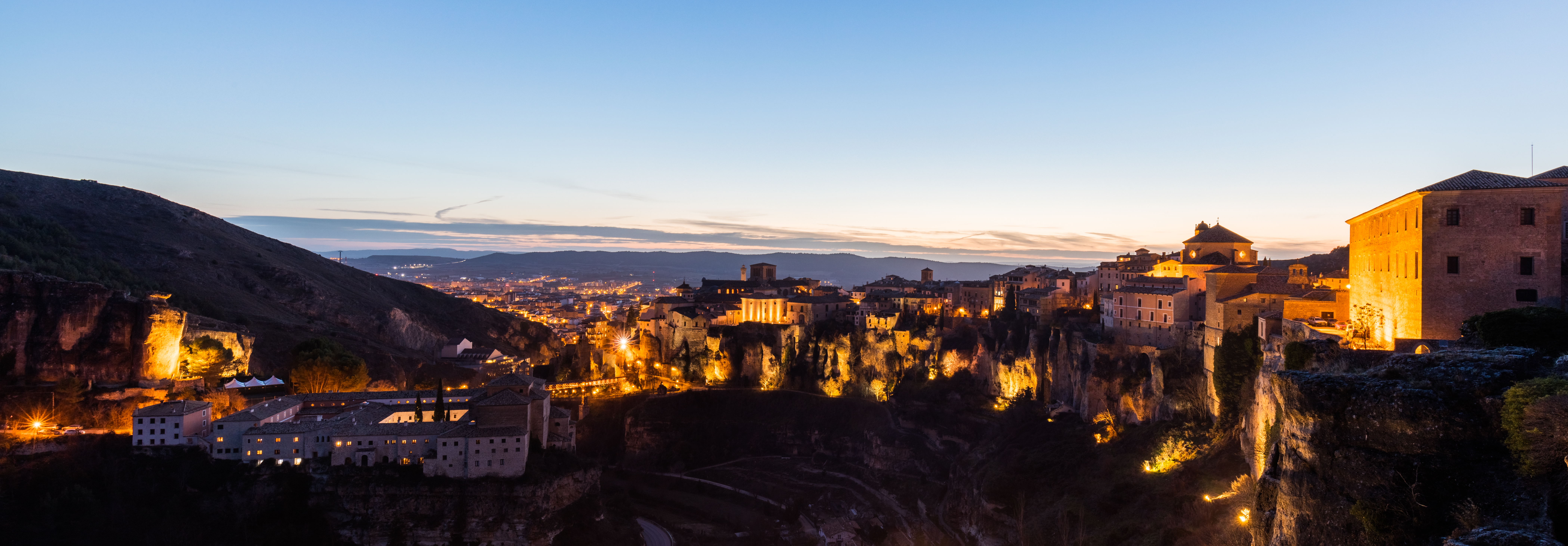
You're flying into Madrid — and a weekend in Cuenca from Madrid is 56 minutes from Atocha by high-speed train. Not because the old city takes that long to walk (it doesn't), but because the thing that makes Cuenca unlike anything else near Madrid — a medieval city cantilevered over a gorge 100 metres deep, and inside one of its most-photographed houses, Spain's first museum of abstract art — reveals itself differently when you stay. Day-trip visitors see the Casas Colgadas (the "hanging houses," 15th-century structures cantilevered over the Huécar gorge) from the San Pablo footbridge. Parador guests wake up to them from the opposite side of the gorge. That gap is what the weekend is for.
The two-day structure is tighter than it sounds: Day 1 covers the gorge path, the museum, the cathedral, and a morteruelo (thick pâté-like Castilian stew of liver, game, and spices — the regional dish) lunch, with the Parador check-in as the evening pivot. Day 2 is Ciudad Encantada by car, or, if you don't have one, a quieter second morning in the old city before the afternoon train back to Madrid. Five gorge positions in two days — that's the thread holding this itinerary together.
Why Cuenca from Madrid
Cuenca earns two days from Madrid on two anchors that exist nowhere else in the city's orbit: a medieval quarter suspended over a river gorge on both sides, and inside one of those cliff-edge buildings, a museum that changed what Spanish abstract art looked like.
Start with the gorge, because everything in Cuenca comes back to it. The old city occupies a narrow limestone spur at the confluence of two rivers — the Huécar and the Júcar — and both rivers have carved gorges roughly 100 metres deep on either side of the medieval streets. There is no comparable urban gorge experience within a two-hour train journey of Madrid. What this produces, for a visitor on foot, is constant surprise: a corner turned, and suddenly the ground disappears below you into a canyon with the Parador's 16th-century convent walls visible on the opposite cliff. The geography isn't background scenery — it's the reason the city exists where it does, and you feel it at every street-level gap.
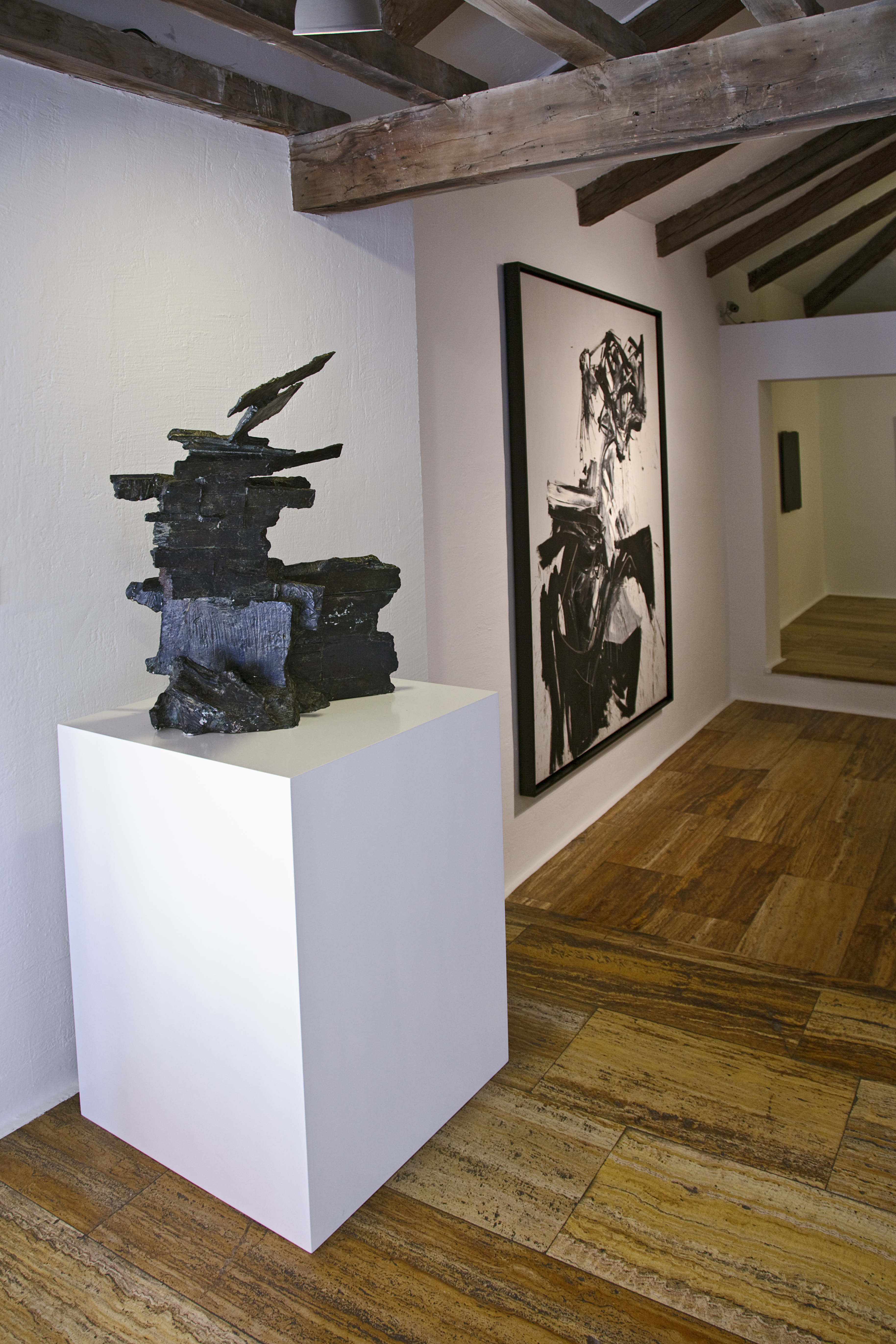
The Museo de Arte Abstracto Español earns a fuller explanation, because English-language writing about Cuenca consistently underplays it. In 1963, Filipino-Spanish painter Fernando Zóbel began installing his personal collection inside two of the Casas Colgadas — restored 15th-century hanging houses, perched over the same gorge. The collection opened to the public in 1966 with works by Antoni Tàpies, Eduardo Chillida, Antonio Saura, Gustavo Torner, and Gerardo Rueda — the core figures of Spain's postwar abstract movement. It's free (managed by the Fundación Juan March), and it hangs in rooms that project over a 100-metre cliff with gorge views out the windows. What Zóbel assembled here, in this place, cannot be replicated in a white-box gallery in Madrid. That's the second anchor — and it's the one that makes this post possible rather than just pleasant.
Getting there from Madrid
Madrid Atocha to Cuenca Fernando Zóbel takes 56 minutes on the AVE — or 1h03 on some iryo and OUIGO services — direct, no changes. Three operators compete on this route: Renfe AVE, OUIGO, and iryo, which means fares vary more than on most Spanish high-speed lines. Advance booking on OUIGO or iryo brings one-way fares to approximately €8–€15; Renfe AVE runs €20–€40 but has better walk-up availability. Budget €16–€50 for the round trip depending on how far ahead you book. Book at ouigo.es, iryo.eu, or renfe.com.
One important detail first-time visitors miss: Cuenca Fernando Zóbel station is 5 km from the old city. The station is named for the museum's founder, which is a nice piece of civic poetry, but it is not in town. Take a taxi to the old city on arrival — approximately €8–€12, around 10 minutes — or catch the local bus (verify frequency at visitacuenca.es before you travel). The old city is entirely walkable once you're there.
If you're planning to visit Ciudad Encantada on Day 2, you have two rental options: pick up a car at Madrid Atocha before you go, or collect one in Cuenca. Either way, the drive via the A-3 motorway is 165 km and takes approximately 1h45–2h from Madrid, which makes driving a reasonable choice if you want the car available for both days. The ALSA bus from Madrid Estación Sur takes 2.5–3 hours — with AVE fares this low, the time difference rarely justifies it.
Quick reference — Getting there
- Train (Atocha → Cuenca Fernando Zóbel): 56 min–1h03 direct; OUIGO/iryo from approx. €8 one way; Renfe AVE €20–€40 (Trainline.com, Omio, June 2026)
- Booking: ouigo.es, iryo.eu, renfe.com
- Station to old city: Taxi approx. €8–€12 (10 min); local bus available — verify at visitacuenca.es before travel
- Drive Madrid → Cuenca: 165 km via A-3; approx. 1h45–2h (ViaMichelin, June 2026)
- Bus (ALSA): 2.5–3 hours from Madrid Estación Sur — rarely worth it over AVE
Day 1 — The gorge circuit, the museum, and checking in across the canyon
Day 1 in Cuenca covers five gorge positions in a single loop: the San Pablo bridge, the museum's cliff-edge windows, the gorge path from below, the old city's street-level glimpses, and the Parador terrace at the end of the afternoon. Each one shows you the same geography from a different elevation and angle. By the time you're sitting on the Parador terrace with the hanging houses lit across the gorge, you'll have seen them from four different positions — and the fifth will greet you from the bedroom window in the morning.
Arrive early — the bridge before the crowd
Catch the first or second train from Atocha, landing in Cuenca before 10:00. Taxi to the old city, drop your bags at your hotel, and walk directly to the Puente de San Pablo — the iron footbridge spanning the Huécar gorge that connects the old city to the former Convent of San Pablo (now the Parador). The bridge gives you the defining external view of the Casas Colgadas: balconies projecting over the void, the gorge dropping away below them, the limestone cliff vertical and close enough to touch the scale of the thing. This is the first gorge position, and it's at its best before the late-morning crowd arrives from Madrid.
From the bridge, take the Hoz del Huécar gorge walk — a signed path that descends along the river face below the old city, 1.5–2 hours as a loop. You go from looking at the hanging houses from outside and above to walking beneath them with the cliff rising straight overhead and the old city cantilevered 100 metres up. The path is well-marked, free, and requires moderate fitness. This is the third gorge position, and it's the one that makes the scale physically legible. Do it early while it's cool and the path is quiet.
Quick reference — Puente de San Pablo and Hoz del Huécar
- Bridge: Free, always accessible
- Gorge walk: Free, allow 1.5–2 hours for the full loop; path from the bridge, signed
- Best photography light on the bridge: Late afternoon (southwest-facing houses)
- Early morning: Best for the gorge walk (cooler, fewer visitors)
Museo de Arte Abstracto Español — the gorge inside the gallery
The museum opens at 11:00, and arriving at opening is worth planning for: the gorge-facing windows are at their best in late morning light, and the rooms are quiet before tour groups arrive. Give it 45–60 minutes.
Fernando Zóbel didn't build a museum inside a hanging house because the location was convenient — he built it there because the gorge view and the abstract art are in dialogue. The rooms where Chillida's iron forms hang have windows that drop straight to the Huécar below. Some of the works in the collection were made in direct response to those views. You're standing in a 15th-century structure that has been cantilevered over this gorge for 600 years, looking at Spanish painting from the 1960s, and the window beside the canvas is part of the argument. This is the second gorge position, and it's the one that earns the museum its reputation. The 129-painting collection Zóbel assembled here and then donated to public stewardship is genuinely important — not a municipal vanity project, but a coherent and historically significant gathering of Spain's postwar abstract movement in a space that no other museum in the country could have offered it.
The Casas Colgadas themselves are integrated into this visit rather than a separate stop. The exterior is visible from the approach on Calle Canónigos and from inside the museum; the building you're standing in is one of the hanging houses. The adjacent private residence is not publicly accessible — but the museum gives you the interior experience the exterior view only hints at.
Closed Mondays. If Day 1 falls on a Monday, restructure to start with the cathedral and old-city walk, skip to lunch, and plan a longer gorge walk.
Quick reference — Museo de Arte Abstracto Español
- Address: Calle de los Canónigos, s/n, Cuenca (inside the Casas Colgadas)
- Admission: Free (Fundación Juan March policy; verify at march.es before visit)
- Hours: Tuesday–Friday 11:00–14:00 and 16:00–18:00; Saturday 11:00–14:00 and 16:00–20:00; Sunday 11:00–14:00; closed Mondays
- Time needed: 45–60 minutes
The cathedral and Plaza Mayor
Five minutes' walk from the museum, Cuenca Cathedral anchors the old city's Plaza Mayor and claims a specific historical distinction: it was the first Gothic cathedral built in Spain, construction begun in 1182 under French stonemasons following the Christian reconquest of Cuenca in 1177. The pointed arches and Norman influence are legible even without a guide. The exterior is free; the Treasury museum runs approximately €4. Allow 45–90 minutes for the nave and Treasury together.
After the cathedral, walk Plaza Mayor and the old-city streets. The medieval quarter is compact — genuinely compact, which is part of Cuenca's honest appeal — but it rewards slow movement. Gorge views appear at unexpected angles through gaps between buildings, and Calle Alfonso VIII descends past medieval facades that give way to sudden drops on both sides. This is the fourth gorge position: the city's geometry keeps delivering the gorge at street level, from angles the bridge and the museum don't prepare you for.
Quick reference — Cathedral and old city
- Cathedral exterior: Free; Treasury approximately €4 — verify at the entrance (cuenqueando.com cathedral guide, 2024)
- Cathedral hours: Daily, hours vary — check before visit
- Plaza Mayor to old-city circuit: Free; 1.5–2 hours unhurried
- Optional add: Cerro del Socorro viewpoint — 30–45 minutes above the old city, both gorges visible simultaneously; free
Morteruelo lunch
Before the Parador check-in, have lunch at one of the mesones on or around Plaza Mayor. Morteruelo is the dish to order — a warm, spiced pâté of rabbit, partridge, pork liver, ham, pine nuts, cinnamon, clove, and caraway, served with bread, that has no close parallel in any other Spanish regional cuisine. Cuenca was named Spain's Capital of Gastronomy in 2023, and morteruelo is the reason the designation sticks. Budget €8–€15 per person for tapas and morteruelo at a traditional mesón. Ajoarriero (salt-cod paste, another regional staple) is worth ordering alongside it.
The Parador restaurant is an alternative if you want to combine lunch with the gorge-view dining experience — but crossing the bridge for lunch means doubling back, so the Plaza Mayor mesones work better structurally before check-in.
Quick reference — Morteruelo lunch
- Where: Traditional mesones on and around Plaza Mayor; multiple options
- Budget: Approximately €8–€15 per person (visitacuenca.es gastronomy section)
- What to order: Morteruelo (the signature dish); ajoarriero if available; zarajos (lamb intestines coiled around a grapevine shoot and grilled) for the adventurous
- Capital of Gastronomy: Cuenca designated Spain's Capital of Gastronomy 2023 (tapasmagazine.es, 2025)
- Parador restaurant: Also serves morteruelo and regional classics with gorge views; reservations recommended
Parador de Cuenca — checking in across the gorge
Cross the Puente de San Pablo in the afternoon, bags in hand, and check into the Parador de Cuenca — a former 16th-century Convent of San Pablo — on the opposite cliff from the old city. The convent has watched the Casas Colgadas across the gorge for five centuries. The Parador has kept that view intact: gorge-facing guest rooms, a glass-covered cloister, and a terrace that puts the hanging houses directly across the water from you, lit in the evening as the light drops off the limestone. This is the fifth gorge position — and the payoff for the day.
The Parador is Cuenca's signature overnight option for a reason. Rooms run approximately €130–€220 per night. Book well before you finalise your travel dates — the Parador fills on weekends, Easter week, and summer weekends, sometimes weeks in advance. Non-guests can visit the glass cloister and dine at the restaurant; reservations are recommended.
Quick reference — Parador de Cuenca
- Rooms: From approx. €130–€220/night; book well ahead (Paradores.es, June 2026)
- Non-guests: Cloister open to visitors; restaurant open for lunch and dinner — reservations recommended
- Location: Across the Puente de San Pablo from the old city; 5-minute walk from the bridge
Where to stay overnight
The Parador de Cuenca (former Convent of San Pablo, 16th century, directly across the Huécar gorge from the Casas Colgadas) is the primary recommendation — rooms from approximately €130–€220 per night, gorge-facing rooms available, restaurant serving regional classics including morteruelo and zarajos. Book before you finalise your travel dates; weekend availability goes quickly. Non-guests can visit the cloister and book the restaurant separately. If the Parador is full or out of budget, budget hotels and guesthouses exist in Cuenca's new town below the old city — the old city itself has limited accommodation options beyond the Parador.
Quick reference — Where to stay
- Parador de Cuenca: From approx. €130–€220/night; gorge-facing rooms; book well ahead (Paradores.es, June 2026)
- Budget alternatives: New-town hotels and guesthouses below the old city
- Non-guests: Cloister visitable; restaurant open to non-residents — reservations recommended
Day 2 — Ciudad Encantada by car, or a quiet second morning
Day 2 divides cleanly between two Cuenca experiences — the 25-kilometer drive east to Ciudad Encantada's Cretaceous limestone formations for visitors with a car, and a slower old-city morning for those on foot — and both versions justify the overnight. With a car, drive east to Ciudad Encantada — 25 km of Serranía limestone at landscape scale. Without one, take the old city slower, ahead of the day-trip trains from Madrid. Neither version is a consolation. The Ciudad Encantada geological park, 25 km east of Cuenca in the Serranía de Cuenca (a mountain range and natural park east of Cuenca, characterised by Jurassic limestone formations and pine forests), is the natural partner for a weekend here — but it has no public transport connection from the city. If you have a car, Day 2 is an outdoor morning completely unlike Day 1. If you don't, Day 2 is a slower second morning in the old city, which is genuinely different from the first — fewer people, better coffee, the chance to take the time the afternoon rush doesn't allow.
If you have a car: Ciudad Encantada
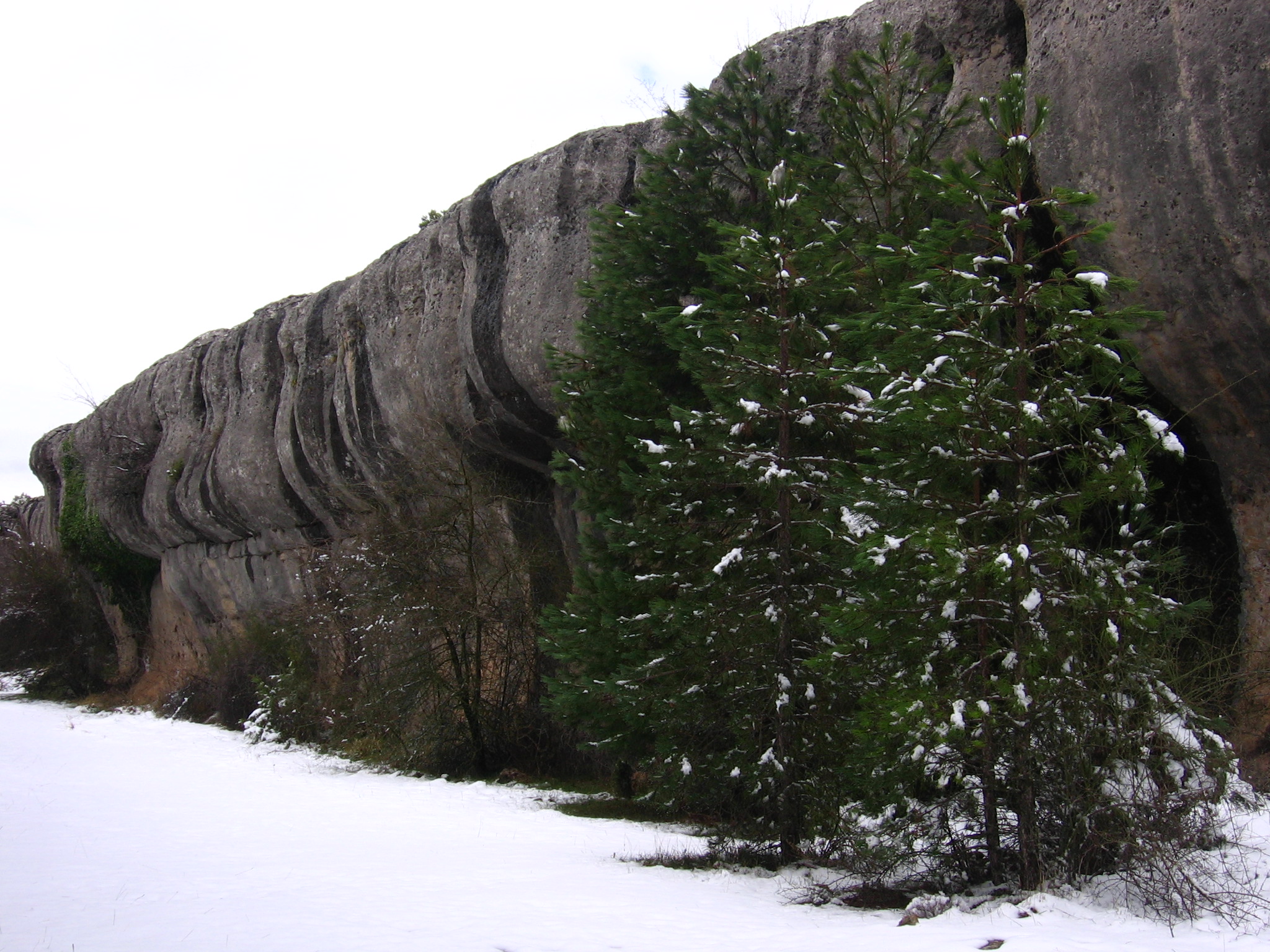
Check out after breakfast — or arrange late checkout with the Parador — and drive 30–40 minutes east on the CUV-9241 toward the Serranía de Cuenca. Ciudad Encantada ("Enchanted City") is a geological park of 30+ named limestone formations shaped over 90 million years from Cretaceous rock: the Lovers of Teruel, the Mushrooms, the Sea of Stone, the Bears. The formations are the product of the same geological force that carved the Huécar and Júcar gorges — water, dissolving limestone, over an unimaginable span of time — but here at landscape scale rather than cliff-face scale. This is the fifth gorge position, translated: the gorge carved by a river in a week of geological time and the boulder field shaped over ninety million years are the same argument made at different volumes.
The 3 km loop trail takes 1.5–2 hours at a relaxed pace. The site requires accessible footwear; some terrain is uneven. Admission is approximately €7–€9 per person — verify current pricing at the entrance. Allow a full morning; return to Cuenca by midday, have lunch, then drive back to Madrid or return the car and catch the afternoon train.
Quick reference — Ciudad Encantada
- Distance from Cuenca: 25 km east; 30–40 minutes by car on CUV-9241
- Admission: Approximately €7–€9 per person — verify on-site (spain.info Ciudad Encantada, 2025)
- Trail: 3 km loop, 1.5–2 hours; accessible footwear required
- No public transport: Car, guided tour, or shared taxi (approximately €30–€40 each way) only
- Car rental: Available from Madrid Atocha or from Cuenca city
If you don't have a car: the quieter old city
The second-best version of Day 2 without a car is a genuinely good morning in Cuenca rather than a substitute for a better one. Day-trip visitors from Madrid arrive on trains that land mid-morning; the old city's narrow streets fill between 11:00 and 16:00. As a Parador guest, you have the Puente de San Pablo to yourself before 09:00, the museum at its opening hour, and the Plaza Mayor in the morning quiet before the cafe tables fill. Cross the bridge one more time — the Casas Colgadas in the morning light read differently than in the afternoon. Walk up to the Cerro del Socorro viewpoint if time allows (30–45 minutes above the old city; free; both gorges visible simultaneously). Take a late-morning coffee on the Parador terrace before check-out with the hanging houses across the gorge. Then catch the midday train back to Madrid.
The old city walls walk and the San Pablo bridge at dawn
The gorge path and the Puente de San Pablo show the Casas Colgadas from below and from across. The city walls circuit above the old quarter shows them from above — a 30–45 minute walk along the medieval ramparts that frames both gorges simultaneously and gives you the Cerro del Socorro viewpoint at its quietest. Morning light falls on the southwest-facing hanging houses differently than afternoon; from the bridge at dawn, the limestone face of the opposite cliff is in shadow and the Parador's convent walls catch the early sun. It's the same footbridge you crossed on Day 1. It reads differently the second time.
Guided tours to Ciudad Encantada do exist — search "excursión Ciudad Encantada desde Cuenca" for current operators. A shared taxi to the park and back is approximately €30–€40 each way, which becomes viable among a group of three or four.
Back to Madrid
From Cuenca Fernando Zóbel station, the high-speed AVE returns to Madrid Atocha in 56 minutes — the same direct connection that made this weekend viable. You're leaving the gorge light, the hanging houses, and the old-town quiet for Atocha before dinner. Evening departures from Cuenca Fernando Zóbel run through approximately 21:00–21:30 — check your specific operator's timetable, but there's no need to rush a 15:00 train. Take the taxi from the old city to the station (approximately €8–€12), buy a coffee for the platform, and watch the Castile-La Mancha plain unfold outside the window as the train accelerates out of the station named for the man who put a 15th-century hanging house to work as an art museum.
The gorge thread holds across both days: you arrived at the Puente de San Pablo with the hanging houses visible for the first time, walked beneath them from the gorge path, stood inside one of them looking out at the void through a window beside a painting, saw the whole geometry of the place from the Parador terrace across the cliff, and then — if the car allowed — watched the same geological logic play out at landscape scale in the Serranía. That's a specific two-day experience. A day gives you the frame; the weekend gives you the depth.
Practical notes
The most useful timing for a Cuenca weekend: spring and autumn sidestep summer crowds on the narrow old-city streets; Ciudad Encantada is best on weekday mornings; and timed-entry windows for the geological park can sell ahead on peak weekends.
Province and transport cards: Cuenca is in Castile-La Mancha — not the Community of Madrid. Your CRTM Madrid transport card does not apply; buy separate train tickets on the operators' sites.
Booking the Parador: Book before you finalise your travel dates. The Parador de Cuenca fills weeks in advance for weekend stays, Easter week, and high summer. If you wait until you have your train tickets, you may find it full.
Museum Mondays: The Museo de Arte Abstracto Español is closed on Mondays. If Day 1 falls on a Monday, shift the museum anchor to an alternative sequence — old city, cathedral, gorge walk, lunch — and visit the museum on Tuesday morning before heading home if your schedule permits an extra night.
Summer timing: July and August bring significant day-trip traffic from Madrid on the AVE. The old city's narrow streets feel crowded between 11:00 and 17:00 on summer weekends. Arriving on the first train (before 09:00) buys 2–3 hours of the Cuenca that Parador guests know from their second morning.
Autumn for Ciudad Encantada: October and November are the best season for the Serranía de Cuenca Natural Park — fewer visitors, the pine forests in autumn colour, mild temperatures for the trail. If you're planning Day 2 around Ciudad Encantada, this is the optimal timing.
Semana de Música Religiosa (Holy Week): One of Spain's oldest classical music festivals, running since 1962, takes place in Cuenca during Easter week — international orchestras and soloists in the cathedral and old-city churches alongside 30,000+ Semana Santa procession participants. In 2026: March 28–April 4. If the festival is the draw, book everything well in advance; if it's not, consider avoiding Easter week for a quieter visit.
Fact-check notes before publication: Station taxi fare to old city (no published fixed rate; approximately €8–€12 based on distance); Museo de Arte Abstracto opening hours and free admission policy (verify at march.es); Ciudad Encantada admission (approximately €7–€9, verify on-site); OUIGO/iryo €8 promotional fares (availability-dependent; carry date qualifier); Figón del Huécar restaurant at the Casas Colgadas (verify current status and balcony access for non-diners); evening illumination hours for the hanging houses (visitacuenca.es).
Quick reference — the weekend
| Item | Detail | Source |
|---|---|---|
| Train (Madrid Atocha → Cuenca Fernando Zóbel) | 56 min–1h03; OUIGO/iryo from approx. €8 one way; Renfe AVE €20–€40 | Trainline.com, Omio, June 2026 |
| Station to old city | Taxi approx. €8–€12 (10 min); local bus available — verify at visitacuenca.es | Dossier, June 2026 |
| Parador de Cuenca | From approx. €130–€220/night; book well ahead for weekends | Paradores.es, June 2026 |
| Museo de Arte Abstracto Español | Free admission; Tue–Fri 11:00–14:00/16:00–18:00; Sat 11:00–20:00 (split); Sun 11:00–14:00; closed Mon | march.es, 2026 |
| Cathedral Treasury | Approx. €4 — verify at entrance | cuenqueando.com, 2024 |
| Morteruelo lunch | Approx. €8–€15/person at Plaza Mayor mesones | visitacuenca.es |
| Ciudad Encantada admission | Approx. €7–€9 — verify on-site | spain.info, 2025 |
| Drive Madrid → Cuenca | 165 km via A-3; approx. 1h45–2h | ViaMichelin, June 2026 |
| Last train back to Madrid | Approx. 21:00–21:30 from Cuenca Fernando Zóbel — check operator timetable day of travel | Renfe, OUIGO, iryo timetables |
Frequently asked questions
How do I get from Madrid to Cuenca?
Take AVE, OUIGO, or iryo from Madrid Atocha station — the journey is 56 minutes to 1h03, direct, no changes. Fares start from around €8 one way with advance booking on OUIGO or iryo; Renfe AVE runs higher but has better walk-up availability. At Cuenca Fernando Zóbel station — 5 km from the old city — take a taxi (approximately €8–€12) or the local bus to the old town. Book at renfe.com, ouigo.es, or iryo.eu (Trainline.com, Omio, June 2026).
Is Cuenca worth a weekend, or is a day trip enough?
Both work, and the choice hinges on one thing: the Parador de Cuenca. A day gives you the Casas Colgadas, the abstract art museum, the cathedral, the gorge walk, and a proper morteruelo lunch — that's a complete visit. A weekend adds waking up in a 16th-century convent with the hanging houses visible across the gorge, a quieter second morning before the day-trip crowd arrives, and Ciudad Encantada by car. If the Parador appeals, the weekend justifies itself immediately.
Do I need a car in Cuenca?
For the old city itself, no — everything in Cuenca's medieval quarter is walkable once you've taken a taxi from the train station. But Day 2's signature excursion, Ciudad Encantada, is 25 km east with no public bus connection. To reach it independently you need a car, rentable in Madrid or Cuenca. Without a car, a guided tour (search 'excursión Ciudad Encantada desde Cuenca') or a shared taxi (approximately €30–€40 each way) are the practical alternatives.
Where should I stay in Cuenca for a weekend?
The Parador de Cuenca is the obvious first answer — a 16th-century former convent directly across the Huécar gorge from the Casas Colgadas, with gorge-facing rooms and a restaurant serving regional classics. Rooms run approximately €130–€220 per night (Paradores.es, June 2026). Book well before you finalise your travel dates: it fills on weekends, Easter week, and summer. Budget alternatives exist in Cuenca's new town below the old city.
What is morteruelo, and where do I eat it?
Morteruelo is Cuenca's signature dish — a dense, spiced pâté of rabbit, partridge, pork liver, ham, pine nuts, cinnamon, clove, and caraway, served warm with bread. It's specific to this province; no other Spanish region makes it in quite this form. Cuenca was named Spain's Capital of Gastronomy in 2023 (tapasmagazine.es, 2025). Eat it at the traditional mesones around Plaza Mayor, where a tapas-and-morteruelo lunch runs approximately €8–€15 per person, or at the Parador restaurant across the gorge.
What is the Semana de Música Religiosa in Cuenca?
One of Spain's oldest classical music festivals, running since 1962 and held during Holy Week each year. International orchestras and soloists perform sacred music inside Cuenca's Gothic cathedral, the former Carmelite convent, and several old-city churches — all during the same week as Cuenca's own Semana Santa processions, with more than 30,000 participants. In 2026 the festival runs March 28–April 4. If you're visiting during this period, book lodging weeks ahead and buy concert tickets in advance (spain.info; festclasica.com, 2026).
What are the Casas Colgadas in Cuenca?
The Casas Colgadas — the 'hanging houses' — are 15th-century buildings at the very edge of the Huécar gorge, with timber balconies projecting over a cliff that drops around 100 metres to the river below. They are Cuenca's most recognisable image and the UNESCO World Heritage site's most legible proof of concept. Two of the three houses contain the Museo de Arte Abstracto Español; the best external view is from the Puente de San Pablo footbridge (UNESCO #781, 2024).