A Weekend in Tossa de Mar from Barcelona
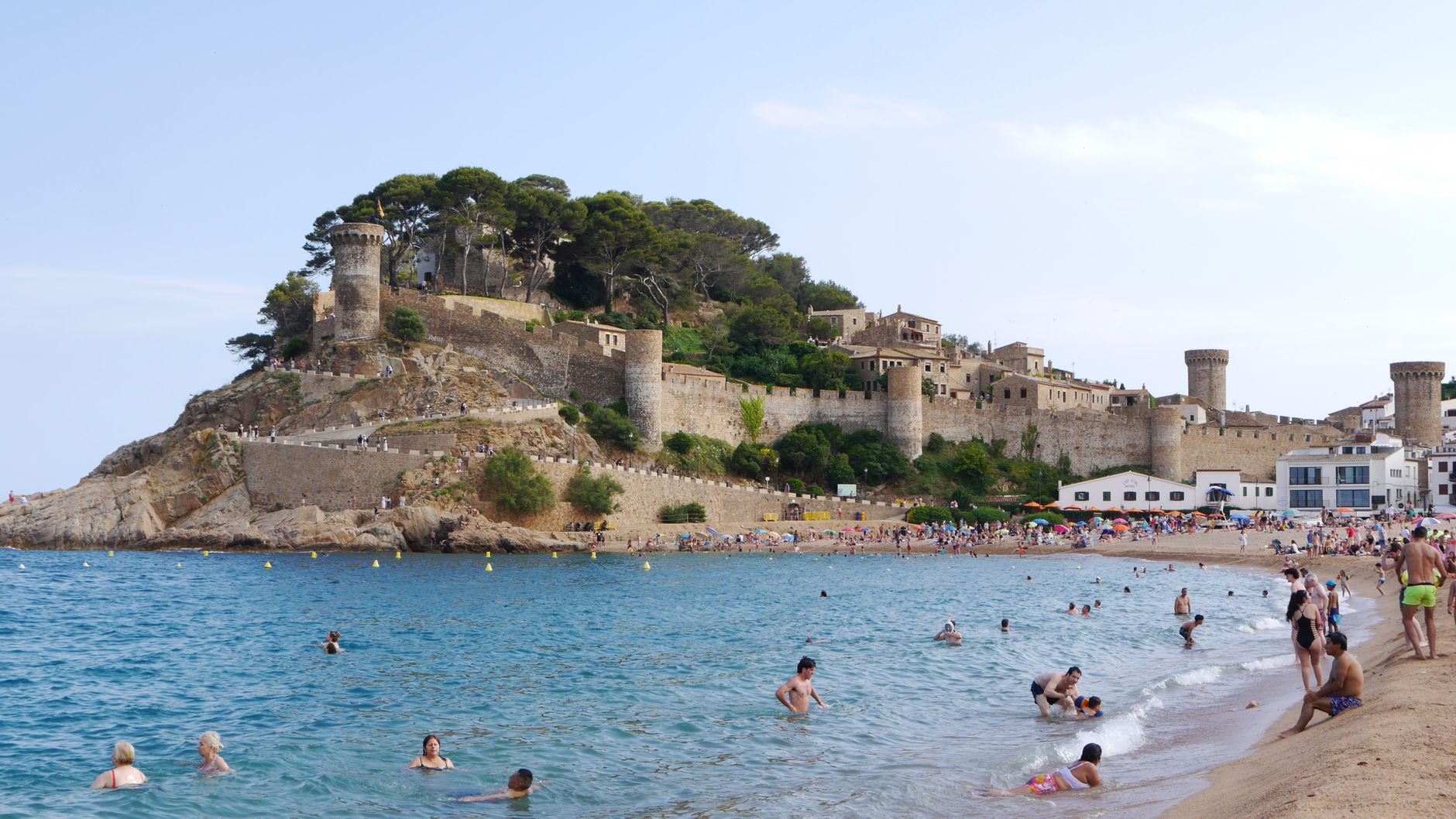
You are flying into Barcelona, and one of the weekend trips this hub earns is a hundred-kilometre run up the coast to a town where a fully intact 13th-century fortified settlement still stands on the headland above a turquoise bay. Tossa de Mar is the only place on the entire Catalan coast where standing medieval walls, cylindrical towers, inhabited cobblestone streets, and a Gothic church in ruins all crown a horseshoe beach at once. The stone was raised here to keep pirates out; it has been here, more or less as built, for eight hundred years.
The beach is pleasant and the water clearer than Barceloneta's, but that is not why you come. You come for the Vila Vella (Catalan for "old town"), the fortified medieval settlement that has held the headland since the early 1200s. The beach is the accompanying feature; the fortification is the argument — and an overnight is what lets the argument land. When the day-trippers file onto the early-evening buses, the Vila Vella stops being a sightseeing circuit and turns into something quieter, worth sitting inside of: a table on the cobblestones, the bay lit below you, the walls lit above. That shift is the whole case for two days.
There is a deeper layer here than the walls, and it is the thread worth following all weekend. Long before the Viscounts of Cabrera raised the battlements, a Roman estate stood here exporting wine across the empire under the name Turissa; centuries later, painters arrived for the light off the water and one of them, Marc Chagall, called the town his "Blue Paradise." Stone above the sea, layer on layer — Roman, medieval, then the artists who came to paint it — and that is what you spend the weekend walking through.
The window for this overnight is shoulder season: May–June and September–October. The Vila Vella is open all year, but the rest of Tossa's visitor infrastructure largely shuts from November through March, and a two-day, one-night trip built around the evening and morning the overnight unlocks only works as described when the town is awake.
Why Tossa de Mar earns a weekend from Barcelona
Tossa earns a full weekend because an overnight changes what you can do, not just how long you have to do it — the evening inside the walls, the empty morning trail, the coves before the crowds, none of which a day trip ever reaches. A day trip compresses five or six sights into one circuit and puts you back on the evening bus with a pleasant memory. The overnight removes that ceiling. You stay behind after 18:00, walk the Camí de Ronda coastal trail before anyone else is on it, and paddle out to the coves north of town while the water is still flat and unpeopled.
Five kilometres south sits Lloret de Mar, a large package-holiday resort built on nightlife and mass-market hotels. Tossa and Lloret are neighbours with almost nothing in common: a smaller footprint here, a genuine medieval monument, and a crowd of families, history-minded travelers, and day-trippers rather than club tourists. The difference is the whole reason to point yourself at Tossa specifically.
And the monument is unrepeatable on this coast. The fortified settlement went up in the early 13th century as a defensive ring against the pirate raids that hit the Catalan shore in that era — its battlements, four large towers (the Joanàs Tower, the Clock Tower, the Codolar Keep), and three cylindrical towers with machicolations (the stone galleries built out over the wall so defenders could drop fire and rock on anyone at the base) stand essentially as built. Barcelona's own Barri Gòtic is a larger historic quarter, but much of its present fabric is 19th- and 20th-century reconstruction. The Vila Vella is the real thing, intact, defensive, sea-facing — and there is nothing else like it between here and the French border.
Getting there from Barcelona
Take the direct Moventis/SARFA bus from Barcelona Estació del Nord on Carrer d'Ali Bei — about an hour and forty minutes, no transfers, and the only option that still leaves you in Tossa for dinner rather than racing a connection. There is no direct train: the nearest rail point is Blanes, and the Blanes-to-Tossa leg means changing onto the L69 local bus, which adds time each way and pulls the last useful return earlier, killing any chance of staying for the evening. So take the bus, and book the return when you book the outbound.
Arc de Triomf metro station (L1) is a short walk from Estació del Nord, and at the Tossa end the bus station leaves you a few minutes from Platja Gran and the arch into the Vila Vella. The whole point of the direct coach is that it deposits you at the foot of the headland with the afternoon still ahead of you.
Quick reference — Getting there
- Direct bus: Moventis/SARFA from Barcelona Estació del Nord (Carrer d'Ali Bei, 80). ~1h 40m, no transfers.
- Fares: ~€14–€17 one-way / ~€28–€34 round-trip, aggregator data (Omio, Busbud, June 2026). Verify on moventis.es or Omio before booking; fares vary seasonally.
- Frequency: ~20–23 direct services per day each way in summer (June–September); lower but adequate in shoulder season.
- Last return: peak-season departures from Tossa run to ~21:00–22:00 (multiple sources); earlier outside June–September. Confirm on moventis.es for your dates.
- Rail alternative: Renfe to Blanes + L69 local bus (~20 min extra each way, earlier last return) — not recommended if you want dinner in Tossa.
Day 1: The walls, the museum, and the evening the town empties
Day 1 climbs through Tossa's layers in a single arc: the 13th-century fortification first, the Roman finds and the Chagall in mid-morning, the beach after lunch, the lighthouse at the gold hour, and the Vila Vella again at night — after the buses leave — as the reward for staying. Every stop sits within a short walk of the last, so the day moves on foot.
The Vila Vella: the fortification above the bay
Walk up from the bus station and pass through the arch at the base of the headland, a ten-minute climb above Platja Gran into the Vila Vella itself. The defensive ring was raised in the early 13th century under the Viscounts of Cabrera to hold off the pirates who worked this coast, and the walls, battlements, cylindrical towers, and gatehouse stand essentially intact — the condition that earned the National Historic-Artistic Monument designation. Put a hand on the stone at the seaward rampart and you are touching the exact thing the town was built to be: a wall between the sea and the people behind it.
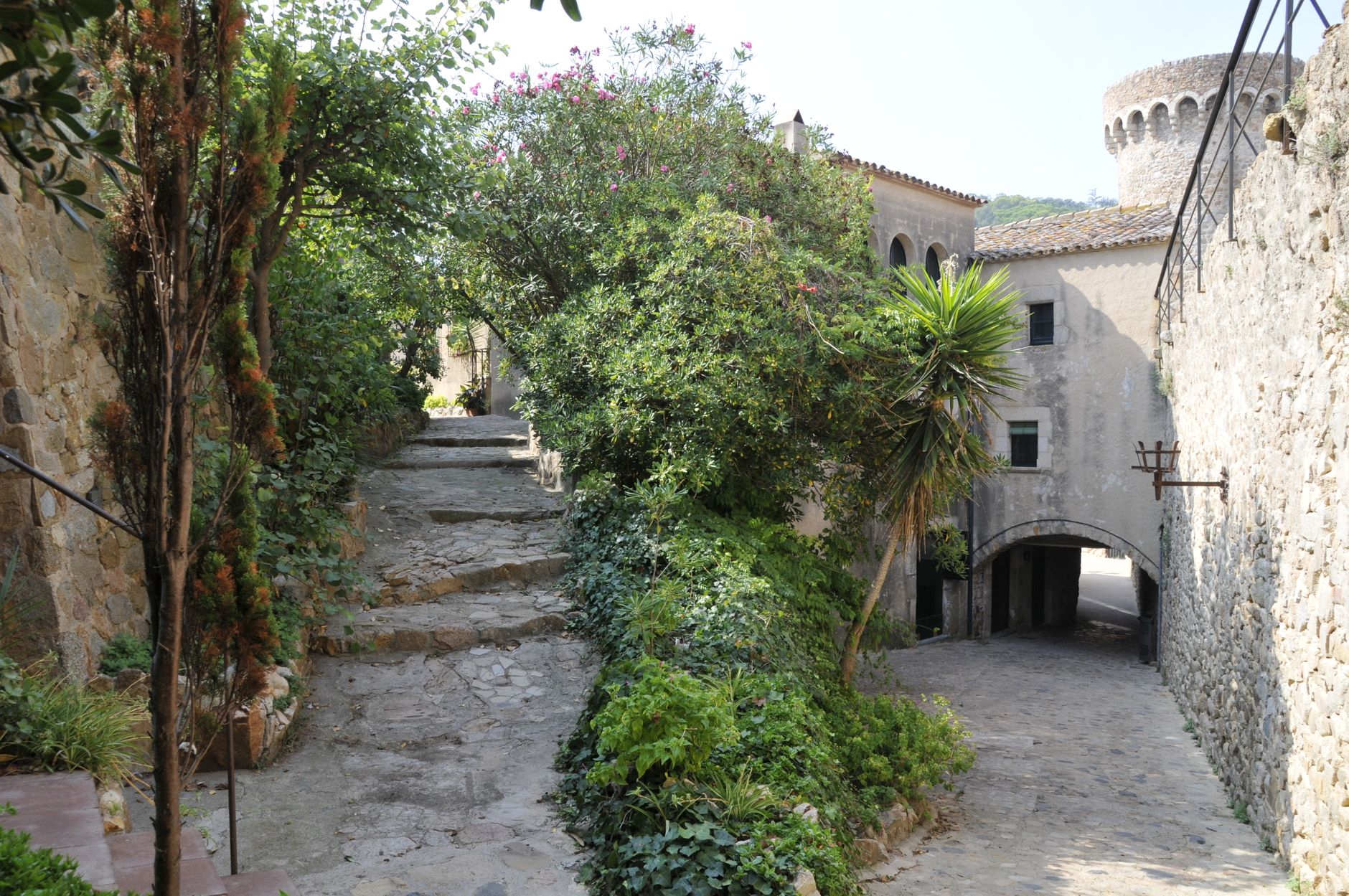
Inside is a real neighborhood, not a film set — two or three dozen people still live here, on narrow stone-paved streets that run between the Governor's House (now the Municipal Museum), the roofless shell of a Gothic church, a terrace restaurant or two, and the bronze statue of Ava Gardner set on the southern wall, looking out the way she did when the town doubled as a film location in the 1950s. Walk the ramparts: the view down over the horseshoe bay and south along the Costa Brava makes the choice of this headland for a fortress immediately obvious. Give the circuit and the walls a good three-quarters of an hour before the museum.

Museu Municipal de Tossa de Mar: the Chagall and the Roman finds
Step into the Museu Municipal de Tossa de Mar, housed in the 14th-century Governor's House inside the walls, where two collections sit side by side and explain the town better than either would alone. One room holds the mosaic finds lifted from the Roman Villa of Els Ametllers — the same pieces that gave the settlement back its Roman name, Turissa — kept here in better shape than the open-air site could ever manage. The other tells the story of the painters who settled in Tossa in the 1920s and 30s, drawn by exactly the light you walked through to get up here.
The piece everyone comes for is Marc Chagall's El Violinista Celeste, the only original Chagall in any public museum on the Costa Brava, left to the town by the painter after his summers on this bay. It was Chagall, not Ava Gardner, who called Tossa his "Blue Paradise" — the phrase that now runs through half the town's marketing belongs to the man who painted the violinist, and standing in front of El Violinista Celeste (1934) in the building it was given to is a quieter thing than seeing it reproduced on a postcard rack down the hill.
Roman Villa of Els Ametllers: the agricultural layer
A five-minute walk outside the walls brings you to the Villa Romana dels Ametllers, the 1st-century-BC estate that shipped wine across the Roman world until the settlement faded around the 5th century AD. A century of digging since 1914 has turned up thermal baths, the residential rooms, a nymphaeum, and floor mosaics — among them the one that confirmed the name Turissa for this exact patch of coast, long before any wall went up over the bay.
This is the bottom layer of the thread you have been following since the bus: Roman estate, medieval fortress, 20th-century art colony, all stacked into less than a kilometre of shoreline. Pair the site with the museum's archaeology room for the full picture — the most important mosaics were carried up to the Governor's House, not left in the ground here.
Platja Gran: the beach below the walls
Spend the afternoon on Platja Gran, the main horseshoe beach directly beneath the Vila Vella, where the cliffs ringing the bay keep the water calm and the medieval walls overhead turn an ordinary swim into something Barceloneta cannot offer. It is a working beach — deckchairs, parasol rental, beachfront restaurants — not a hidden cove, so set your expectations to a busy stretch of sand with an eight-hundred-year-old fortress looking down on it.
The sand is best in May, June, or September, before the July–August crowds compress it; in peak summer, come before 11:00 or after 16:00 to get ahead of the midday wall of people. The beach is the pleasant accompaniment to this trip. The fortification, still, is the argument.

Far de Tossa: the lighthouse view
In the late afternoon, take the steep path up from Platja Gran to the Far de Tossa, the 1917 lighthouse standing on the promontory above the Vila Vella. The lighthouse keeps a small museum on Mediterranean lighthouse history inside, but the real reason to make the climb is the angle: from up here the walls drop away below you and the whole fortified headland reads at once, the way it never quite does from the streets inside it.
Give it half an hour to forty minutes, timed so the low sun is on the stone. This is the last stop before dinner, and the light at this hour — warm on the ramparts, the bay going dark below — is the exact scene that fills most of the photographs ever taken of Tossa, worth standing in rather than scrolling past. If the climb is too much, a tourist train runs up from the town center.
Evening in the old town: the reason for staying
Come back up to the Vila Vella for dinner, because after 18:00–19:00 the day-trip buses are gone and the place changes character entirely — the cobbled lanes that churned with visitors all afternoon go quiet, and the town briefly belongs to the people who live in it again. The handful of restaurants in and around the walls — Sa Muralla, a fisherman's tavern with mid-20th-century roots; Can Pini by the walls; Restaurant Bahia on the beachfront — open up without the midday queue, and a terrace table comes within reach.
This is the structural argument for the overnight, the thing a day trip cannot buy at any price: the Vila Vella after dark is not the same place as the Vila Vella at noon. In shoulder season the difference sharpens — fewer people, cooler air, the town running for its residents instead of performing for a crowd. Dinner on a terrace inside the walls, the bay lit below and the stone lit above, is the specific payoff you stayed the night for. For a more formal meal, Can Simón is the upscale choice; book ahead.
Quick reference — Day 1
| Detail | Info |
|---|---|
| Vila Vella entry | Free |
| Museu Municipal entry | Fee — check visittossa.com (visittossa.com, June 2026) |
| Museu Municipal hours | Reduced in shoulder/low season; check visittossa.com (visittossa.com, June 2026) |
| Museu Municipal time | Allow 45–60 min |
| Roman Villa Els Ametllers | Free; ~20–30 min |
| Far de Tossa | ~30–40 min, late afternoon; cited by Lonely Planet (Lonely Planet, 2025–2026) |
| Getting up to lighthouse | Walk (steep) or tourist train from town center |
| Evening dining | Sa Muralla, Can Pini, Restaurant Bahia; Can Simón upscale (Lonely Planet, 2025–2026) |
| Dinner booking | Advisable in shoulder season; essential July–August |
Where to stay overnight
Two nights inside or just below the walls is the right pacing for this trip, and the two lodgings that matter most are the ones that put you closest to the stone after the day-trippers leave. Hotel Diana is a 4-star Modernist building on the beachfront; Hotel Cap d'Or sits inside the Vila Vella itself, which is the whole point — it leaves you behind the walls when the town empties out. Smaller guesthouses and rental apartments fill out the rest of the inventory.
Book two to three weeks ahead in shoulder season, four to six weeks for a well-placed old-town room in July or August. The honest gap here is price: rates were not captured at research time, so check the official hotel sites or hotels.com directly, and expect shoulder-season nights to run well below peak summer. One hard caution overrides everything else — see the winter note below before you book anything between November and March.
Quick reference — Where to stay
- Hotel Diana: 4-star Modernist, beachfront (cited by Lonely Planet and Frommer's).
- Hotel Cap d'Or: historic building inside the Vila Vella — closest to the fortification after dark.
- Booking lead time: 2–3 weeks shoulder season; 4–6 weeks July–August for old-town rooms.
- Pricing: not captured at research time — check official hotel sites or hotels.com; shoulder rates well below peak.
- Winter: Diana and Cap d'Or may both close November–March; verify your specific hotel is open before booking anything else.
Day 2: The coastal trail, the coves, and a final swim
Day 2 cashes in the overnight: the Camí de Ronda before the beach crowds wake up, a kayak out to coves no road reaches, a swim at the quieter beach over the headland, and a long lunch before the afternoon bus south. All four depend on the early start and the empty morning window that only staying the night can give you — a day-tripper arriving mid-morning has already missed every one of them.
Camí de Ronda: north toward Cala Bona
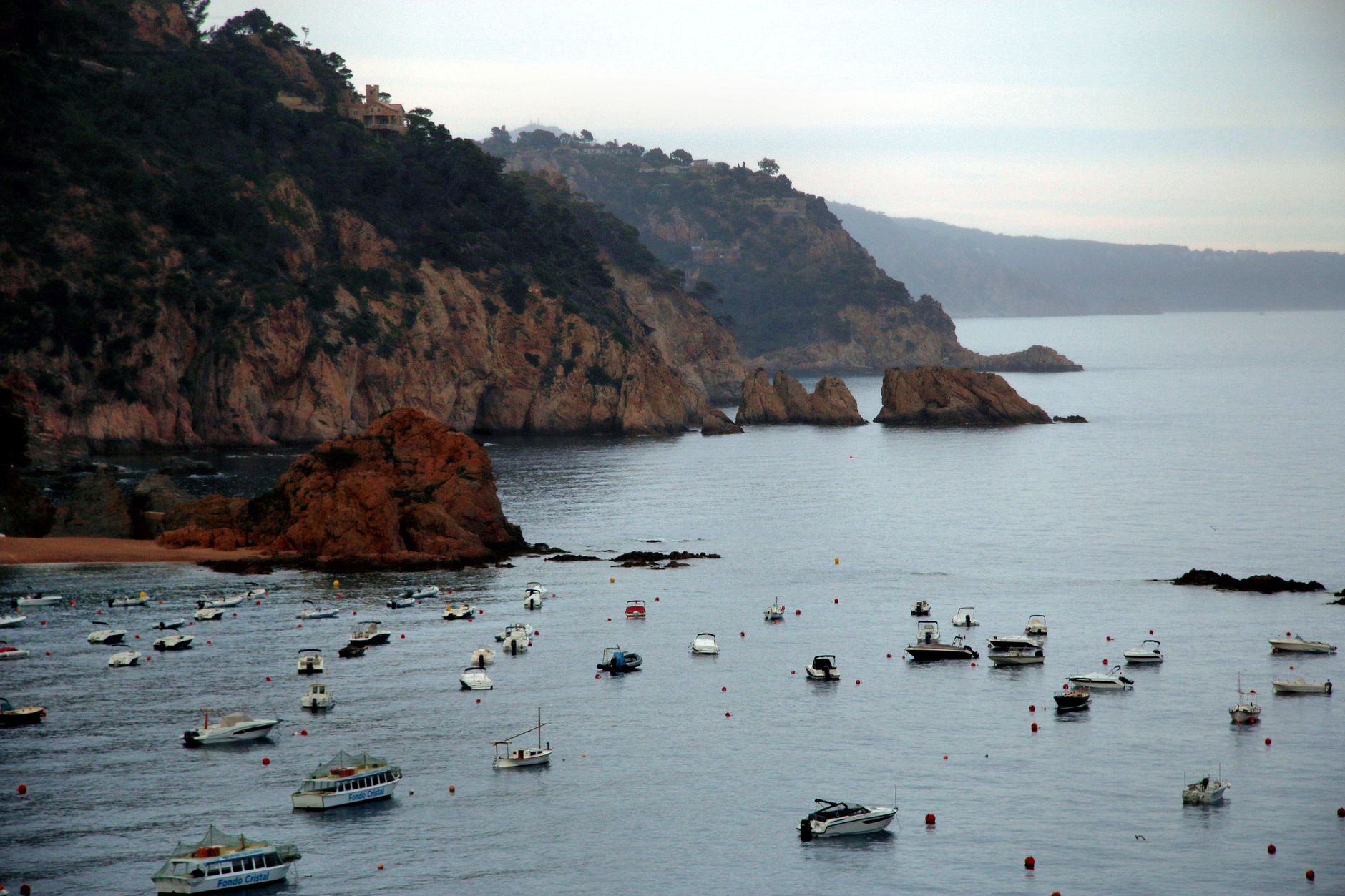
Leave the hotel early and pick up the Camí de Ronda (the GR-92, the old coastal patrol path that runs the length of the Catalan shore) heading north out of Tossa. The trail traces the same clifftops the fortress walls were built to watch — Mediterranean pine forest on the high ground, frequent drops to small coves, red-and-white blazes marking the way. It is well-defined but rocky, with sections that need a hand on the stone and proper footwear under you.
The first real cove, Cala Bona, is about forty-five minutes out, with a beach bar in season; Cala Pola and Cala Giverola lie further on. Most walkers turn at Cala Bona and head back, which makes a comfortable round-trip of ninety minutes to two hours. Go before nine, or close to it: the path is cooler, the light is cleaner, and you have the clifftops nearly to yourself before the beach below starts to fill. May, June, and September are the months for it — no mud, no midday furnace.
Morning kayak or paddleboard from Platja Gran
Back at Platja Gran, while the beach is still half-empty, is the window for a kayak or paddleboard — several operators rent gear and run guided tours to the coves north of town that no road can reach. Push off before nine and the water is glass-flat, the light is good on the color of it, and you can drift into coves in near-solitude before the day fills them.
This is strictly a morning-after-overnight thing. A day-tripper off the mid-morning bus, by the time they have walked up to the Vila Vella and back, has watched the prime kayak window close from the wrong side. The overnight simply puts you on the beach at the right hour. Out on the water, with the clarity and the quiet, the coves feel like a different town from the sunbed-and-parasol scene you paddle back into two hours later.
Platja de Mar Menuda: the swim between the hike and lunch
A five-minute walk north of Platja Gran, Platja de Mar Menuda is the calmer beach on the far side of the headland — rockier to get into, but the best place to put on a mask in the whole area. The water here is consistently clearer than the main beach and the fish are actually present, which makes it snorkel territory rather than pure sand-and-sun. Bring your own gear; rental is thin on this side compared with Platja Gran.
After the hike and the paddle, this is the spot for an unhurried swim in clean Costa Brava water before lunch. It is less serviced than the main beach, usually less crowded, and a useful contrast — the same Mediterranean, a completely different mood.
Suquet de peix lunch at a Vila Vella restaurant
Close the weekend with lunch at one of the restaurants in or just below the walls, and order the suquet de peix (soo-KAYT duh PAYSH) — the Catalan fisherman's stew of white fish and shellfish slow-cooked with potatoes, onion, tomato, saffron, and sometimes ground almonds worked into a picada. This is the dish the fishing ports of the Costa Brava built their tables on, the thing the men coming off the boats ate, and it is worth choosing over the generic tourist paella at nearly every waterfront table in town.
Sa Muralla, the fisherman's tavern with mid-century roots, Can Pini near the walls, and beachfront Restaurant Bahia all serve a version; Can Simón is the longer, more formal sit-down if you want to draw the last meal out. Whichever table you pick, leave time — the kitchens fill at midday and the better ones reward a reservation. Then check the afternoon departures on moventis.es and walk down to the bus station for the run back to Barcelona.
Quick reference — Day 2
| Detail | Info |
|---|---|
| Camí de Ronda (north to Cala Bona) | ~45 min one-way; red-and-white GR blazes; sturdy footwear required |
| Full Camí de Ronda round-trip | ~90 min–2 hours at an easy pace; best May–June, September |
| Kayak/paddleboard operators | Rental and guided tours from Platja Gran; push off before 09:00 |
| Platja de Mar Menuda | ~5 min walk north of Platja Gran; bring snorkeling gear |
| Lunch dishes & spots | Suquet de peix at Sa Muralla, Can Pini, Restaurant Bahia; Can Simón upscale (Lonely Planet, 2025–2026) |
| Lunch price signal | ~€20–€35/person, higher in peak summer (point-in-time indication, June 2026; verify before publishing) |
| Return bus | ~1h 40m to Barcelona Estació del Nord; verify last-return time on moventis.es |
Back to Barcelona
Plan the return for early afternoon, building the second day around the morning Camí de Ronda walk and a long Vila Vella lunch rather than a late dash for the bus — the run back to Barcelona Estació del Nord is about an hour and forty minutes. A departure around 14:00–15:00 puts you back in the city by late afternoon. If you want to stretch the lunch and catch a later service, confirm the evening departures run on your date and direction; shoulder season thins them out.
You flew into Barcelona, and Barcelona is the gateway this weekend orbits. The Vila Vella is not a reason on its own to cross an ocean — but for a traveler already in the city with a free weekend, it is the most specific thing the coast offers within two bus hours that Barcelona itself cannot replicate: an intact medieval fortress standing over the sea, the same stone above the same water the Romans, the Viscounts, and Chagall all answered to in their turn. That is what the two days actually deliver.
Practical notes
Season choice carries most of the weight on this trip: shoulder season (May–June, September–October) is when the town, the lodging, and the restaurant rhythm all line up, while high summer and deep winter each ask you to compromise something. Plan around the season first, then the last bus.
Shoulder season (May–June, September–October) is the window to aim for. Most hotels and restaurants are open, crowd density runs well below July–August, walking temperatures sit in a comfortable 17–24°C, and the evening Vila Vella is at its best when the town is functioning for its residents rather than at full tourist volume. May and September come recommended specifically (Near and Far Explorers, 2025; Champion Traveler, 2025).
Summer peak (July to mid-September) is workable but crowded. Platja Gran fills hard, August most of all; the Vila Vella stays walkable but busy through midday; accommodation prices climb. Book bus and hotel four to six weeks out. The overnight still pays off — the evening-empties dynamic holds — but the daytime is louder and more compressed.
November to March: not recommended without verified accommodation. This is not a footnote but the operating reality of a seasonal resort town. Most hotels close from around November; many restaurants shut October–November and reopen near Easter. Bus frequency drops to a few services a day. If you go in this window, confirm directly with your specific hotel and restaurants that they are open before booking anything else — Hotel Diana and Hotel Cap d'Or may both be closed, and arriving without a confirmed bed in a largely shuttered town is a documented traveler experience with no good fix on the ground. Late April or early May is a far better early-season call.
Last return bus timing matters. In summer the last Moventis/SARFA bus out of Tossa runs late — sources cite services until roughly 21:00–22:00 in peak season — but in winter and shoulder season it falls earlier. Verify the exact last-service time on moventis.es before you go, especially if you are eyeing a Day 2 dinner or a drawn-out lunch. Missing the last bus because you skipped the timetable is the one wholly avoidable problem on this trip.
The Camí de Ronda southern section (toward Lloret) offers shorter, easier segments — a 30–60 minute post-lunch walk with viewpoints and the small Cala del Molí cove for a swim — if you want a second stretch of trail on Day 1, or a lighter substitute if the Day 2 northern leg feels like enough.
Driving makes sense for groups or anyone stringing Tossa together with other Costa Brava stops like Girona, Sant Feliu de Guíxols, or Calella de Palafrugell. The AP-7/C-32 route runs about an hour and a quarter from Barcelona, with fuel and tolls around €30–€45 round-trip per car (ViaMichelin, June 2026); in July and August the parking on Tossa's outskirts fills early. The scenic GI-682 from Lloret de Mar adds fifteen to twenty minutes but threads clifftop pine forest worth the detour if you have the time.
Making a longer trip of it? Two more easy escapes from Barcelona: Ripoll's Romanesque portal and the cava country of Sant Sadurní d'Anoia.
Frequently asked questions
Is Tossa de Mar worth staying overnight?
Yes, with the right expectations. An overnight shifts the trip from a day excursion to a different kind of visit: the day-trippers leave after 18:00, the Vila Vella's cobbled streets empty, and the town's evening atmosphere is not what you see at noon. It also makes the morning Camí de Ronda coastal walk practical and opens up kayak access to coves before the beach crowds arrive. Shoulder season — May–June and September–October — gives the best overnight experience overall.
How do I get to Tossa de Mar from Barcelona?
Take the direct Moventis/SARFA bus from Barcelona Estació del Nord (Carrer d'Ali Bei, 80). Journey time is approximately 1 hour 40 minutes with no transfers; fares run around €14–€17 one-way based on aggregator data from June 2026 — verify current pricing on moventis.es or Omio before booking. There is no direct train to Tossa de Mar; the rail alternative requires a Renfe R1 to Blanes and then the L69 local bus, adding about 20 minutes each way and an earlier last-return constraint.
Is Tossa de Mar worth visiting in winter?
For most visitors, no. November through March sees widespread closure of hotels and restaurants — this is the seasonal resort reality, not an edge-case. Bus frequency drops significantly. The Vila Vella and outdoor spaces remain accessible year-round, but the visitor-facing town largely shuts down. If you have confirmed that your specific hotel and restaurants are open, a quiet winter visit is possible — but do not assume anything is operating. Late April or May is a far better early-season option.
What makes Tossa de Mar different from other Costa Brava towns?
The Vila Vella is the specific differentiator. Tossa is the only town on the entire Catalan coast with an intact fortified medieval settlement — original 13th-century perimeter walls, battlements, and cylindrical towers still standing. Lloret de Mar, 5 km south, is a package-holiday resort built on different infrastructure and attracts a different visitor profile entirely. Calella de Palafrugell and Begur to the north have their own character but no equivalent medieval monument.
What is the Vila Vella in Tossa de Mar?
The Vila Vella (Catalan for 'old town') is Tossa de Mar's 13th-century fortified medieval settlement, built in the early 1200s to defend against pirate raids. Its original perimeter walls, battlements, cylindrical towers, and interior streets remain largely intact and were declared a National Historic-Artistic Monument in 1931. It is formally the only surviving example of a fully fortified medieval town on the Catalan coast. The interior holds inhabited streets, the Municipal Museum, restaurant terraces, and the ruins of a Gothic church.
What is suquet de peix?
Suquet de peix (soo-KAYT duh PAYSH) is the traditional Catalan fisherman's stew: white fish and shellfish slow-cooked with potatoes, onion, tomato, saffron, and sometimes ground almonds in a picada. It is the characteristic dish of Costa Brava fishing ports and appears on most Tossa restaurant menus. It is worth ordering over the generic tourist-paella option at most waterfront spots — particularly at Sa Muralla or Can Pini near the walls.
How crowded does Tossa de Mar get in summer?
July and August are the busiest months. Platja Gran fills with day-trippers from Barcelona and resort guests; the Vila Vella is walkable but busy from mid-morning to early evening. August is the peak and functions as a logistics challenge rather than an escape — advance bus and hotel booking 4–6 weeks out is essential. June and September maintain most of the summer experience with meaningfully lower crowd density and are the recommended months for this overnight trip.
Is the Camí de Ronda worth doing from Tossa?
Yes, particularly the northern section toward Cala Bona — about 45 minutes one-way along clifftop pine forest with descents to coves accessible only on foot. The trail is marked with red-and-white GR blazes and requires sturdy footwear; sections involve scrambling on rocky terrain. Best in May–June and September to avoid peak midday summer heat. An overnight in Tossa makes an early-morning start on this trail practical, which is one of the two clearest reasons the trip rewards two days rather than one.