
10 things to do in São Paulo in 3 days
São Paulo announced itself before most travelers are ready for it — a concrete horizon that stretches in every direction without a hill to break it, too vast to scan from any street corner, too dense for the eye to find a focal point. First impressions here tend to be the same: this is a lot, and none of it looks like a postcard. That's the city's real advantage and its most common misunderstanding. São Paulo's rewards are distributed — across its restaurant tables, its alley murals, its weekend street rituals — not concentrated at monuments. Visitors who arrive expecting a ranked-attractions list leave mildly confused. Visitors who eat, join, and wander come back.
For North American travelers, São Paulo is also the logical way into Brazil. GRU (Guarulhos International Airport) has nonstop service from roughly nine US cities and handles 43.6 million passengers a year, making it South America's busiest international airport by volume (AirportInformation.com, 2026). Fares from Miami start from $210 one-way (recent low, Jun 2026 searches) and round trips from the East Coast typically run $400–$600. The city works best as the opening leg of a longer trip — three days here, then a domestic flight to Foz do Iguaçu for Iguazú Falls, then Rio de Janeiro and home — an open-jaw ticket (flying into one city and home from another, so you never retrace the same ground) that the GRU domestic network makes easy to build.
Here are 10 specific things to do. Each one has a concrete reason it's on the list, and each gives you something to taste, order, climb, or join — not just look at.
1. See MASP and walk Avenida Paulista

MASP — the Museu de Arte de São Paulo Assis Chateaubriand — is free on Tuesdays and Thursday evenings, houses more than 10,000 works including Van Gogh, Rembrandt, and Picasso, and sits directly on Avenida Paulista in a suspended glass-and-concrete structure that Lina Bo Bardi designed in 1968 (US News Travel, 2025; MASP official).
The building does something unusual: it lifts off the ground entirely on two red concrete pillars, leaving an open civic plaza underneath — the Trianon-MASP plaza — that serves as a weekend exhibition and protest space in its own right. Bo Bardi, a Brazilian architect of Italian origin, wanted the museum to be transparent to the avenue, not walled off from it. Stand underneath and look up through the glass floor of the suspended hall: it's one of the more vertiginous architectural experiences in a city that takes architecture seriously. Walk the avenue itself — São Paulo's main artery, lined with corporate towers, street vendors, and the kind of daily human density that makes Rome feel manageable. Thursday evenings, when MASP extends to 8 PM and admission is free for everyone, are the best time: the city is out, the plaza fills, and the avenue is at its most itself.
Practical: Open Tue–Sun 10 AM–6 PM (Thu until 8 PM). Admission R$35 adults (~$7 USD at June 2026 rates); free Tue and Thu evening. Metro: Trianon-MASP (Line 2 – Verde).
2. Spend a morning at the Pinacoteca do Estado
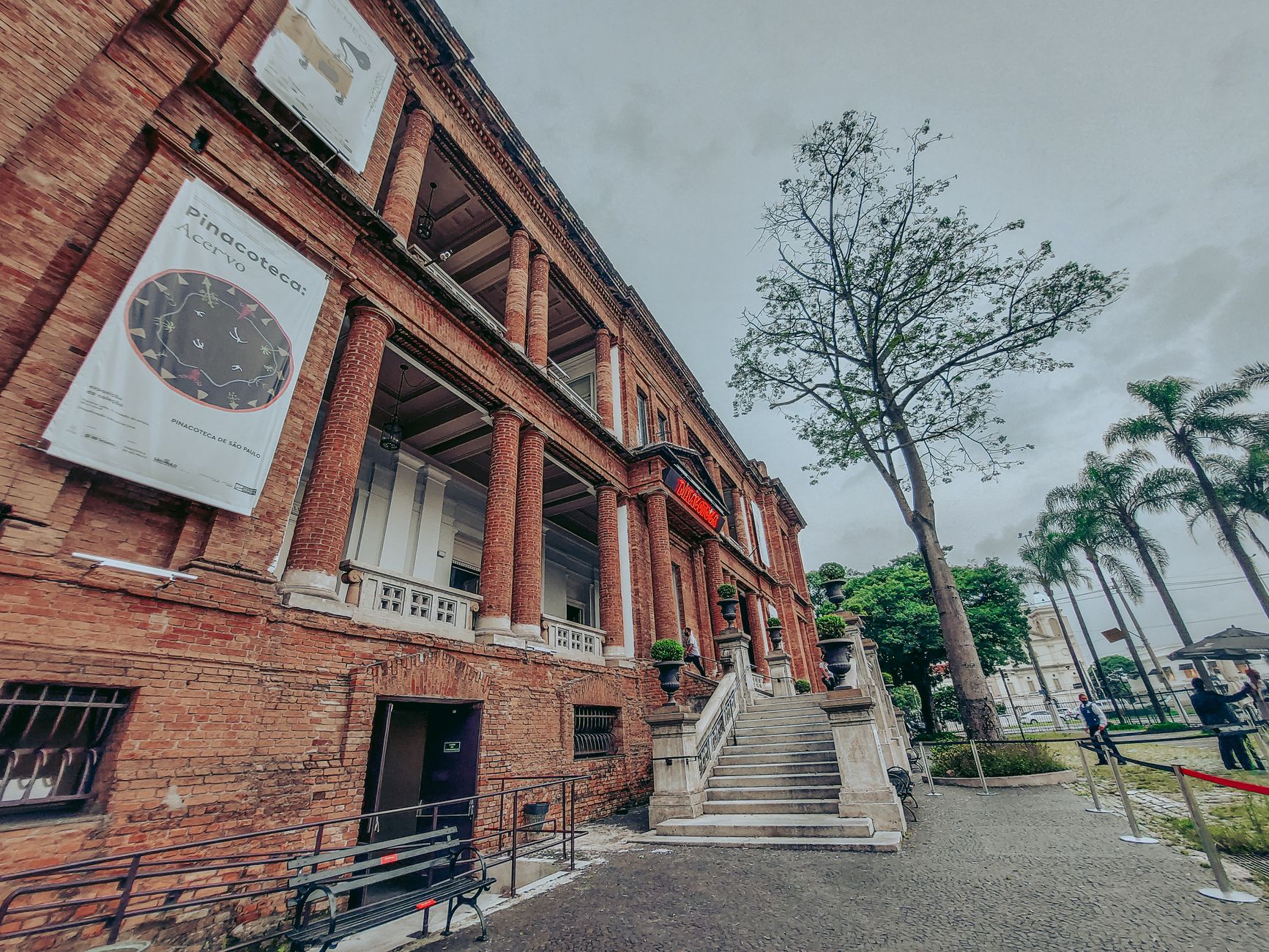
The Pinacoteca do Estado is Brazil's oldest fine art museum — founded in 1905 — and holds the most significant collection of Brazilian art in the country, from 19th-century academic painting through contemporary work (Audiala, 2025). Admission is R$6 (~$1.20), free on Saturdays and Thursday evenings.
While MASP draws the international comparison (a Van Gogh, a Rembrandt), the Pinacoteca is the place to understand what Brazilian artists have been doing on their own terms for more than a century. The collection spans the Academic period, Impressionist-influenced work by Almeida Júnior, Modernist painting by Tarsila do Amaral and Lasar Segall, and contemporary Brazilian artists who don't appear in any major European collection. The building, a renovated 19th-century neoclassical structure in the Luz neighborhood, is quieter and less theatrically staged than MASP — which is part of why the work gets more room to breathe. Luz itself is a historically rough part of downtown, and while the museum and the Sala São Paulo concert hall nearby have anchored some revitalization, it's worth knowing where you're going and not straying far from the immediate museum block after dark.
Practical: Tue–Sun 10 AM–5:30 PM (Thu until 10 PM). R$6 adults; free Sat and Thu evening. Allow 1.5 hours. Metro: Luz (Line 1 – Blue or Line 3 – Red).
3. Eat the mortadella sandwich at the Mercadão

The mortadella sandwich at Hocca Bar inside the Mercado Municipal — a 300-gram roll of Ceratti mortadella (a São Paulo–specific cured meat product) stuffed into a French roll with melted cheese — is the city's most specific food ritual, and the market itself is worth the visit for its 1933 stained-glass windows alone (Audiala, 2025; The Culture Trip, 2025).
The building, designed by Francisco Ramos de Azevedo and opened in 1933, is unusual for a food market: its soaring stained-glass windows depict food production scenes rather than religious motifs, turning the market hall into something closer to an edible cathedral. Hocca Bar, on the ground floor, is where the sandwich happens — two thick slabs of folded Ceratti mortadella, a drape of melted cheese, and a roll big enough that eating it tidily is not an option. Anthony Bourdain included the Mercadão on his São Paulo visit for exactly this reason. Go for the sandwich and the architecture. The market is genuinely tourist-facing, with some vendors using aggressive free-sample tactics before presenting prices well above neighborhood rates — treat it as a spectacle to participate in selectively, not as a place to stock up on groceries. The second-floor restaurants are calmer than the ground-floor stalls if you want to sit down.
Practical: Metro: Anhangabaú or São Bento. Arrive before noon on weekends to avoid the longest queues at Hocca Bar. (EatLikeBourdain.com)
4. Walk Ibirapuera Park and see the Museu Afro Brasil
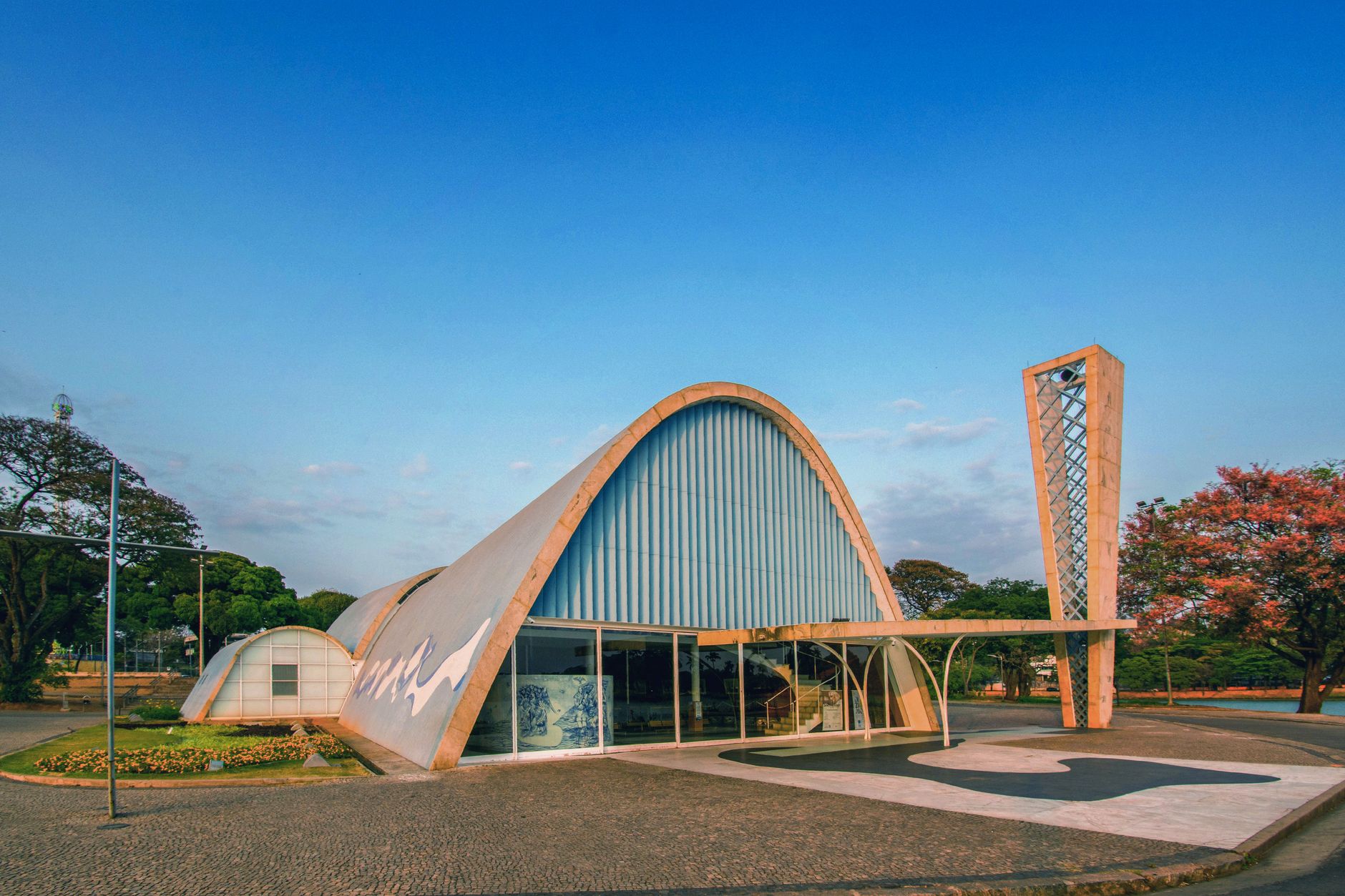
Ibirapuera Park is São Paulo's largest urban park — 1.6 million square meters — designed in the 1950s with buildings by Oscar Niemeyer, and contains the Museu Afro Brasil, MAM (Museum of Modern Art), and a Japanese pavilion alongside its paths, lakes, and running tracks (Lonely Planet, 2025; Go Ask A Local, 2025).
Niemeyer's modernist pavilions are the most accessible examples of Brazilian mid-century architecture in the city — the curved concrete Marquise roofline and the slender columns supporting the Museu Afro Brasil building are the kind of structures you can walk around rather than just look at from behind a rope. The Museu Afro Brasil is the one most visitors skip and shouldn't: three floors of paintings, sculpture, textiles, and photographs tracing the African contribution to Brazilian culture, from the slave trade through Candomblé (an Afro-Brazilian spiritual tradition with roots in West Africa), capoeira, and contemporary Afro-Brazilian art. The park itself is best on weekday mornings, when the jogging tracks and bike paths are active but not crowded; Sunday afternoons bring half the city out to picnic.
Practical: Park open daily, free entry. Museu Afro Brasil hours and admission vary — verify current schedule before visiting. Metro: Moema (Line 5 – Lilac), then a 15-minute walk or short bus ride.
5. Walk Beco do Batman before 10 AM
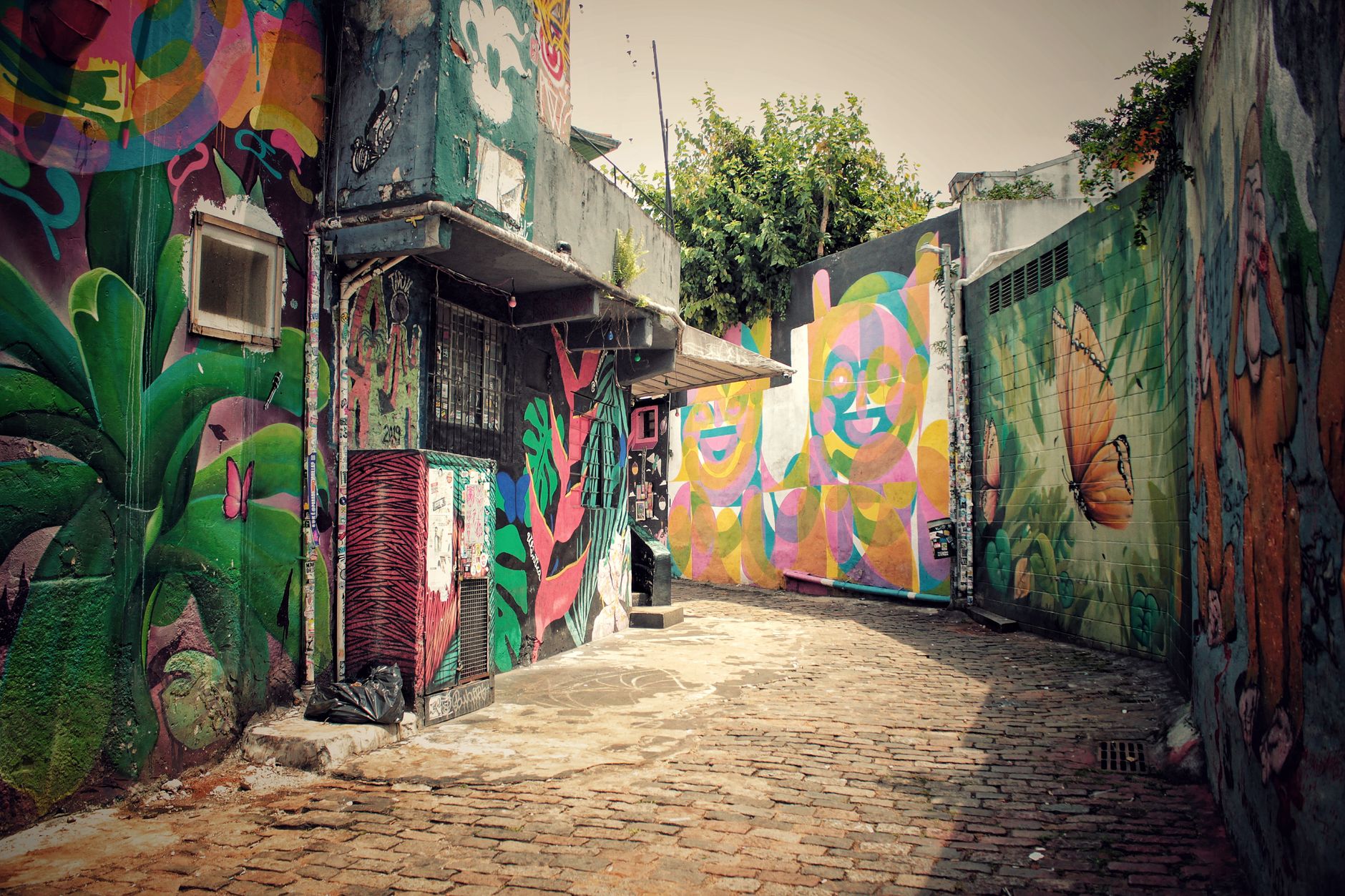
Beco do Batman (Batman's Alley) is a narrow alley system in Vila Madalena covered in continuously rotating murals by Brazilian graffiti artists — including large-scale work by internationally recognized painter Eduardo Kobra and dozens of other artists whose work changes regularly (Audiala, 2025; New City Brazil, May 2025). Free, always accessible, best before 10 AM on weekdays.
The murals here are not fixed attractions — what was on the walls last year is probably gone now, painted over by something newer. That's the point. The alley is a live surface, not a gallery, and the density of layers visible on older sections — ghost images of older work showing through newer paint — is part of what makes it worth seeing rather than just photographing. Kobra's large-scale São Paulo murals appear elsewhere in the city too, including on Avenida Paulista and Rua da Consolação, but verify specific works before relying on them as destinations: murals on building facades can be painted over or altered between travel research and your actual visit. At Beco do Batman, the rotating nature is the experience. A small café on the corner opens early; the alley empties noticeably once the tour groups arrive after 10 AM on weekends.
Practical: Free. Metro: Vila Madalena (Line 2 – Verde).
6. Spend a night out in Vila Madalena

Vila Madalena is where the food, bar, and gallery scenes that define São Paulo's international cultural reputation are most concentrated and walkable — independent bars and restaurants on the side streets, the Saturday Feira da Praça Benedito Calixto (part antique market, part food fair, part live music), and the Rua Augusta nightlife strip beginning nearby (Go Ask A Local, 2025; Matador Network, 2025).
The Feira runs from around 9 AM to late afternoon on Saturdays — stalls selling vintage furniture, vinyl records, hand-printed textiles, and regional food alongside enough live samba and MPB (Música Popular Brasileira, the broadly defined canon of Brazilian popular music) to establish that São Paulo's relationship with music is not just imported from Rio. In the evenings, the neighborhood's bars fill gradually from about 8 PM, with the actual social peak arriving closer to 10 PM or later — São Paulo runs on a schedule that takes some adjusting to if you're coming from North America. Rua Augusta, a few blocks east, has a denser and more mixed nightlife strip, but Vila Madalena's independent bar scene is the more interesting introduction to how the city actually socializes. Research specific venues before walking in cold on Rua Augusta; travel forums document some bars there with pushy staff and inflated billing practices.
Practical: Metro: Vila Madalena (Line 2 – Verde) or Fradique Coutinho. Feira da Praça Benedito Calixto runs Saturdays from approximately 9 AM.
7. Spend half a day in Liberdade and visit the Museu Histórico da Imigração Japonesa
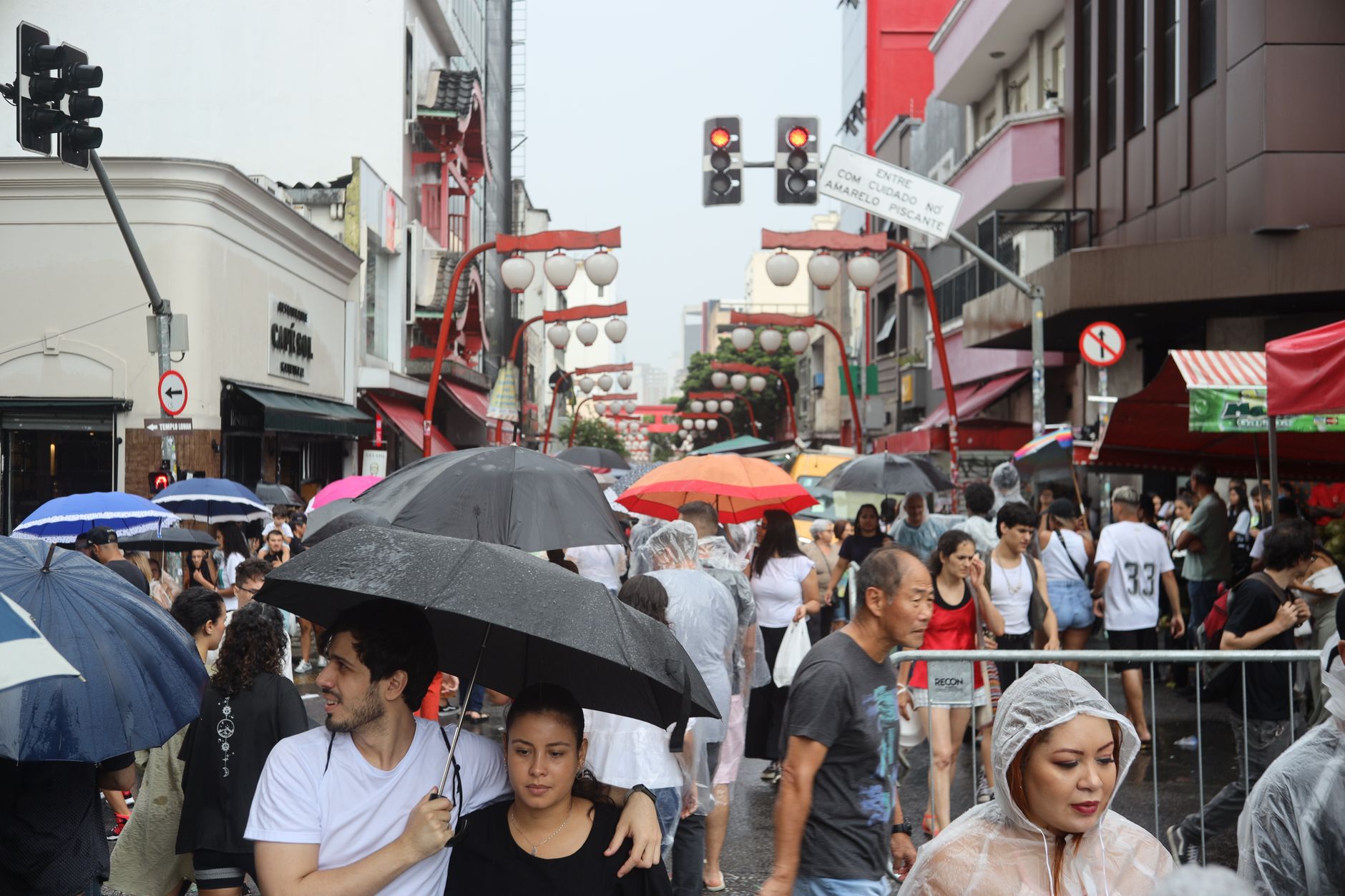
Liberdade is the center of the world's largest Japanese diaspora community outside Japan — São Paulo has roughly 1.5 million Nikkei (Brazilians of Japanese descent), and the neighborhood's Museu Histórico da Imigração Japonesa provides three floors of photographs, artifacts, and film tracing more than 100 years of Japanese immigration to Brazil (Caffeinated Excursions, 2025; Frommer's).
The museum is the part of Liberdade that most English-language guides skip in favor of a paragraph about gyoza. That's a mistake. Japanese immigration to Brazil began in 1908 — the first ship of workers arrived in Santos to labor on coffee plantations in São Paulo state, families who had been recruited with promises that didn't survive contact with reality. The museum traces that founding experience through subsequent decades: the acculturation, the discrimination during World War II, the remarkable cultural hybridization that produced a Nikkei community that is today deeply, particularly Brazilian while retaining distinct markers of Japanese culture in food, aesthetics, and community structure. The weekend street market near the Liberdade metro — lanterns strung across the street, Japanese and Korean food stalls alongside Portuguese-language signs — is the street-level version of what the museum explains. Go to both. Best on weekends when the market is active.
Practical: Metro: Liberdade (Line 1 – Blue). Museum hours and admission: verify before visiting. Daytime visit recommended; the neighborhood is primarily residential.
8. Walk the Minhocão on a weekend
The Minhocão — officially Via Elevada Presidente João Goulart, an elevated highway through downtown São Paulo — closes to cars on weekday evenings after 8 PM and all day on weekends, becoming an informal 3.5-km linear park where locals cycle, roller-skate, walk dogs, and read in the sun (Wikipedia — Minhocão; Great Runs). Free, no ticket, no barrier.
This is the item most absent from English-language São Paulo guides, and the most genuinely local thing on this list. On a Sunday morning, the Minhocão is a kind of civic exhale — the highway itself becomes the park, with large murals on the gable ends of the apartment buildings that face the elevated road at close range. Residents on those same apartments have a complicated relationship with the structure (noise, pollution, views of concrete rather than sky on weekdays), but on weekend mornings the balconies face a street festival that just happens to be 10 meters in the air. The experience is São Paulo at its most São Paulo: a piece of infrastructure that the city wasn't sure what to do with, repurposed through sheer collective habit into something that functions better than what it replaced.
Practical: Free. Open evenings after 8 PM on weekdays; all day Saturday and Sunday. Central location — within walking distance of Consolação metro.
9. Eat the Brazilian Northeast at Mocotó or Tordesilhas

Dinner at Mocotó — chef Rodrigo Oliveira's north-zone restaurant specializing in the food of Brazil's Sertão (the northeastern interior) — or at Tordesilhas, where chef Mara Salles has been making the case for Amazonian and Bahian ingredients for over 20 years, is the serious-food experience that explains why São Paulo has an international culinary reputation (Tripadvisor, 2025; Wanderlog).
São Paulo is globally associated with churrasco (Brazilian-style grilled meat over charcoal) and caipirinha. Both are real, and both are everywhere. But the more interesting story is the Sertão tradition that Mocotó represents: the food of Brazil's northeastern interior, historically poor and historically overlooked, now the subject of serious culinary attention. Rodrigo Oliveira took over from his Pernambuco-born father José Almeida, who opened Mocotó more than 50 years ago. Dishes include moqueca (a stew of fish or shellfish with palm oil and coconut milk, with roots in Afro-Brazilian coastal cooking), tacacá (a hot broth from Pará, made with jambu leaf — the leaf causes a mild numbing and tingling sensation on the tongue), and the house caipirinhas made with cachaça. Mocotó has appeared on World's 50 Best Restaurants lists and is not in a tourist corridor — it's a genuine Uber ride north of the center. At Tordesilhas, Mara Salles's focus on Minas Gerais and Bahia flavors occupies a more central Pinheiros location. Both require reservations on weekends.
Practical: Mocotó: Vila Medeiros neighborhood, ~25 min by Uber from Paulista. Around R$80–150 per person. Book in advance on weekends. Tordesilhas: Pinheiros, accessible by Metro (Fradique Coutinho). Mid-to-upper price range. (Tripadvisor, 2025; Wanderlog)
10. Get above the concrete sea

The 17th-floor rooftop terrace at Sesc Paulista on Avenida Paulista gives you the view the city resists offering at street level — the full horizontal scale of São Paulo's concrete expanse, towers in every direction, the density that the term "concrete sea" describes accurately (Go Ask A Local, 2025).
Most cities arrange themselves around a viewpoint. São Paulo doesn't cooperate — there's no Eiffel Tower height, no hill the whole city faces, no single vantage point the tourist infrastructure has organized itself around. The Sesc Paulista terrace is the practical answer: a cultural center on Paulista, free to enter, with a rooftop that is simply open. From up there the scale lands differently than it does at street level. You can see the Serra da Cantareira on the northern horizon on clear days — the Atlantic Forest ridge that holds one of the largest urban forests in the world, 7,900 hectares, a UNESCO Biosphere Reserve where the Pedra Grande trail climbs to a granite outcrop with the city's concrete visible on one side and tropical forest on every other. For anyone with a free half-day, Serra da Cantareira (about 30 minutes north by bus or Uber) is the version of this view with Atlantic Forest in the foreground — a contrast that the city doesn't give you any other way.
Practical: Sesc Paulista: Avenida Paulista. Hours vary by season — check the Sesc São Paulo website before visiting. Serra da Cantareira: ~30 min by bus or Uber from the city center (25 km north). Open Tue–Sun. Park entry fee ~R$20 (verify current rate before visiting).
Practical notes
São Paulo rewards three focused days more than three days spread thin — the metro is reliable but the city is large, and rush-hour traffic (roughly 7–10 AM and 5–8 PM on weekdays) can turn a 20-minute journey into 90 minutes (Oyster.com, 2025).
Getting around. The Metrô (6 lines, 65+ stations) runs 4:40 AM–midnight daily (1 AM Saturdays) and costs R$5.20 per ride — the practical way to reach MASP, Vila Madalena, and Liberdade. Use Uber for cross-city trips and for restaurants off the metro network (Mocotó, most north-zone destinations). Do not hail unregistered street taxis, particularly at GRU arrivals or near Paulista — documented express kidnapping risk from unlicensed cabs (World Nomads, 2025). Book through the app; verify the plate and driver before getting in.
Airport to city. From GRU (Guarulhos), the CPTM Line 13 (Jade) runs to the metro network for R$5.00 ($1 USD), about 45 minutes to a city-center transfer at Engenheiro Gould. The EMTU bus 257 costs the same and runs every 15–25 minutes. An Uber from GRU runs R$130–200 ($26–40 USD) depending on traffic.
Safety, specific. São Paulo recorded its lowest robbery rate in 25 years in 2025 (Sao Paulo For Foreigners, 2026). The main tourist neighborhoods — Paulista, Jardins, Pinheiros, Vila Madalena, Moema — are safe for daytime pedestrian movement. Keep your phone in a closed bag, not in your hand, on the metro — pickpocketing is active on crowded trains. Avoid the historic center after dark and route around the Cracolândia area (near the historic center, a public health crisis zone). Walk the Liberdade museum visit during daylight.
Money. 1 USD ≈ R$5 (approximate, June 2026; the Brazilian real has been volatile — verify the current rate at time of travel). In restaurants, a 10% service charge is often already included in the bill (marked as serviço) — if so, no additional tip is expected, though a small amount for attentive service is appreciated. Cash is useful for the Minhocão and street markets; Pix (Brazil's instant payment system) is widely accepted at restaurants and some vendors.
Language. Portuguese is necessary for daily city life — English is uncommon outside upscale hotels and international restaurants. Google Translate's camera mode handles menus and street signage. Even basic phrases — obrigado/a (thank you), com licença (excuse me), quanto custa? (how much?) — smooth interactions considerably.
US visa. As of April 10, 2025, US citizens need an e-visa to enter Brazil ($80.90, apply at brazil.vfsevisa.com). Allow at least 10 business days. This is time-sensitive information — re-verify against the US Embassy in Brazil's official site before booking (US Embassy Brazil, 2025).
Best time to visit. March–May (fall) and October–November (spring) offer comfortable temperatures and low rainfall. June–August is dry and pleasantly cool. December–February is hot (highs ~30°C / 86°F) with heavy afternoon thunderstorms; Carnival (February/March) brings street parties, peak crowds, and higher prices.
Weekend extensions. With an extra day or two beyond the core three, Serra da Cantareira (30 min north, the Pedra Grande trail view) is a half-day. Campos do Jordão — a mountain town 170 km out in the Serra da Mantiqueira at 1,700 m elevation, genuinely cool in June–July and worth an overnight — is a two-day trip rather than a day trip, and better saved for a return visit or a longer Brazil leg.
The onward trip. São Paulo's domestic flight network connects to every major Brazilian city. The most practical Brazil-in-two-weeks structure: fly into GRU, spend 3–4 days in São Paulo, then take a domestic flight to Foz do Iguaçu (Iguazú Falls, about 1h 50 min) and another to Rio de Janeiro to fly home — an open-jaw that uses GRU's connectivity and means the whole trip moves forward rather than backtracking. Domestic fares from GRU to Foz do Iguaçu start from around $65–72 one-way (recent low, KAYAK/Travelocity, Jun 2026); GRU to Rio from about $29–35 one-way (Skyscanner/KAYAK, Jun 2026). All fares are from aggregator search summaries, not cached Treverra data — treat these as directional and verify at time of booking.
Planning São Paulo? Also worth reading: 3 days in São Paulo.
Frequently asked questions
How many days do you need in São Paulo?
Three days is enough to cover the essential neighborhoods — Paulista and Luz on day one, Vila Madalena and Liberdade on day two, Pinheiros or the north zone for a serious dinner on day three. You won't exhaust the city, but you'll understand why people come back. A fourth or fifth day unlocks the forest at Serra da Cantareira or the mountain town of Campos do Jordão.
What is São Paulo known for?
São Paulo is Brazil's financial and cultural capital — home to the country's most sophisticated restaurant scene, a serious contemporary art circuit anchored by MASP and the Pinacoteca, and a nightlife culture that runs later and harder than anywhere else in South America. It's also the world headquarters of Brazilian Japanese culture: roughly 1.5 million Nikkei (Brazilians of Japanese descent) live here, the largest such population outside Japan.
Do US citizens need a visa to visit Brazil?
Yes — as of April 10, 2025, US citizens need an e-visa to enter Brazil. Apply at brazil.vfsevisa.com at least 10 business days before travel. The fee is $80.90. The visa is valid for 10 years with multiple entries and allows stays of up to 90 days. Verify current requirements with the US Embassy in Brazil before booking, as policies can change. (US Embassy Brazil, 2025)
What is the best neighborhood to stay in São Paulo?
Jardins and Consolação, on either side of Avenida Paulista, put you within walking distance of MASP and the metro. Pinheiros is the best option if you want to be in the thick of the bar and restaurant scene. Vila Madalena suits travelers who want walkable nightlife and street art on their doorstep. All three neighborhoods are safe for pedestrian movement during the day and evening.
What is the Minhocão in São Paulo?
The Minhocão — officially Via Elevada Presidente João Goulart — is a 3.5 km elevated highway running through the heart of downtown São Paulo. On weekday evenings after 8 PM and all day on weekends, it closes to cars and becomes an informal linear park. Locals roller-skate, cycle, walk dogs, and read in the sun along it. It's one of the city's most genuine local rituals and almost entirely absent from English-language tourist guides.
What is moqueca?
Moqueca is a Brazilian fish or shellfish stew made with palm oil (dendê oil), coconut milk, tomatoes, onions, and coriander — a dish with deep roots in Afro-Brazilian coastal cuisine. The Bahian version uses more palm oil and is richer; the Capixaba version (from Espírito Santo) uses less and is lighter. At restaurants like Mocotó and Tordesilhas in São Paulo, you'll also find tacacá — a hot broth from Pará made with jambu leaf, which causes a mild tingling sensation on the tongue.
Is São Paulo worth visiting on a Brazil trip?
Yes — especially as the opening leg. GRU is South America's busiest international airport with nonstop service from roughly nine US cities, and fares are generally lower than into Rio. A practical Brazil trip runs São Paulo first (2–4 days) → Foz do Iguaçu for Iguazú Falls (~2 days) → Rio de Janeiro to fly home — an open-jaw ticket that means you never retrace the same ground.