5 days in Amsterdam and beyond: when to stay, when to go
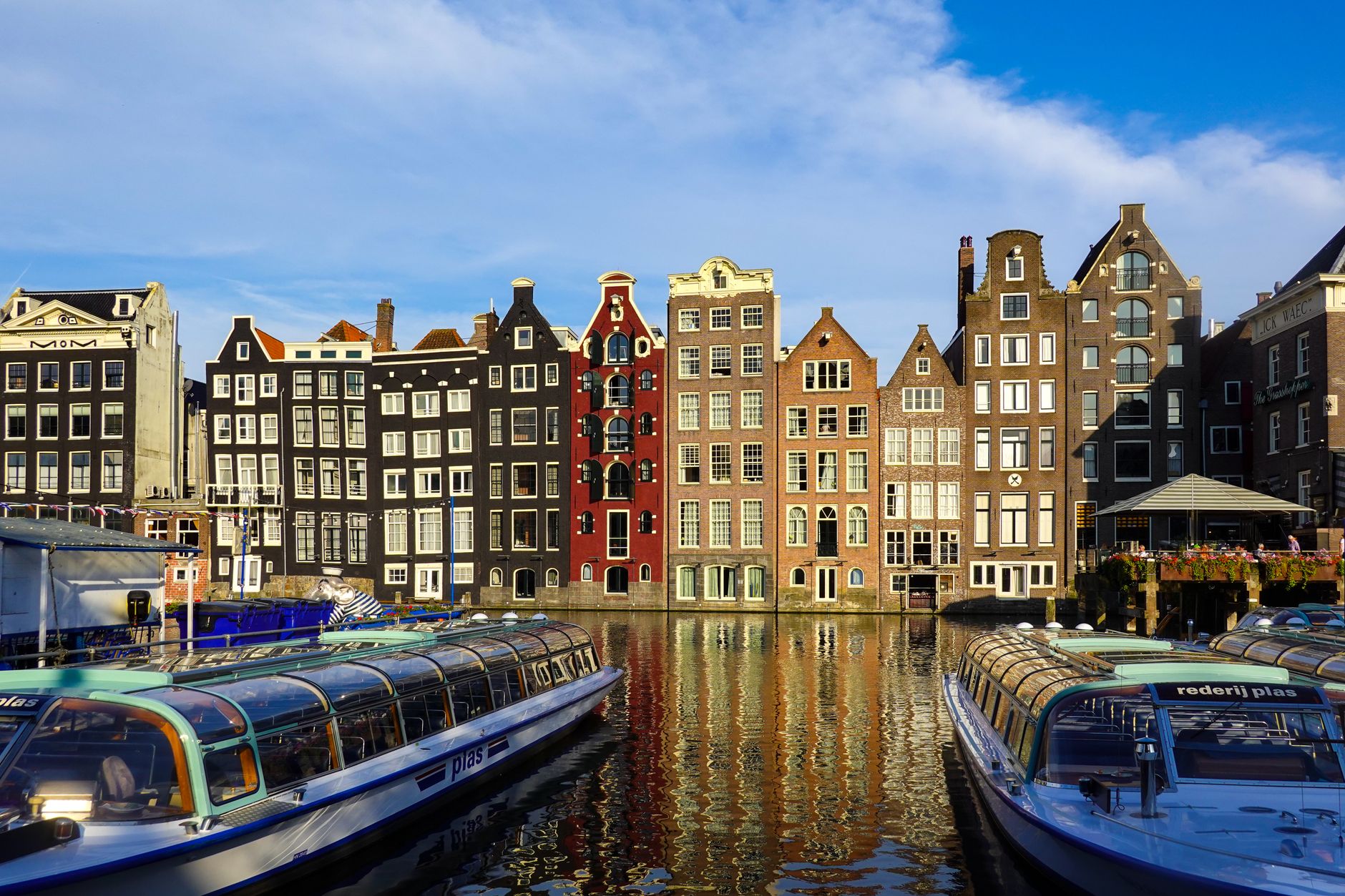
Amsterdam is a city that spent its golden century building outward. The VOC merchants who financed the canal ring sent ships east to Japan and west to Brazil, and then came home and spent their profits on Rembrandt and Vermeer. The four concentric semicircles of waterways they built — the Grachtengordel (canal ring), now a UNESCO World Heritage Site — were not just beautiful: they were the logistics network of a trading empire that touched every continent. Five days here work the same way: three days inside the canal ring, and Amsterdam is a complete gateway into the rest of Western Europe. Spend three days inside the canal ring and its immediate neighborhood, and the trip is genuinely complete. Then step onto a Eurostar at Amsterdam Centraal, because the city was never designed to be the end of the journey.
That combination — a city worth three days on its own terms, positioned at the hub of a Western Europe rail network — is what makes 5 days in Amsterdam work best when the trip doesn't end in the city. Brussels is under 2 hours by Eurostar. Paris is 3 hours 20 minutes. The case for Amsterdam as the entry point into this arc isn't that fares from North America are dramatically cheaper than Paris or London — they aren't, consistently. The case is geography: Amsterdam Centraal is one of the best-positioned rail hubs in Western Europe, and once you're through the Golden Age museums and the Jordaan canals and the free ferry to Noord, the question isn't what else to do in Amsterdam. It's which train you take out.
Why Amsterdam as a gateway
Amsterdam works as a Western Europe entry point because of where Amsterdam Centraal sits: Eurostar high-speed trains run direct to Brussels-Midi, Paris Gare du Nord, and London St Pancras from city center, with no transfer to an outlying hub.
The trip this enables: fly into Schiphol, spend three grounded days in Amsterdam, then board the Eurostar for a Belgian or French second leg before your return flight. If your flight home is from Charles de Gaulle rather than Schiphol, an open-jaw ticket — flying into Amsterdam and home from Paris, so you never retrace the same ground — closes the circle cleanly. From Schiphol, recent low fares have come in around $248–$258 one-way from North America (Treverra search data, Sept–Oct 2026 windows), with typical advance fares in the $300–$450 range. Competitive, but not dramatically cheaper than Paris in every window; the honest case for Amsterdam is the rail network, not the transatlantic fare.
Amsterdam is a weaker fit if your whole trip stays in France, Spain, or Italy — Paris CDG or Madrid MAD often prices better for those corridors, and the rail geometry points the wrong direction. This itinerary is for travelers whose Western Europe trip crosses the northern arc: Belgium, the Netherlands, and at least one of France or the UK.
Days 1–3: Amsterdam in compressed form
Three days in Amsterdam has a clear spatial grammar: the canal ring and Jordaan on Day 1, Museumplein and De Pijp on Day 2, and Amsterdam Noord plus a Haarlem half-day on Day 3. The anchors are not interchangeable — each day builds on what the last one established. By the end of Day 3 you have the full Golden Age arc: Rembrandt's world as it was built, as it peaked, and as it was remembered. The Eurostar on Day 4 morning is a logical extension of that movement, not an afterthought.
The full 3-day plan — with complete anchor write-ups, Quick reference blocks, and Haarlem versus Noord versus Rembrandt House fork — is in the companion 3 days in Amsterdam itinerary. What follows here is the compressed version: enough to plan around, with the key logistics your booking calendar actually needs.

Day 1 — Jordaan and Anne Frank House
Day 1 stays inside the canal ring: a morning walk through the Jordaan neighborhood — where the Westerkerk tower marks Rembrandt's buried grave, though nobody recorded exactly where — followed by an afternoon at the Anne Frank House, the actual concealed annexe on Prinsengracht 263 where Anne Frank wrote her diary during twenty-five months of hiding. The bruin cafés (traditional Dutch brown-paneled pubs, stained dark by decades of pipe smoke) are where the day ends.
Quick reference — Day 1
- Jordaan walk: 30–45 min from Amsterdam Centraal on foot; Tram 13/17 from Centraal cuts it to 10 min. Free to wander.
- Westerkerk tower: €12.50; limited availability; book ahead at Westerkerk.nl.
- Anne Frank House: €16.50 adults / €7 ages 10–17 / €1 under age 10. Tickets release every Tuesday at 10am Amsterdam time (CET), for visits exactly 6 weeks ahead. Peak season (March–October): they sell out within hours of that Tuesday release. No walk-up tickets. No official resellers. Set an alarm for 10am CET Tuesday; book at AnneFrank.org (2026).
- Bruin cafés in the Jordaan: €4–€6 per beer. Dense independent options along Prinsengracht.
Day 2 — Rijksmuseum, Van Gogh Museum, De Pijp
Day 2 anchors at Museumplein: the Rijksmuseum first (the Gallery of Honour corridor was built to culminate in a single painting — Rembrandt's The Night Watch, 363 by 437 centimetres — and the spatial sequence from the entrance to that end wall is the experience), then the adjacent Van Gogh Museum where 200 paintings trace his full arc from the dark Dutch early work to the Arles fever-pitch output. The afternoon goes to De Pijp and the Albert Cuyp Market — a kilometre of stalls running since 1905, where you eat a hot stroopwafel pressed at stand 144 and raw herring held by the tail, eaten in the Dutch way that goes back at least to 1916 at this market.
Quick reference — Day 2
- Rijksmuseum: €25 adults; free under 18. Daily 9am–5pm; closed April 27 and December 25. Timed entry online only — no walk-ups. Quietest on Tuesdays and Wednesdays; arrive at 9am or after 3pm (Rijksmuseum.nl, 2026).
- Van Gogh Museum: €25 adults; free under 18. Daily 9am–6pm (Fridays to 9pm). Book 2–4 weeks ahead in peak season (VanGoghMuseum.nl, 2026).
- Albert Cuyp Market: Free entry. Mon–Sat 9am–5pm; closed Sundays. Best before 10am (IAmsterdam.com, 2026).

Day 3 — Amsterdam Noord and Haarlem (or the Rembrandt House fork)
Day 3 crosses the IJ River to Amsterdam Noord on the free GVB ferry (5 minutes, 24/7, departs directly behind Centraal — no tap, no fare), then takes the afternoon train to Haarlem. Noord is the post-industrial counterpoint to everything in the canal ring: the NDSM Wharf occupies a former shipyard, the EYE Film Institute cantilevers over the IJ, and the container-bar beach clubs make the point without needing to explain it. Haarlem — twenty minutes by train, €4.50 one-way — gives you the Frans Hals Museum, where the Golden Age civic guard portraits Hals was painting in the 1620s and 1630s are the direct format ancestor of The Night Watch. Standing in front of Hals' work with the Rijksmuseum still in memory is the itinerary making its argument.
Alternatively: stay in the canal ring and spend the afternoon at the Rembrandt House Museum on Jodenbreestraat — the canal house where Rembrandt lived from 1639 to 1658 and accumulated the collection of shells, antler horns, and Flemish paintings that bankrupted him in 1656. The evening either way ends at Brouwerij 't IJ, the organic craft brewery inside a 19th-century converted bathhouse directly beside the De Gooyer windmill in eastern Amsterdam. Kaspar Peterson, a Dutch musician frustrated by the city's thin beer culture, founded it in 1985; it's now one of the city's most recognizable institutions, with a local clientele and a terrace on the IJ that the Heineken Experience cannot replicate. The tasting room is open daily 2pm–8pm.
Quick reference — Day 3
- IJ ferry to Amsterdam Noord: Free; 24/7; behind Amsterdam Centraal. Buiksloterweg and NDSM stops. Bikes welcome.
- EYE Film Institute: Screenings ~€11–€14; exterior terrace free.
- Train to Haarlem: Every 15 min from Amsterdam Centraal; ~€4.50 one-way; 20 min (Trainline, 2026).
- Frans Hals Museum (Haarlem): Check current admission at franshalsmuseum.nl.
- Rembrandt House Museum (fork option): €23.50 adults (off-peak 4–6pm: €19.50); ages under 25: €15. Daily 10am–6pm; book a start time at Rembrandthuis.nl (2026).
- Brouwerij 't IJ: Tasting room daily 2pm–8pm. Tram or 15-min bike from Centrum. Verify current hours at brouwerijhetij.nl.
Day 4: The Eurostar to Brussels

Day 4 begins the reason a 5-day Amsterdam trip works differently than a 3-day one: after three days inside Amsterdam's Golden Age geography, the city's main itinerary is genuinely done. Brussels, under 2 hours away by high-speed train, is not a consolation prize for running out of Amsterdam. It's a city with Belgian beer culture that has no equivalent in the Netherlands, Art Nouveau architecture that looks nothing like the Dutch canal ring, and a French-Dutch-German language seam that signals clearly: you've crossed into a different country. That cultural distance is exactly what Days 4–5 exist to deliver.
The Eurostar runs from Amsterdam Centraal to Brussels-Midi in 1 hour 52 minutes — a journey short enough that you can take an early train, have a full day in Brussels, and not feel the travel. This is the rail connection that justifies Amsterdam's gateway position: no flight, no airport, no checked bag. Board in city center, arrive in city center.
Brussels itself is a city that doesn't front its best side immediately. The area around Brussels-Midi is uninviting; the city's payoff comes a metro stop or twenty-minute walk north, in the dense medieval grid of streets around the Grand-Place — which is one of the genuinely remarkable central squares in Western Europe, its guild houses still intact — and in the Art Nouveau residential and institutional buildings scattered across the Ixelles, Saint-Gilles, and Ixelles communes that Victor Horta and his contemporaries built between 1890 and 1910. The beer culture runs deep: Belgium's brewing tradition is unusually diverse for a country its size, and the café tradition in Brussels is specific to the city — an afternoon kriek (a cherry-fermented Belgian lambic) or a glass of gueuze (a spontaneously fermented, dry, sour Brussels-specific beer) at a traditional café is the most legible introduction. Both terms are worth knowing before you order.
Quick reference — Day 4: Amsterdam → Brussels
- Operator: Eurostar
- Route: Amsterdam Centraal → Brussels-Midi
- Journey time: 1 hour 52 minutes
- Fare: From ~$34 one-way (advance) (Eurostar.com / Rail Europe, 2026)
- Frequency: Multiple departures daily; 10 trains per day on the Paris corridor (Brussels is a stop)
- Booking: Eurostar.com or Trainline; book ahead — fares rise as inventory sells
- Passport and security: Eurostar is international; passport check and security screening happen at Amsterdam Centraal before boarding. Allow 30 minutes before departure.
Day 5: Brussels extended, or Eurostar onward to Paris

Day 5 splits into two routes: extend your time in Brussels for a proper second day, or board a second Eurostar leg to Paris — 1 hour 22 minutes from Brussels-Midi, a third capital before the flight home.
The Brussels case for a second day is straightforward. A single afternoon on Day 4 covers the Grand-Place and an introduction to the beer culture; a second day gives you the Art Nouveau architecture, the city's major museums, and the neighborhood distinctions that one day can only hint at. If your return flight is from Brussels Airport, staying through Day 5 in Brussels is the cleanest route.
The Paris case is different in kind. From Amsterdam Centraal, the Eurostar reaches Paris Gare du Nord in 3 hours 20 minutes — the same service that stops in Brussels, continuing southwest. If you've already spent Day 4 in Brussels, a Brussels-Midi to Paris Gare du Nord leg runs about 1 hour 22 minutes (from a shorter separate leg, or the same through-service). Paris at this point in the trip is what it is: a city at a different scale than Amsterdam or Brussels, with the Louvre, Montmartre, and the Marais all within reach of Gare du Nord by metro in twenty minutes. No hour-by-hour plan is needed — the city is self-explanatory.
The routing depends on your return flight. If you fly home from Paris Charles de Gaulle, the Paris leg is the natural close: you've moved in a single direction from Amsterdam, through Brussels, to Paris, with a direct RER B train from Gare du Nord to CDG. This is the trip that earns an open-jaw ticket — an open-jaw meaning: flying into one city (Amsterdam) and home from another (Paris) without retracing your route. The alternative is a direct return to Amsterdam from Brussels and flying home from Schiphol, which works equally well if your transatlantic return is already booked from AMS.
The night train option is also worth noting: the European Sleeper runs Brussels–Amsterdam–Berlin three times weekly. If a Germany leg follows, this is the connection — though the three-times-weekly frequency makes it a secondary choice for most 5-day trips.
Quick reference — Day 5: Brussels → Paris (optional second leg)
- Operator: Eurostar (Amsterdam Centraal → Paris Gare du Nord, or Brussels-Midi → Paris as a shorter continuation)
- Route (full): Amsterdam Centraal → Paris Gare du Nord; 3h20; from ~$41 one-way advance (Rail Europe, 2026; Seat61 cites from €35 booked months ahead)
- Route (Brussels → Paris only): Brussels-Midi → Paris Gare du Nord; ~1h22
- Frequency: 10 direct trains per day Amsterdam → Paris
- Booking: Eurostar.com, Rail Europe, or Trainline; book ahead — peak-season Friday departures sell out weeks in advance
- Passport and security: Same Eurostar passport and security check at Amsterdam Centraal if departing from there. From Brussels-Midi, a shorter process applies.
- CDG from Gare du Nord: RER B direct to CDG airport terminals; departures every 10–15 min. Buy a standard Île-de-France ticket at Gare du Nord.
- Night train option: European Sleeper (Brussels → Amsterdam → Berlin), three times weekly. Book at europeansleeper.eu.
Practical notes
Amsterdam is straightforward to navigate on the ground, with near-universal English and a public transit system that accepts contactless bank cards on every tram, metro, and bus route. Several bookings require advance attention before you leave home.
Getting around. The GVB (Amsterdam's transit operator) uses OVpay: tap your contactless bank card or phone on any tram, metro, or bus to board and exit. Daily cap €10.50. GVB day passes available: 1 day €10, 2 days €16, 3 days €21.50 (GVB, 2026). The IJ ferry to Amsterdam Noord is free — no tap, no fee, runs 24/7.
From Schiphol. A direct train from the rail station under Schiphol terminal to Amsterdam Centraal runs every 10–15 minutes; 16–18 minutes journey time; €6.20 second class. Taxis to the center €40–€55; Uber and Bolt operate from the airport. Avoid unmarked taxis at Centraal.
Museum bookings. The Rijksmuseum, Van Gogh Museum, and Anne Frank House all require online timed entry — no walk-up tickets at any of them. Book the Anne Frank House first: tickets release every Tuesday at 10am CET for visits exactly 6 weeks ahead, and in peak season (March–October) they sell out within hours. Book before you leave home. The Van Gogh Museum sells out days to weeks ahead in peak season; book 2–4 weeks in advance.
Eurostar booking. Book the Brussels or Paris Eurostar leg when you book your transatlantic flight. Advance fares are meaningfully cheaper, and peak Friday and Sunday departures sell out weeks ahead. Passport required on all Eurostar routes; security check at Amsterdam Centraal departure.
Money and tipping. Euros. Card is near-universal; many venues are card-only (the Rijksmuseum is cashless). Tipping is not expected at the level North American travelers are used to: 5–10% for a restaurant meal, rounding up for café drinks (DutchReview, 2026).
Safety. Pickpocket risk at Amsterdam Centraal, Dam Square, Albert Cuyp Market, and on Trams 2 and 5. Keep phones and wallets in front pockets and bags zipped across the chest in crowds. Real Dutch police do not ask to inspect your wallet or remove cash.
Holland vs. the Netherlands. Holland refers to two of the Netherlands' twelve provinces — North Holland and South Holland. Amsterdam is in North Holland. "Holland" as a synonym for the Netherlands is a common Anglophone shorthand the Dutch notice.
WorldPride 2026. WorldPride 2026 runs July 25 through August 8 — Amsterdam's most expensive and crowded window of the year. The Canal Parade is August 1. Avoid if you are seeking lower prices and smaller crowds; prioritize if the event is a draw (IAmsterdam.com, 2026).
ETIAS. US travelers may need ETIAS (the EU's Electronic Travel Information and Authorisation System) pre-authorization before entering the Schengen Area — check travel.state.gov before departure. ETIAS is not yet operational as of June 2026; when it launches, the fee is expected to be around €20 per application, valid for three years or until your passport expires, whichever comes first (travel-europe.europa.eu, 2026). Verify current launch status and fee before booking.
Frequently asked questions
Is 5 days in Amsterdam too long, or not enough?
Five days is exactly the right amount — if you spend three of them in Amsterdam and two on the Eurostar. Days 1 through 3 cover the Jordaan, Museumplein, Noord, and Haarlem. By Day 4, Amsterdam's main itinerary is genuinely finished and Brussels is under 2 hours by train. Staying five days in Amsterdam without leaving means running out of material; leaving on Day 4 means the trip earns its length.
How do I get from Amsterdam to Brussels by train?
The Eurostar runs direct from Amsterdam Centraal to Brussels-Midi in 1 hour 52 minutes. Advance fares start around $34 one-way, booked at Eurostar.com or Trainline. You go through passport control and a security check at Amsterdam Centraal before boarding — allow 30 minutes. Book ahead: fares rise as inventory sells and busy weekend departures fill weeks out.
How do I get from Amsterdam to Paris by train?
The Eurostar runs direct from Amsterdam Centraal to Paris Gare du Nord in 3 hours 20 minutes, with 10 trains daily. Advance fares start around $41 one-way at Eurostar.com, Rail Europe, or Trainline. Same passport and security check applies at Amsterdam Centraal as for Brussels — allow 30 minutes before departure. Book the Paris leg when you book your transatlantic flight; peak-season Friday departures sell out weeks in advance.
Should I go to Brussels or Paris after Amsterdam?
Brussels if you want a short cultural hop with a distinct language shift and a beer tradition that looks nothing like Amsterdam's — it's under 2 hours and $34 one-way advance. Paris if you want scale, and if your return flight home is from Charles de Gaulle, because then the Paris leg doubles as your open-jaw exit — flying into Amsterdam and home from Paris without retracing any ground.
Do I need to book the Anne Frank House in advance?
Yes, well in advance. Tickets release every Tuesday at 10am Amsterdam time — that is 10am CET — for visits exactly six weeks ahead. During peak season (March through October) they sell out within hours of that Tuesday release. There are no walk-up tickets and no official resellers. Book at AnneFrank.org on the Tuesday that falls six weeks before your visit date.
What is ETIAS and do US travelers need it for the Netherlands?
ETIAS is the EU's Electronic Travel Information and Authorisation System — a pre-travel authorization for US passport holders entering the Schengen Area, similar in practice to the US ESTA. It is not yet operational as of June 2026. When it launches, the fee is expected to be around €20 per application, valid for three years. Check travel.state.gov before you book to confirm current status and requirements.
When is the best time to visit Amsterdam for fewer crowds?
September and October offer post-peak crowds, mild weather, and lower hotel rates while keeping full museum access. April and May are beautiful but busy, with Keukenhof tulip gardens open March 19 through May 10. WorldPride 2026 runs July 25 through August 8 — Amsterdam's single most expensive and crowded window of the year. Avoid it if you want lower prices; prioritize if the event is the point.