
3 Days in Catania: Eastern Sicily's Sharpest Entry Point
Catania sits at the foot of the tallest active volcano in Europe — and the city doesn't let you forget it. The stone under your feet in Piazza del Duomo is Etna's black lava. The elephant at the center of the square, the city's emblem, is carved from it. The airport you flew into is named Vincenzo Bellini — and Bellini, the bel canto (a 19th-century Italian operatic style) composer of Norma, was born on this street grid in 1801. Sicily's Baroque reconstruction after the 1693 earthquake gave the city its architectural spine; the volcano gave it its character. Catania is the right way into eastern Sicily — not chiefly because the fares tend to run lower than Palermo, though they sometimes do, but because it sits at the center of a three-node circuit. Etna is to the northwest, Taormina to the north, Syracuse to the south. All three are reachable by regional train, without a car.
This itinerary gives 3 days in Catania a clear structure: Day 1 to the city itself — the fish market at dawn, the Baroque center, a lunch that carries a story, the opera house in the evening. Day 2 goes up the mountain. Day 3 picks your exit: south to Syracuse and Ortigia, or north to Taormina.
Why Catania as a gateway
Catania works as a gateway to eastern Sicily because CTA airport anchors a three-node rail circuit — Etna, Taormina, and Syracuse all within 36 to 75 minutes — and arrives cheaper than Palermo from most North American origins. The airport, Sicily's busiest with 97 non-stop destinations and around 3,948 departures per month, pulls Ryanair, Wizz Air, and easyJet connections from London, Paris, Amsterdam, and Frankfurt alongside intercontinental routes from the US and Canada. The Alibus drops you at Piazza Stesicoro in 20–28 minutes for €4. From Catania Centrale station, trains run north to Taormina-Giardini in 36–51 minutes and south to Siracusa in about 1 hour 15 minutes — the eastern corridor by rail, no car required.
The fare argument is real but secondary. Recent aggregator search summaries show Catania averaging around $200 less per trip than Palermo from US origins — but that gap shifts with season and booking window. Treat it as context, not a guarantee. The geographic case is the durable one: if eastern Sicily is your itinerary, this is where you land. Travelers whose trips focus on Palermo, Agrigento, and the western temples are better served by Palermo-Fontanarossa (PMO). If you want to cross the whole island, Catania is still the entry point. Fly in here, move west through Etna and Syracuse to Palermo, and exit from PMO on an open-jaw ticket (flying into one city and home from another, so you never retrace the same ground).

Day 1: The fish market at dawn, the Baroque center, and the Bellini thread
Day 1 stays in Catania's historic center: the Pescheria at dawn, the UNESCO-listed Baroque spine through Piazza del Duomo at mid-morning, a lunch rooted in the city's defining composer, and the opera house in the evening.
Start at the Pescheria — also known as La Piscaria, the Catanian dialect name for the fish market that has run in this sunken square since the 1800s — before 9:00 AM, while the stalls are still at full volume. The market sits in a natural depression directly adjacent to Piazza del Duomo; you walk down steps to enter it, and the crowd noise arrives before you reach the bottom. Vendors call prices in Sicilian; the catch comes in whole: sardines, anchovies, octopus, squid, swordfish laid flat on ice. A fishmonger in white rubber boots slaps a swordfish onto the marble slab and shouts a price across the narrow alley before the buyer has time to respond. This is not a curated food hall. Keep your bag zipped and close to your body — the market is a known pickpocket spot, and you can lose yourself in it freely once you're not worried about your back pocket.
From the market steps, the Fontana dell'Elefante is fifty meters away in Piazza del Duomo. The elephant at the center of the square — carved from Etna's black lava — is Catania's emblem. The city's mascot is made from the same material as its streets, its building foundations, and the columns salvaged from the Roman amphitheater and built into the cathedral facade. The square is part of the Val di Noto UNESCO World Heritage Site — eight towns rebuilt in Baroque style after the 1693 earthquake. What the designation doesn't capture is the specific texture of a city rebuilt using the volcano's own stone as the construction medium.
The Cattedrale di Sant'Agata stands at the eastern edge of the square. Its columns are Roman — pulled from the nearby amphitheater and incorporated into the Baroque rebuild. The nave is free; the rooftop cupola is ticketed and delivers the best overhead view of the square and, on clear days, Etna above the rooftops. The Museo Diocesano adjacent gives access to Roman bath remnants beneath the church — a more immersive Roman-era experience than the partly-inaccessible amphitheater at Piazza Stesicoro.
By noon, walk to Trattoria del Cavaliere for lunch. This is where the Bellini thread becomes legible. Vincenzo Bellini was born in Catania in 1801. His opera Norma premiered in Milan in 1831 and became one of the most celebrated bel canto works of the nineteenth century. Catanians named a dish after it: pasta alla Norma — rigatoni with tomato sauce, fried eggplant, and grated ricotta salata — which is the city's signature dish and has been for more than a century. Trattoria del Cavaliere, open since 1922, is the consistently cited benchmark. Eating it here, in the city that invented it, named for an opera written by a man born a few blocks from this table, is a cultural fact, not a tourist ritual. The dish, the opera, the composer, and the city are all the same story. You're sitting inside it.
In the late afternoon, walk to the Teatro Massimo Bellini on Piazza Vincenzo Bellini. The opera house opened in 1890, its ceiling frescoed with scenes from Bellini's operas, the foyer named for a composer who is also, at this point, the airport, the public garden to the north, and the pasta you just ate. If an evening performance is running, this is the right night to attend; the program leans heavily toward the composer the building was built to honor. If not, the guided tour of the foyer closes the thread cleanly.
Evening close: the Via Landolina aperitivo strip on Via Gemmellaro and Via Landolina, two minutes' walk from the theater, fills with university students and local workers from 19:00. Drinks come with free snacks. Arrive by 19:30 on weekdays; weekends fill by 20:00. This is where Catanians actually spend their evenings — not because it's a secret, but because the guides just haven't caught up.
Quick reference — Day 1
- Pescheria (La Piscaria): Free. Mon–Sat, approximately 7:00 AM–1:00 PM; arrive before 9:00 AM for full volume. Watch belongings — known pickpocket spot.
- Piazza del Duomo / Fontana dell'Elefante: Free, open at all hours. Best light before 9:00 AM or late afternoon.
- Cattedrale di Sant'Agata: Nave free; cupola and Museo Diocesano ticketed — check hours locally; midday closure common.
- Pasta alla Norma lunch: Trattoria del Cavaliere, open since 1922; pasta ~€6.50; budget €8–€15 total (GamberoRossoInternational.com). Coperto (a cover charge for bread and table service, typically €1–€2 per person — not a tip) may appear on the bill.
- Teatro Massimo Bellini: Check schedule at teatromassimobellini.it; guided tours available. Located on Piazza Vincenzo Bellini.
- Via Landolina aperitivo: Free to explore. Cocktails €5–€9. Arrive by 19:30 weekdays.
Day 2: Mount Etna — a full day on the volcano
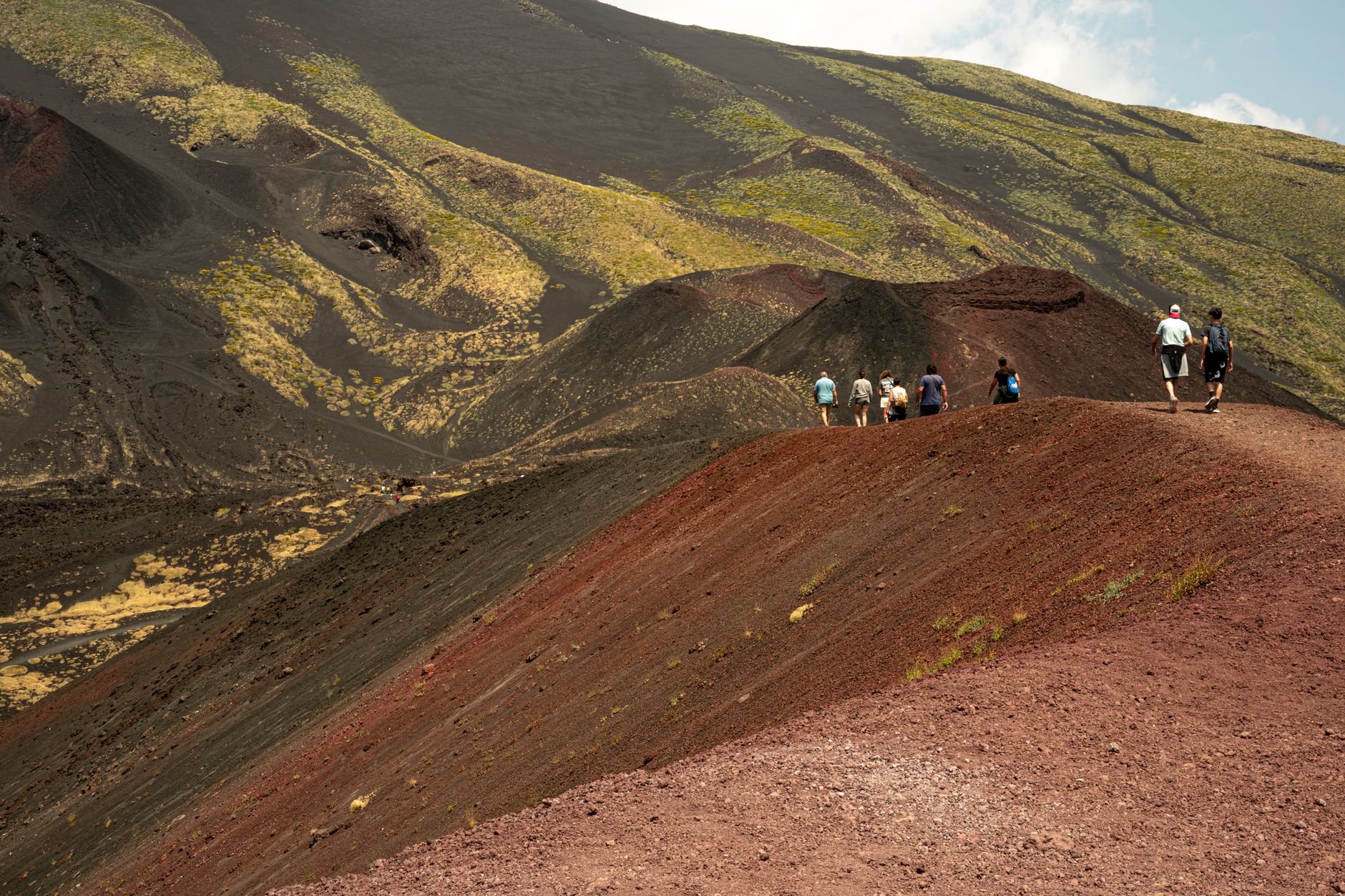
Day 2 belongs to Etna: the AST bus at 8:15 AM, the cable car from Rifugio Sapienza, and a return by late afternoon with a winery stop on the way down. Plan a long dinner on return — the mountain doesn't leave time for much else.
Two paths up, depending on budget and how much you want managed.
The AST public bus leaves from Piazza Papa Giovanni XXIII in Catania at 8:15 AM daily and reaches Rifugio Sapienza — the southern base station at approximately 1,900 metres — in about 90 minutes. The return bus leaves Etna at 4:30 PM. This is the cheapest and most independent route. From Rifugio Sapienza, the Funivia dell'Etna (Etna's cable car) rises to 2,500 metres. Above 3,000 metres, reaching the crater rim area requires a licensed mountain guide regardless of approach. Before leaving Catania, check INGV — the Istituto Nazionale di Geofisica e Vulcanologia (Italy's volcanic monitoring agency) — for current access conditions; eruption status affects which elevation zones are open on any given day.
Guided group tours do more for you and often include a stop in the wine. Most reputable operators include transport from Catania, a licensed guide for the upper sections, and a stop at a producer in the Etna DOC zone — the volcanic wine appellation on the mountain's lower slopes. Nerello Mascalese (the primary red, grown in century-old ungrafted vines at 600–1,000 metres in black volcanic soil — phylloxera never reached these altitudes) and Carricante (the white) have drawn serious international attention over the past decade. In the cellar, the air is cool after hours in the lava fields above; the guide pours a glass and the minerality in the wine makes sense for the first time. The wine stop is the detail most travelers mention afterward as the part they didn't expect. See Quick reference for tour pricing.
Quick reference — Day 2
- AST bus: Departs Piazza Papa Giovanni XXIII, Catania, 8:15 AM daily. Returns from Etna 4:30 PM. Approximately €3–€4 each way (astsicilia.it). Walk-up.
- Funivia dell'Etna (the Etna cable car): From Rifugio Sapienza to ~2,500m. Around €52 round trip as of March 2025 (TrailsOfSicily.com) — verify current pricing at funivia-etna.com before travel.
- Above 3,000m: Licensed guide required regardless of approach method.
- INGV volcanic activity check: ingv.it — check before departing.
- Guided group tours: €60–€118 per person; typically include transport, guide, Etna DOC winery visit. Book ahead in peak season (April–October). Nerello Mascalese ungrafted vine/elevation detail: Wine Enthusiast, 2025; Jancis Robinson, 2025.
- Optional Day 2 add-on: If you return before 17:00, San Berillo — a street art and urban regeneration district, 10–15 minutes' walk from Piazza del Duomo — is worth the time. CityMapSicilia.it has a self-guided tour download. Free; daylight hours only.
Day 3: Pick your exit — Syracuse south or Taormina north
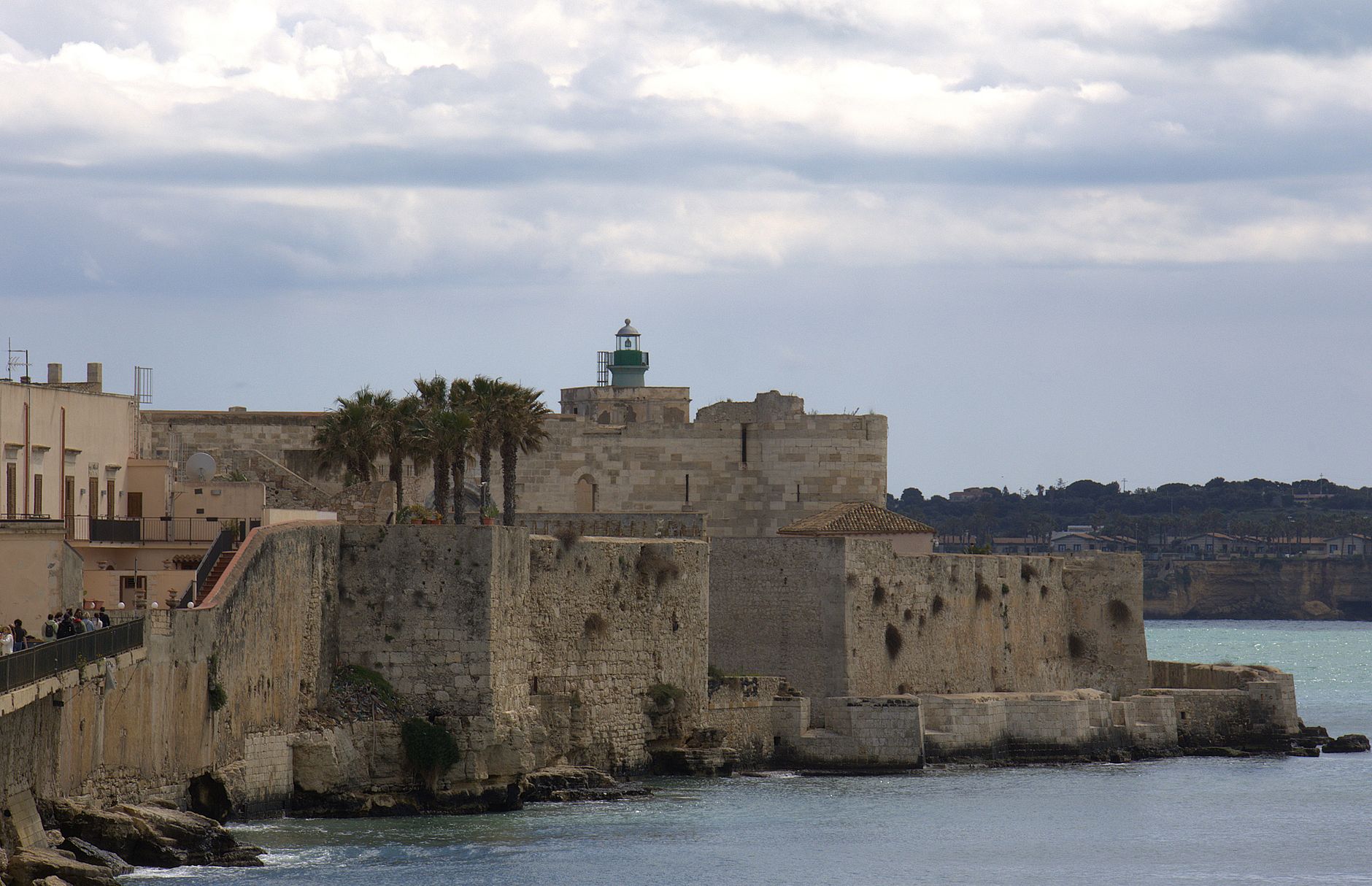
Day 3 delivers the gateway payoff: a morning at Castello Ursino in the city, then a regional train south to Syracuse and Ortigia or north to Taormina — both under 75 minutes, no car required. The morning starts at Castello Ursino, then you take the train in whichever direction you chose.
Castello Ursino and Museo Civico earns the morning slot. The castle was built by Holy Roman Emperor Frederick II in the thirteenth century as a coastal fortress. Etna's 1669 eruption extended the shoreline outward and left the castle surrounded by land — the sea it once looked over no longer exists from its windows. The city grew around the eruption, out into what had been water. The Museo Civico inside holds Greek, Roman, and Norman collections; 45–60 minutes is enough before a morning train.
Rail disruption caveat: The Messina–Syracuse line sustained significant disruption after Storm Harry in January 2026. At the time this post was researched (June 2026), the Giardini-Taormina to Messina section remained suspended with Trenitalia replacement bus service on that section; partial service between Syracuse and Giardini-Taormina had resumed January 24, 2026. Before booking any train to Taormina or Syracuse, verify current service status at Trenitalia.com. Journey times and connections below reflect pre-disruption figures and may differ if replacement buses are still in use.
Onward south: Syracuse and Ortigia
Syracuse is a full day, not an afternoon. The Neapolis Archaeological Park on the mainland holds a Greek theater still used for summer performances, and the Ear of Dionysius — a cave carved into the limestone. Whisper at one end; it carries clearly to the other. Cross the two short bridges to Ortigia island — the historic core, where the Temple of Apollo and a Baroque cathedral built around a Greek temple's columns repeat the same layering of eras you saw in Catania. The Spring of Arethusa is at the island's southern tip: a freshwater pool fed by an underground spring that opens onto the sea, with papyrus growing in it. Ortigia's seafood restaurants line the harbor. Depart Catania Centrale by 9:00 AM to cover both the archaeological park and the island. Buses return to Catania until approximately 23:10.
Onward north: Taormina
Taormina is a different kind of day — smaller, steeper, more touristed, and more scenic in the sense that everything is framed against Etna and the Ionian coast below. The comparison that surfaces in travel forums is blunt but accurate: Taormina is Miami, Catania is Philadelphia. Both have value; the experience is fundamentally different. Taormina's ancient Greek theater, cut into the cliffside with the volcano in the background, is not overstated — from the upper rows the scale of the view earns the train ride on its own. The town itself fills fast with tour groups in high summer; the same route in April through June or September through October is substantially better. The train station is at the base of the cliff; a local bus or short taxi ride completes the climb to the town.
Onward connection
The Day 3 train closes the eastern circuit: three days covering the city, the volcano, and a second destination — all from one airport, no rental car, no cross-island backtrack required. You flew into Catania, moved through Etna and then Ortigia or Taormina, and the whole arc comes back to the same departure point.
If you have a week or more and want the full island, the cleanest structure is the open-jaw: fly into Catania, move west across Sicily through Etna and the Baroque southeast to Palermo, exit from Palermo-Fontanarossa (PMO). The CTA-in, PMO-out direction is slightly easier to price and book than the reverse — travel forums generally agree on this. On an open-jaw ticket — flying into one city and home from another, so you never retrace the same ground — the otherwise mandatory cross-island backtrack disappears. Treverra will publish a dedicated guide to that booking structure when the time comes.
Quick reference — Day 3 onward
- Castello Ursino: Museum entry fee — check current pricing locally. Walkable from Piazza del Duomo, southern historic center. Allow 45–60 minutes.
- Train to Siracusa: ~1h15; from approximately €8.95–€10 one-way; ~13 trains/day, first at 03:56, last at 23:10 (TheTrainline.com, 2026). Verify Trenitalia.com for current service status before booking.
- Train to Taormina-Giardini: 36–51 minutes; from approximately €6.67 one-way; ~26–30 trains/day (TheTrainline.com, 2026). Station at base of cliff; local bus or taxi to Taormina town. Verify Trenitalia.com for current service status before booking.
- Interbus/Etna Trasporti: Bus alternative to Taormina and north coast if rail status is uncertain.
- Syracuse full-day logistics: Depart Catania Centrale by 9:00 AM; buses back until ~23:10.
- Taormina timing: Shoulder season (April–June, September–October) strongly preferred over July–August for crowd levels (Rick Steves Forum, 2025; mel365.com, 2026).
- Open-jaw CTA/PMO direction: CTA-in, PMO-out is slightly easier to price and book than the reverse (Tripadvisor Sicily Forum, 2025).
Practical notes
Planning a Catania-led eastern Sicily trip takes an evening: the city anchors are walkable, the mountain has a fixed bus schedule to work around, and the onward choice (Syracuse or Taormina) is the main call you'll make. A few things worth knowing before you go.
Getting to and from the airport. The Alibus (€4 one-way) runs every 20–25 minutes from CTA to Piazza Stesicoro in 20–28 minutes — fastest and most direct. A free shuttle from the terminal connects to the Aeroporto Fontanarossa metro station; a metro ticket costs €1 for 90 minutes of travel, making total airport-to-center cost €1 by that route, with slightly more travel time. A taxi runs around €20–€25 at the fixed rate. The airport is 4 km from the historic center.
Money and coperto. Cards are accepted at hotels and most larger restaurants; carry €20–€30 in cash for the Pescheria, street food, the AST bus to Etna, and smaller trattorias. Most local restaurants add a coperto (cover charge for bread and table service, typically €1–€2 per person) to the bill — this is standard practice, not a service charge to tip on top of. Tipping is not expected in Sicily; rounding up or leaving small change is considered generous.
Language on the ground. English works at the cathedral, the opera house, and the larger restaurants. At the fish market, local trattorias, and the AST bus stop, Italian gets further. At places like Trattoria de Fiore, which operates without a written menu, pointing and "questo" (this one) covers most ordering situations. "Quanto costa?" (How much?) and "Il conto, per favore" (The bill, please) handle the rest.
Arancini, briefly. Catania's fried rice balls — arancini (singular: arancino) — are cone-shaped rather than round, which is the Catanian shape and distinguishes them from the round version you'd find in Palermo. At street food vendors near the Pescheria, they run €2–€4 each.
Seasonal timing. April–June and September–October are the most recommended months: warm, lower crowds than peak summer, and the sea stays swimmable into early October. July and August are high season — hot (mid-30s°C / mid-90s°F), expensive, and crowded in Taormina and Syracuse in particular. The Festa di Sant'Agata (February 3–5), Catania's patron saint festival, brings up to one million visitors over three days — the largest religious festival in Sicily by attendance — and accommodation books months in advance if you want to witness it.
If you have a fourth day. Swap one of the Day 1 afternoon anchors, or add a day: Aci Trezza, 14 km north of Catania, is a working fishing village with eight basalt sea stacks — the Faraglioni dei Ciclopi — rising from the bay. The Odyssey places them as the rocks Polyphemus threw at Odysseus; the volcanic basalt (not limestone, unlike Capri's stacks) and the active fishing harbor give the place its specific character. Sixty-minute boat tours around the stacks run approximately €15–€25 per person. Interbus or Etna Trasporti covers the route from Catania in about 30 minutes.
Planning Sicily? Two more guides worth a look: 5 days across eastern Sicily and Catania vs Palermo: which gateway.
Frequently asked questions
How many days do you need in Catania?
Three days in Catania covers the essentials: Day 1 for the fish market, Baroque center, and Bellini opera house; Day 2 for a full day on Mount Etna; Day 3 for an onward train south to Syracuse or north to Taormina. You can extend to four days by adding Aci Trezza's fishing village and volcanic sea stacks on the Catanian coast.
Is Catania or Palermo the better airport for a Sicily trip?
It depends on where you're going. Catania (CTA) is the right airport for eastern Sicily — it puts Etna, Taormina, and Syracuse within 40 to 75 minutes by train. Palermo (PMO) is the right airport for western Sicily — Monreale, Agrigento, and Segesta. For a full island traverse, fly into one and out of the other on an open-jaw ticket (flying into one city and home from another, so you never retrace the same ground) — that eliminates the long cross-island backtrack.
How do you get from Catania to Mount Etna without a guided tour?
Take the AST public bus, which departs daily from Piazza Papa Giovanni XXIII in Catania at 8:15 AM and reaches Rifugio Sapienza — the mountain's main base station at about 1,900 metres — in roughly 90 minutes. The return bus leaves Etna at 4:30 PM. The cable car, the Funivia dell'Etna, goes up to 2,500 metres from there. Above 3,000 metres, a licensed guide is required regardless of approach.
How do you get from Catania to Syracuse by train?
Trenitalia regional trains run from Catania Centrale to Siracusa in about 1 hour 15 minutes, with around 13 services per day. Before booking, check current service status at Trenitalia.com — the Messina–Syracuse line carried disruption following Storm Harry in early 2026, with replacement bus service in place on sections of the route. Service may have partially resumed; verify before travel.
What time does the Catania fish market close?
The Pescheria (also called La Piscaria, the Catanian dialect name) runs Monday through Saturday roughly 7:00 AM to 1:00 PM, but it winds down as the catch sells through — arriving after 11:00 AM means you may find empty stalls. Come before 9:00 AM to see it at full volume. The market is free to enter and sits in the sunken square directly adjacent to Piazza del Duomo.
What is pasta alla Norma, and where should I eat it in Catania?
Pasta alla Norma is rigatoni with tomato sauce, fried eggplant, and grated ricotta salata — Catania's signature dish, named for Vincenzo Bellini's opera Norma. Eating it in Catania carries specific weight: the dish, the opera, and the composer are all rooted here. Trattoria del Cavaliere, open since 1922, is a consistently cited benchmark with pasta around €6.50 a plate (GamberoRossoInternational.com).
Do I need a rental car to see eastern Sicily from Catania?
No. The core eastern Sicily circuit — Catania, Mount Etna, Taormina, and Syracuse — is doable by Trenitalia regional trains and the AST public bus to Etna. Check service status on the Messina–Syracuse line before booking. A rental car is useful for exploring the Etna DOC wine zone independently or completing a cross-island circuit to Palermo; for three days in the east, the train is sufficient.