5 Best Day Trips from Palermo
Palermo sits at the western tip of Sicily, its streets still running along the grid that Arab emirs laid out in the 9th century, its cathedral rising on the bones of a Norman palace that replaced a mosque that replaced a Byzantine church. Arab-Norman is the architectural style — and the political fact — that defined this city in the 12th century, when Norman kings ruled a court of Arab scholars, Greek Orthodox clergy, and Latin bishops under one roof. That layered inheritance is the reason the city is the natural entry point for western Sicily, and why a traveler based here for several days can reach four of the most significant medieval and ancient sites in the Mediterranean without changing hotels. The day-trip radius from Palermo is genuinely one of the most concentrated in southern Europe — UNESCO monuments, ancient Greek temples, a coastal cathedral town — mostly reachable by bus or train, one of them by city bus alone. The city and its cathedral churches were collectively listed as a UNESCO World Heritage Site in 2015.
The 5 best day trips from Palermo
Palermo's position as the entry point for western Sicily means five major sites sit within two hours of the city center — four of them linked to UNESCO listings, one of them reachable from Piazza Politeama on a €1.40 bus ticket. The list below runs from closest and most accessible (Monreale, 30 minutes by city bus) to most logistically demanding (Segesta, car-primary), with the in-city half-day option last.
1. Monreale Cathedral

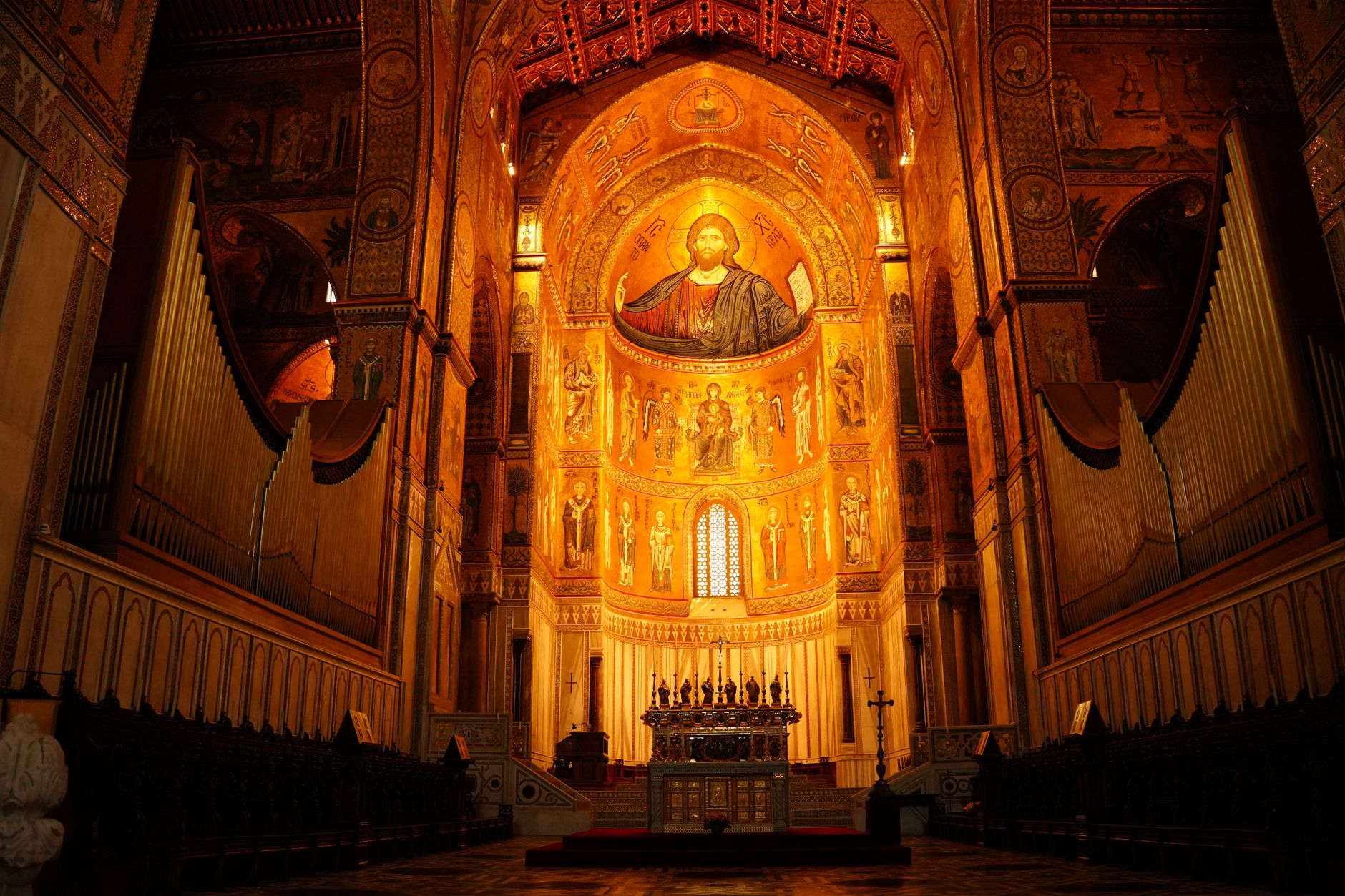
Monreale Cathedral, 8km southwest of Palermo and 30 minutes on city bus 389, contains the largest cycle of Byzantine mosaics in the world: 6,340 square meters of gold tesserae covering every wall, arch, and vault of a 12th-century Norman nave.
Roger II's son William II built the cathedral in the 1170s and 1180s, importing Byzantine mosaic workers from Constantinople to cover the interior in gold tesserae — the tiny glass tiles pressed one by one into lime plaster. The project took the better part of two decades. Stand at the west entrance when you first walk in, before you move toward the altar, and let the whole program register at once: Old Testament scenes running the full length of both nave walls, the New Testament completing the sequence overhead, and at the far end the Christ Pantocrator — a portrait of Christ as ruler of the cosmos, perhaps 13 meters tall — filling the entire curved vault of the apse. It is one sustained argument made in gold, and the Norman kings who commissioned it understood exactly what they were doing: this was architecture as a claim about divine authority, built in the same city where Arab emirs had built their palaces a century before.
Go early. Tour coaches start arriving mid-morning and the nave becomes difficult to read spatially once it fills. Get there at opening, stand at the west end, then walk the length of the nave slowly before the crowd arrives. After the interior, step outside to the cloister — the colonnaded courtyard where Benedictine monks walked in contemplation. It holds 228 paired columns with carved capitals, each capital different from the last. Walk the full perimeter. The cloister is a quieter argument than the nave: smaller scale, more intricate, no less impressive.
Quick reference: Bus 389 from Piazza dell'Indipendenza, Palermo; ~30 min; €1.40 single. Entry ~€4–5 adults (cloister included). Open daily; hours vary by season. No rental car needed.
2. Agrigento — Valley of the Temples
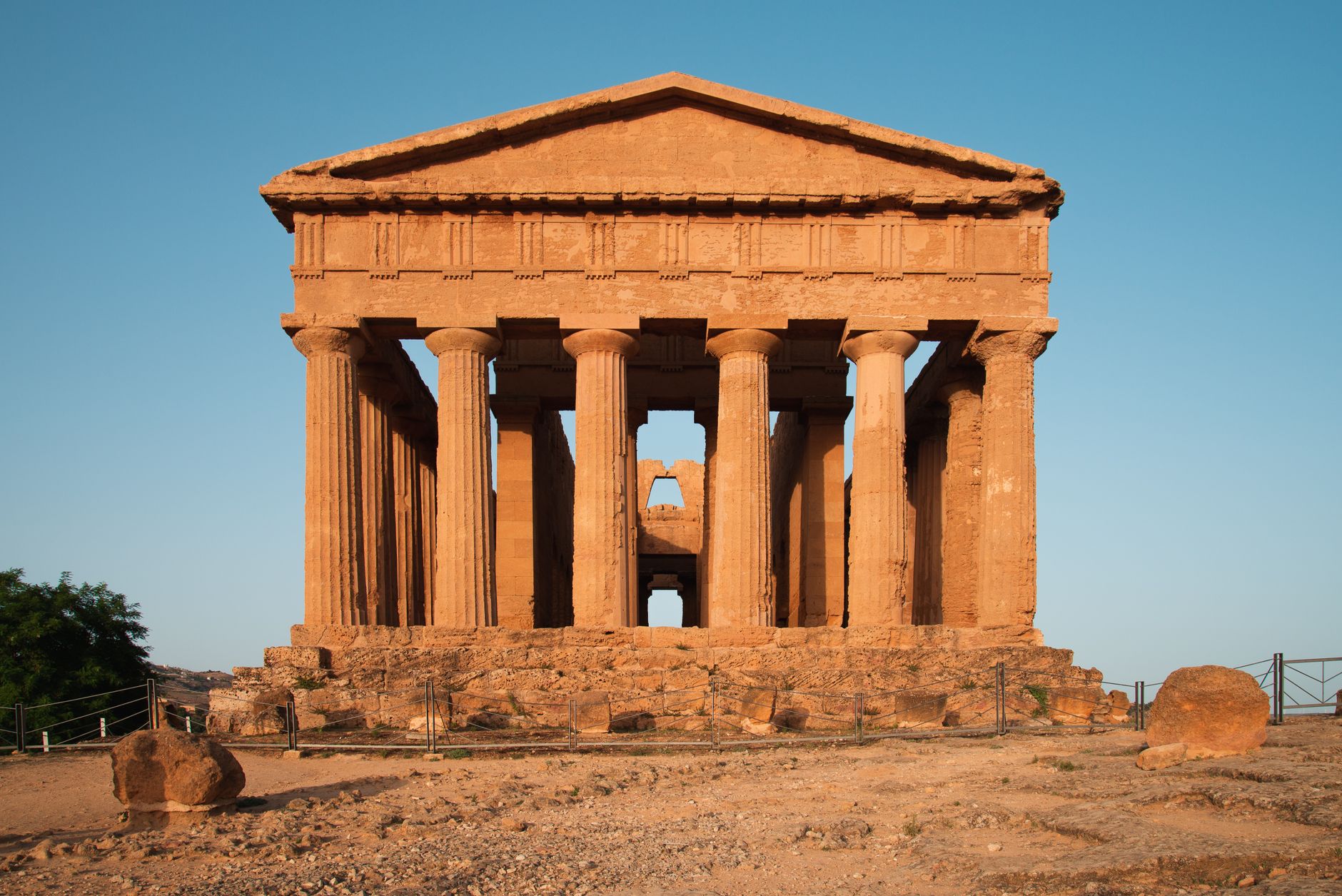
The Valley of the Temples at Agrigento holds the best-preserved ancient Greek temples outside Greece — seven 5th-century BC structures on a limestone ridge, collectively UNESCO-listed. The journey from Palermo takes about two hours each way.
Transit gap — read before you go: The Agrigento Centrale train and bus station is not within walking distance of the Valley of the Temples. From the station, budget an additional 15 minutes and approximately €5–10 for a taxi or local bus from Agrigento Bassa to the site entrance. This gap catches travelers who plan only for the Palermo-to-Agrigento leg. Plan for it explicitly.
The Cuffaro bus runs from Palermo's bus terminal to Agrigento roughly every four hours. The Trenitalia regional train runs every two hours from Palermo Centrale. Both take around two hours and cost €10–15. You arrive in Agrigento and then sort out the taxi or local bus to the site — confirm this before you leave Palermo rather than working it out on arrival.
Walk the ridge in the late morning, before the afternoon heat sets in. The Temple of Concordia is the most intact — a Doric temple (the oldest and most austere of the ancient Greek architectural orders, recognizable by its plain column capitals and columnar base with no decorative pedestal) whose walls survived because a 6th-century bishop converted it to a Christian church, which kept the stone standing for another fifteen centuries. At the eastern end of the ridge, the Temple of Juno commands the highest point. Stand there and look back along the row of columns toward Concordia with the Sicilian countryside and the glint of the sea behind them. The site stretches roughly two kilometers end to end; allow two to three hours on foot to do it properly.
This is a full day from Palermo and back. If you want more time at the site — a morning visit with better light, a night in Agrigento to catch the temples after the day-trippers leave — an overnight unlocks that. February and early March bring almond blossoms to the countryside around the temples, a striking contrast to the pale limestone, if your timing allows.
Quick reference: Cuffaro bus (€11–14) or Trenitalia train (€10–15) from Palermo Centrale; ~2 hours each way. Taxi or local bus from Agrigento Centrale station to site entrance: ~15 min, €5–10. Site entry ~€12–14 adults (Parco della Valle dei Templi, 2026). Allow 2–3 hours at the site.
3. Cefalù
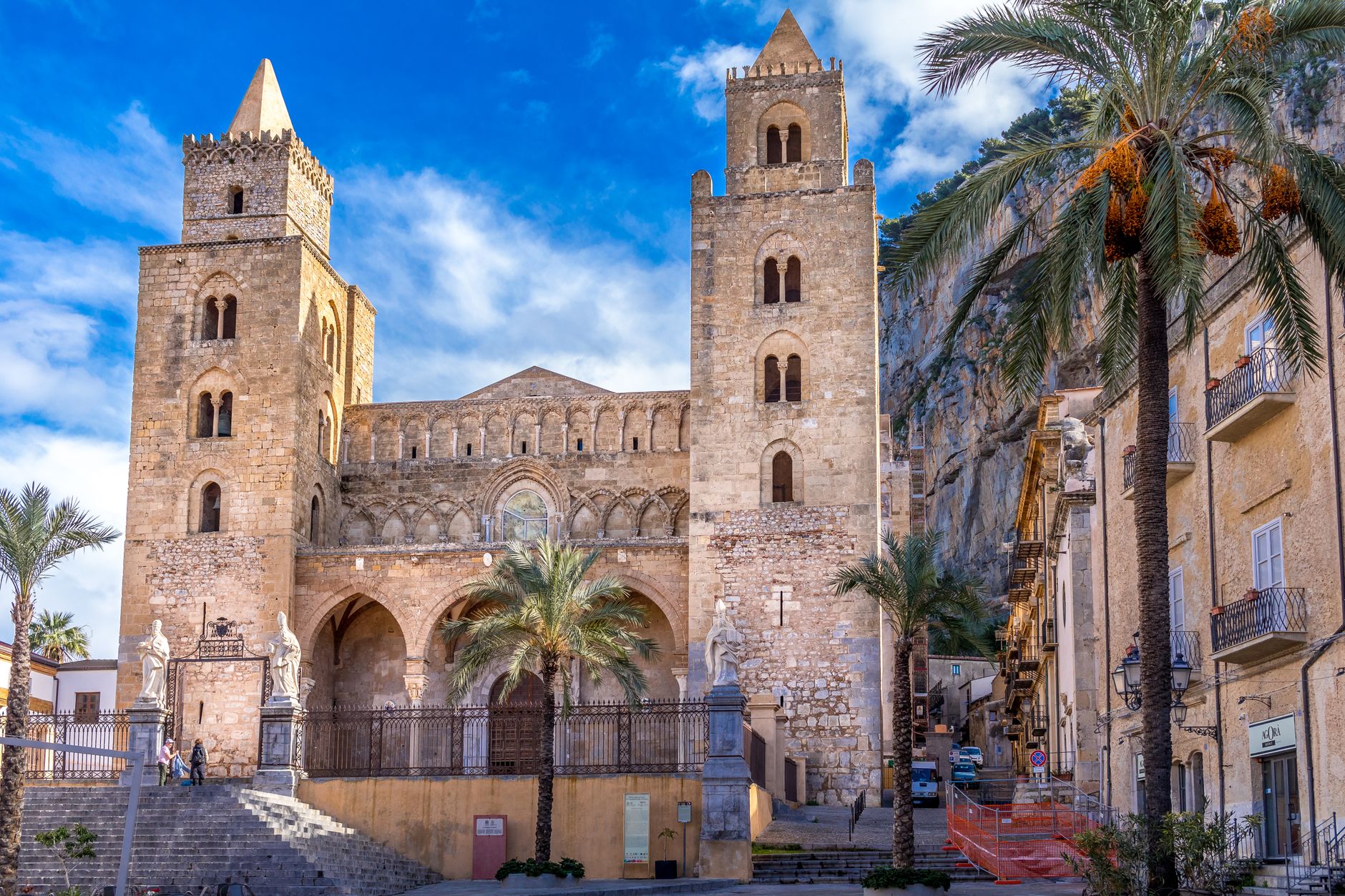
Cefalù's Norman cathedral, 70km east of Palermo by one-hour train, is part of the same Arab-Norman UNESCO listing as the Palatine Chapel and Monreale — a 12th-century site set against a coastal town that makes this a full day out.
The Trenitalia regional train from Palermo Centrale takes about an hour and costs €5–8 each way. Multiple departures run daily; you can walk up and buy a ticket at the station without advance booking, though on busy summer weekends the trains fill and an early start is worth it. In the final stretch before Cefalù the line runs along the coast, and the old town appears on its headland above the water — a useful preview of the proportions of what's waiting.
The cathedral was built in 1131 by the Norman king Roger II as a votive offering after a storm nearly sank his fleet off this coast. He survived and built a cathedral. The mosaic program is earlier than Monreale's and more compact, but the Christ Pantocrator in the apse — set alone against gold and considered one of the finest Byzantine mosaic portraits in Sicily — repays sitting with it rather than passing through. Find a pew near the center of the nave, look up at the apse, and stay long enough for your eyes to adjust to the scale and the quality of the gold. Cefalù's Pantocrator and Monreale's are made by the same tradition and the same general period; seen on consecutive days, the differences become legible.
After the cathedral, walk down through the old town to the waterfront. A granita — a coarse-textured Sicilian frozen dessert made from fruit juice, coffee, or almond and eaten with a soft brioche — is the right thing to order at a café on the seafront. The beach below the old town is swimmable from late May through September. On summer weekends the beach and the trains both fill early; an early departure from Palermo and an afternoon return avoid the worst of it.
Quick reference: Trenitalia regional from Palermo Centrale; ~1 hour; €5–8 one-way. Walk-up tickets at Palermo Centrale or trenitalia.com. No rental car needed.
4. Segesta
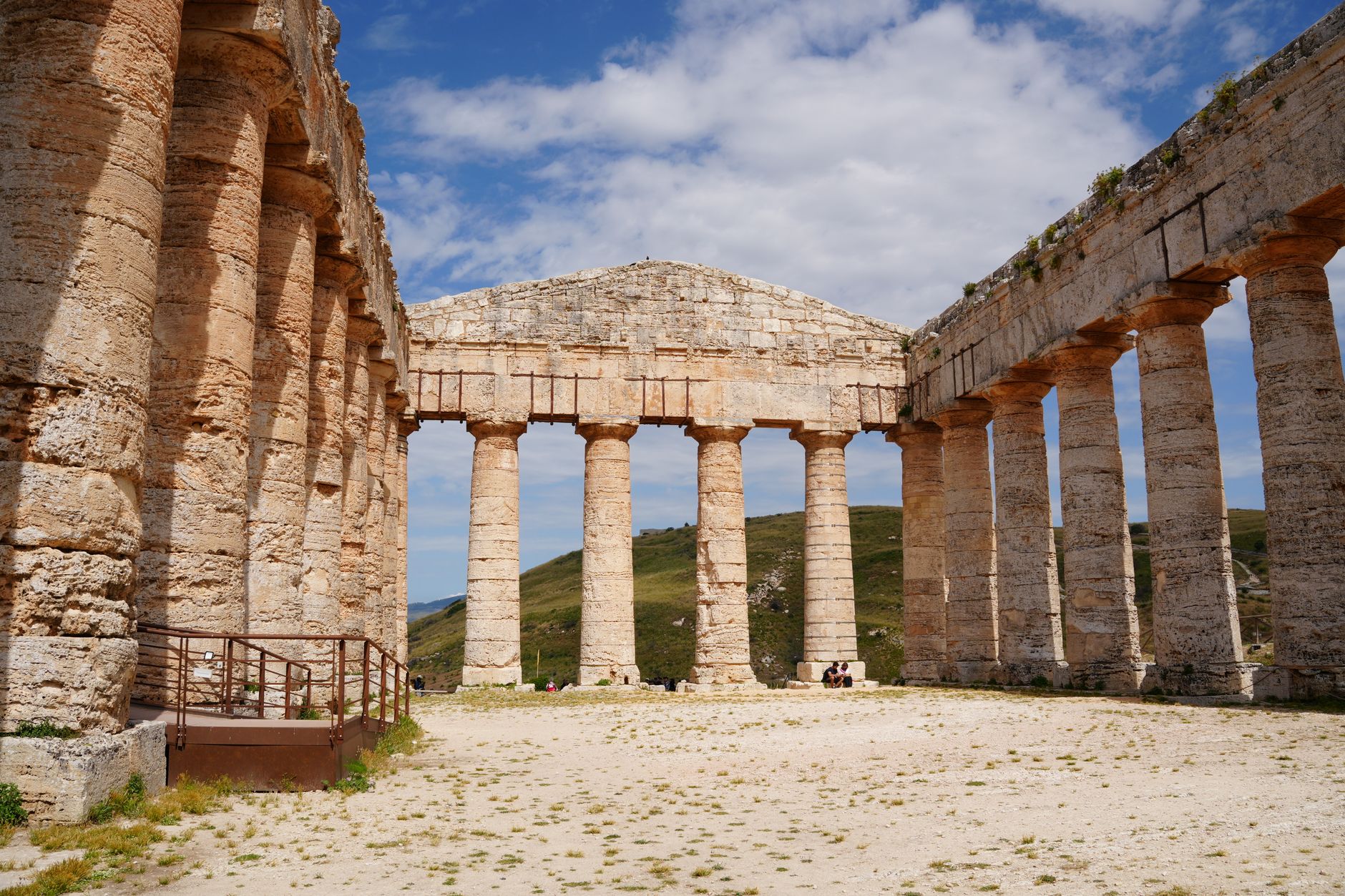
Segesta's Doric temple has stood on a hilltop since the late 5th century BC — unfinished, un-roofed, alone with no surrounding town and nothing between the columns and the open Sicilian sky. That absence is what sets it apart.
A rental car from Palermo is the most reliable way to reach it — roughly 1.5 hours southwest on the A29 autostrada (the motorway connecting Palermo to Trapani). You can also take a Trenitalia regional train to Calatafimi-Segesta station, then a short taxi to the site for around €10. But taxis are not reliably waiting at that station, and you should contact a local taxi service before boarding the train rather than assuming one will be there when you arrive. Organized day tours from Palermo, bookable through Viator or GetYourGuide, are the third option — fixed departure times, no logistics, often combined with other western Sicily sites.
April through June is the most comfortable window. By July the open hilltop gets seriously hot in the middle hours, and there is no shade on the approach to the temple. Bring water regardless of season.
When you arrive, walk straight up to the temple before anything else. All 36 columns are standing, but the interior was never finished — there is no cella (the enclosed inner chamber where Greek temples typically housed their cult statue), and the structure is open to the sky. Walk through the colonnade, stand at the center, look up at the open air where a roof was never laid. Whatever the ancient Segestans were building when they stopped, they had finished the columns and the entablature (the horizontal band of stone the columns hold up) but never put on the roof. The unfinished state is not a deficiency; it is part of what the site is. The adjacent Greek amphitheater on the hilltop above the temple hosts seasonal performances in summer.
Quick reference: By car ~1.5 hours from Palermo on the A29 autostrada. By public transport: Trenitalia to Calatafimi-Segesta station, then taxi ~€10 — confirm taxi availability in advance before your train departs. Site entry ~€8–10 adults (Along Dusty Roads, 2025). Best April–June. Bring water and sun protection.
5. Monte Pellegrino

Monte Pellegrino rises 600 meters above Palermo's northern edge — within the city itself, not outside it. Bus 812 from Piazza Politeama reaches it in 25 minutes for €1.40. This is a half-day in-city option.
The first reason to go is the Santuario di Santa Rosalia — the shrine of Palermo's patron saint, carved directly into the cliff face of the promontory. Inside, water seeps through the rock walls and trickles down stone channels that the sanctuary's caretakers have routed with bricks and tiles over centuries. Votive offerings cover every surface: crutches, photographs, written prayers in Italian and Sicilian. Goethe called Monte Pellegrino the most beautiful promontory in the world — and the sanctuary itself is not a tourist attraction in the way Monreale is. This is where Palermitani come to pray. The Festino di Santa Rosalia (July 14–15 annually), the city's largest celebration, begins here each year. Step inside, let your eyes adjust from the Mediterranean glare to the cave dimness, and stay long enough to understand what the space is — not a museum exhibit of religious tradition but religious tradition still in use.
The second reason is the view. From the Belvedere di Monte Pellegrino, the Conca d'Oro (the "Golden Shell" — the fertile plain that cradles Palermo on three sides, named for the color of the citrus groves that once filled it) spreads below you. Mondello bay is visible to the northwest. On a clear day you can see across the city to the mountains on the other side. It is the best vantage point over Palermo, and the Arab-Norman story you've been following across the week's sites is compressed into the view below: the old city, the cathedral, the markets, the port.
Bus 812 gets you close; a short uphill walk reaches the Belvedere. The full hike from road level to the summit is possible but demanding in summer heat. Comfortable shoes either way.
Quick reference: Bus 812 from Piazza Politeama; ~25 min; €1.40 AMAT single-trip ticket. Sanctuary free, open daily. Goethe called the promontory "the most beautiful in the world" (TravelMadeMeDoIt, 2026). No rental car needed. This is a within-the-city excursion — you do not leave Palermo.
Practical notes for planning your day trips
Planning day trips from Palermo across western Sicily's UNESCO sites and archaeological parks takes a bit of coordination — the logistics differ meaningfully from site to site, and the distances add up fast if you're not accounting for return transit times.
Public transport versus car: Monreale and Cefalù are straightforwardly reached by city bus and train — no car, minimal planning. Agrigento works by bus or train but requires the extra taxi or local bus from the station to the Valley of the Temples entrance. Segesta is car-primary for most travelers; the train-plus-taxi route is viable but requires advance coordination on the taxi. Monte Pellegrino is a city bus. If you plan to visit both Segesta and Agrigento, a rental car from Palermo airport simplifies the logistics considerably — Segesta is southwest of Palermo, Agrigento is south, so they work as a single car circuit with an early start.
Timing across the sites: Monreale is the fastest (30 minutes from Palermo) but deserves a full morning. Agrigento and Cefalù each require a full day given transit time. Segesta can be combined with Agrigento in a single car day — the loop works geographically. Monte Pellegrino is the right half-day if you have an afternoon otherwise free in the city.
Entry fees: Attraction pricing shifts; the figures here reflect dossier research from June 2026. Confirm current rates at the ticket office or via the official site before visiting, particularly for Agrigento and Segesta where combined park tickets and seasonal pricing are common.
Getting around Palermo itself: The historic core sits inside a ZTL (Zona a Traffico Limitato — pedestrian-priority zone where private cars are restricted during certain hours and fines apply for unauthorized entry). For city travel, AMAT buses and trams cost €1.40 per trip, valid 90 minutes, with contactless payment accepted. Taxis from the airport to the city center run approximately €45 daytime.
ETIAS: US passport holders currently enter Italy visa-free under Schengen rules for stays up to 90 days within any 180-day period (US State Department, 2025). ETIAS — the European Travel Information and Authorization System — is expected to launch in late 2026; once active, US travelers will need an authorization (€20, valid 3 years) before visiting. A 6-month grace period follows launch. Monitor travel.state.gov for updates if your trip falls in that window.
Street food while you're in the city: The arancina — Palermo's round, fried rice ball, stuffed with ragù or cheese and called arancina (feminine) here specifically, not arancino as in Catania — costs €2–3.50 and is available from early morning at Ballarò, Capo, and most market stalls. Pani ca meusa (a spleen sandwich — veal spleen boiled, fried, and stuffed into a sesame roll, served with lemon or caciocavallo cheese) is Palermo's most divisive street food and worth trying at least once. At sit-down restaurants, check the bill for a coperto (cover charge, typically €1–3) before adding extra — if coperto is already listed, additional tipping is optional.
Planning Sicily? Two more guides worth a look: why fly into Palermo and Catania vs Palermo: which gateway.
Frequently asked questions
How do I get from Palermo to Agrigento and the Valley of the Temples?
Take the Cuffaro bus (around €11–14, roughly every 4 hours) or a Trenitalia regional train (around €10–15, every 2 hours) from Palermo Centrale to Agrigento Centrale — about 2 hours either way. Important: the station is not within walking distance of the Valley of the Temples. Budget an extra 15 minutes and €5–10 for a taxi or local bus from Agrigento Bassa to the site entrance. (Rome2Rio, 2026)
Can I visit Monreale Cathedral from Palermo without a car?
Yes. Bus 389 from Piazza dell'Indipendenza in Palermo reaches Monreale in about 30 minutes for €1.40 each way. The cathedral is a short walk from the bus stop. Go early — tour groups fill the nave by mid-morning. Entry is approximately €4–5 for adults. The cloister is included and worth 30 extra minutes. (ItiMaker.com, 2026)
Is Cefalù worth a day trip from Palermo?
Cefalù earns a day trip for travelers who want Norman cathedral architecture and a beach town in one outing. The Trenitalia regional train from Palermo Centrale takes about an hour and costs €5–8 each way. The cathedral — part of the same UNESCO Arab-Norman listing as Palermo's own monuments — is the anchor; the beach and old town are the rest of the day. (Trenitalia, 2026)
Do I need a rental car to reach Segesta from Palermo?
A rental car is the most reliable option — about 1.5 hours southwest on the A29 autostrada from Palermo. You can also take a Trenitalia train to Calatafimi-Segesta station and taxi from there (around €10), but taxi availability at the station is unreliable and should be confirmed in advance. Organized day tours from Palermo are the third option if you prefer no logistics. (TourOfSicily.com, 2025)
Is Monte Pellegrino worth visiting if I only have a few hours?
Monte Pellegrino is Palermo's own promontory — not a day trip outside the city but a 25-minute ride on city bus 812 from Piazza Politeama for €1.40. The panoramic views over the Conca d'Oro plain and the Santuario di Santa Rosalia — a pilgrimage shrine carved into the cliff face — make it the most rewarding half-day option within the city. Entry to the sanctuary is free. (TravelMadeMeDoIt, 2026)