5 Reasons to Fly into Palermo for Your Sicily Trip
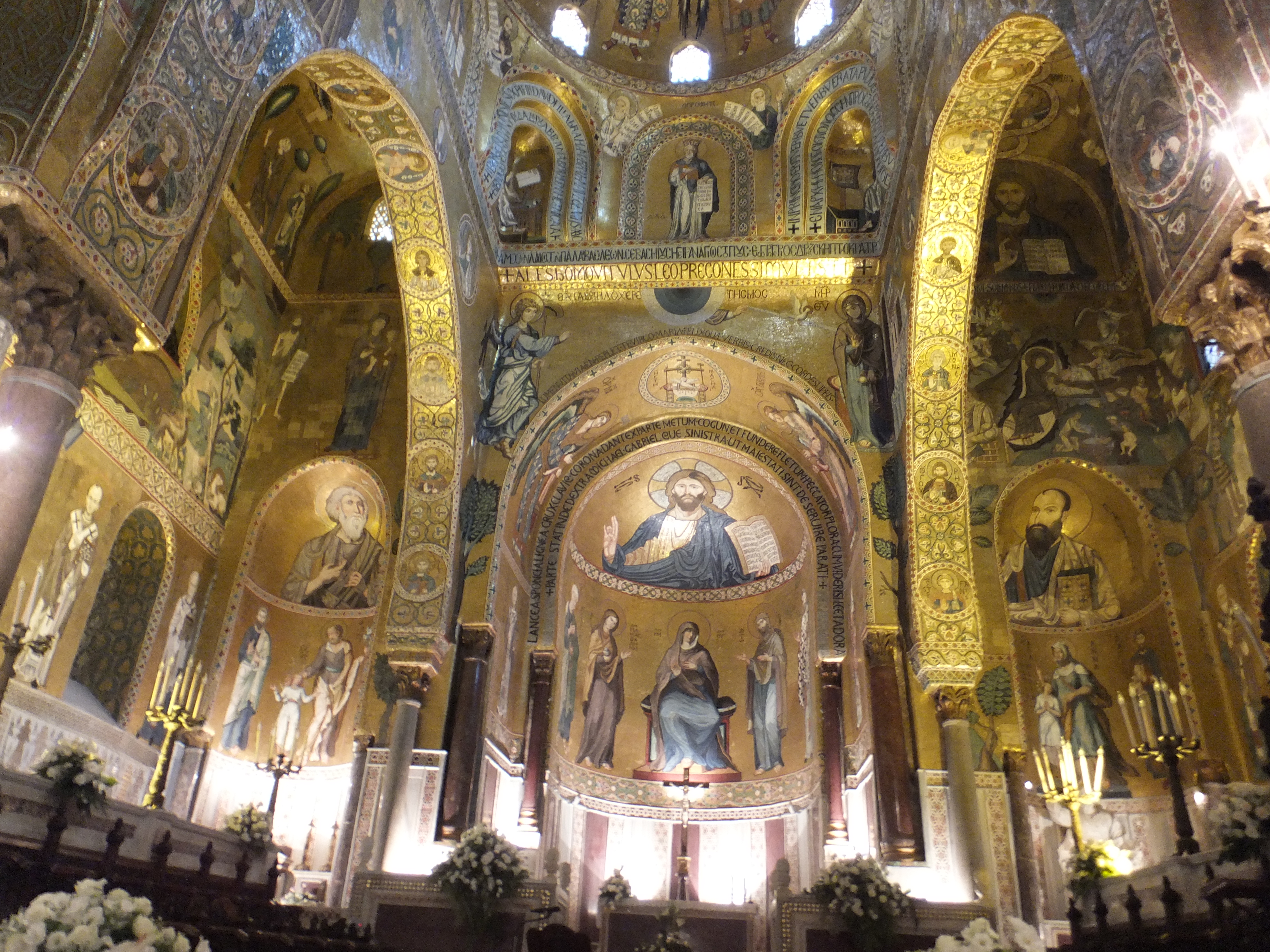
Palermo has been receiving ships and ideas from elsewhere for a very long time. The Arab traders who built its markets, the Norman kings who gilded its chapel ceilings, the Byzantine mosaicists they hired, the Sicilian dialect that still carries traces of all three — it all moved through this port. You walk into a 12th-century chapel on your first morning and the ceiling is gold from wall to wall, and what you're looking at is the record of a city that was, for about a hundred years, one of Europe's most cosmopolitan places. That's Palermo. It also sits at Sicily's western tip, which makes it the natural starting point for a full-island trip — the gateway that puts you at the front of a Sicily circuit, not the back of one.
One caveat before the list: if your Sicily trip centers on Taormina, Etna, or Syracuse, fly into Catania. That airport sits two hours closer to eastern Sicily and there's no geographic case for starting in the west if you're not spending meaningful time there. This list is for travelers planning real time in western Sicily, doing a full open-jaw crossing, or continuing from Sicily to the Italian mainland.
1. You Start at the Front of a Western Sicily Circuit
Palermo is the right entry for western Sicily because the island's touring route runs west to east, and PMO puts you at the beginning of that line — not in the middle, paying transit time you didn't budget for.
Sicily's west-facing destinations are concentrated within a couple of hours of Palermo: Segesta's Greek temple sits on a hilltop about 70km to the west; the Valley of the Temples at Agrigento lies roughly two hours south. Flying into Catania and heading west means two and a half hours of transit before you've seen anything. Flying into Palermo means you step off the bus into the historic center and you're already there.

You can reach Agrigento from Palermo by Cuffaro bus or Trenitalia regional train in about two hours. From there, the standard circuit moves east through central Sicily — Ragusa, Syracuse, Taormina — before reaching Catania at the island's opposite end. Every stop on that route is new ground. The alternative — landing in Catania and working backward to Palermo before heading east again — is a structure that doesn't reward the traveler for anything.
The practical note: a night in Agrigento rather than a day trip makes the Valley of the Temples visit substantially more relaxed and opens the early-morning light, which is when the columns turn amber against the hillside.
2. The Open-Jaw PMO-In/CTA-Out Circuit
An open-jaw ticket — flying into one city and home from another, so you never retrace the same ground — is the routing recommended on Sicily travel forums for a first full-island trip, and PMO is the western terminus.
A seven-to-ten day PMO-in/CTA-out circuit looks like this: you arrive in Palermo, spend two or three days in the historic center, then move south toward Agrigento, east through Ragusa and Syracuse, north to Taormina, and depart from Catania. Every place is new. The island's full east-west span gets covered once, in one direction, rather than twice.
Book this by selecting "multi-city" on most booking platforms. You'll see PMO for the outbound leg and CTA for the return — or the reverse, if you prefer to move east to west. Either direction works; the point is that you're not crossing the island twice.
For US travelers connecting through European hubs, intra-EU legs to PMO have appeared at €18–€40 one-way based on recent Treverra search data (Treverra search data, April–May 2026). Your total fare depends on your transatlantic routing and booking window. The open-jaw routing itself isn't a pricing argument — it's a geographic one. What it saves you is time and the dulling repetition of seeing the same ground from a train window going both ways.
3. The Overnight Ferry to Naples as a Mainland Exit
If your Sicily trip is one chapter of a longer Italy journey, Palermo offers a mainland exit no other Sicilian airport can match: an overnight ferry to Naples that turns departure into part of the journey.
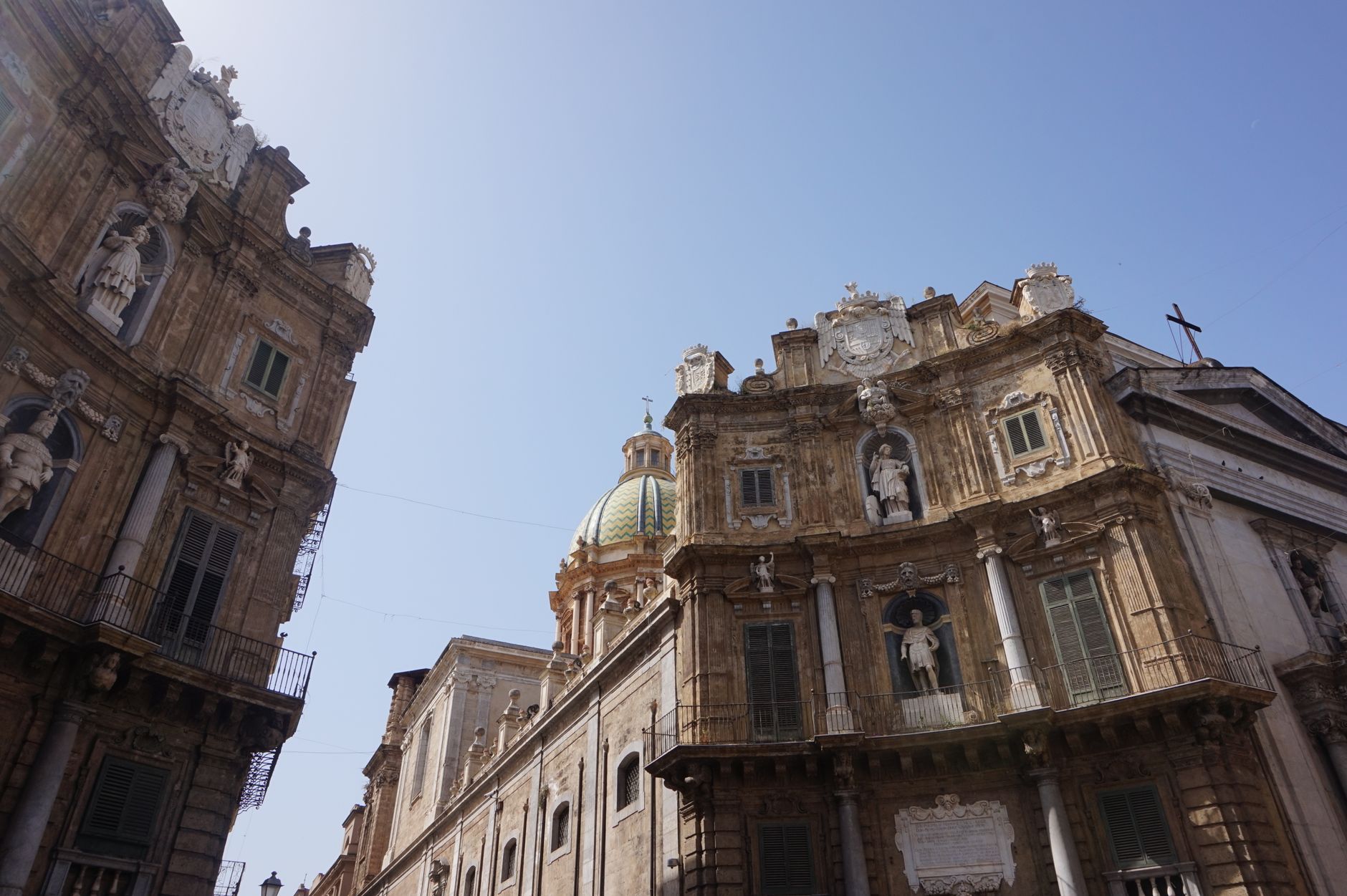
You board in the evening. The ship clears the harbor and the city lights fall back into the dark. Eleven hours later you're docking in Naples with a full day ahead of you — no airport, no security line, no lost morning to transit. Palermo's port sits about 15 minutes on foot from Quattro Canti, the Baroque piazza at the center of the historic city.
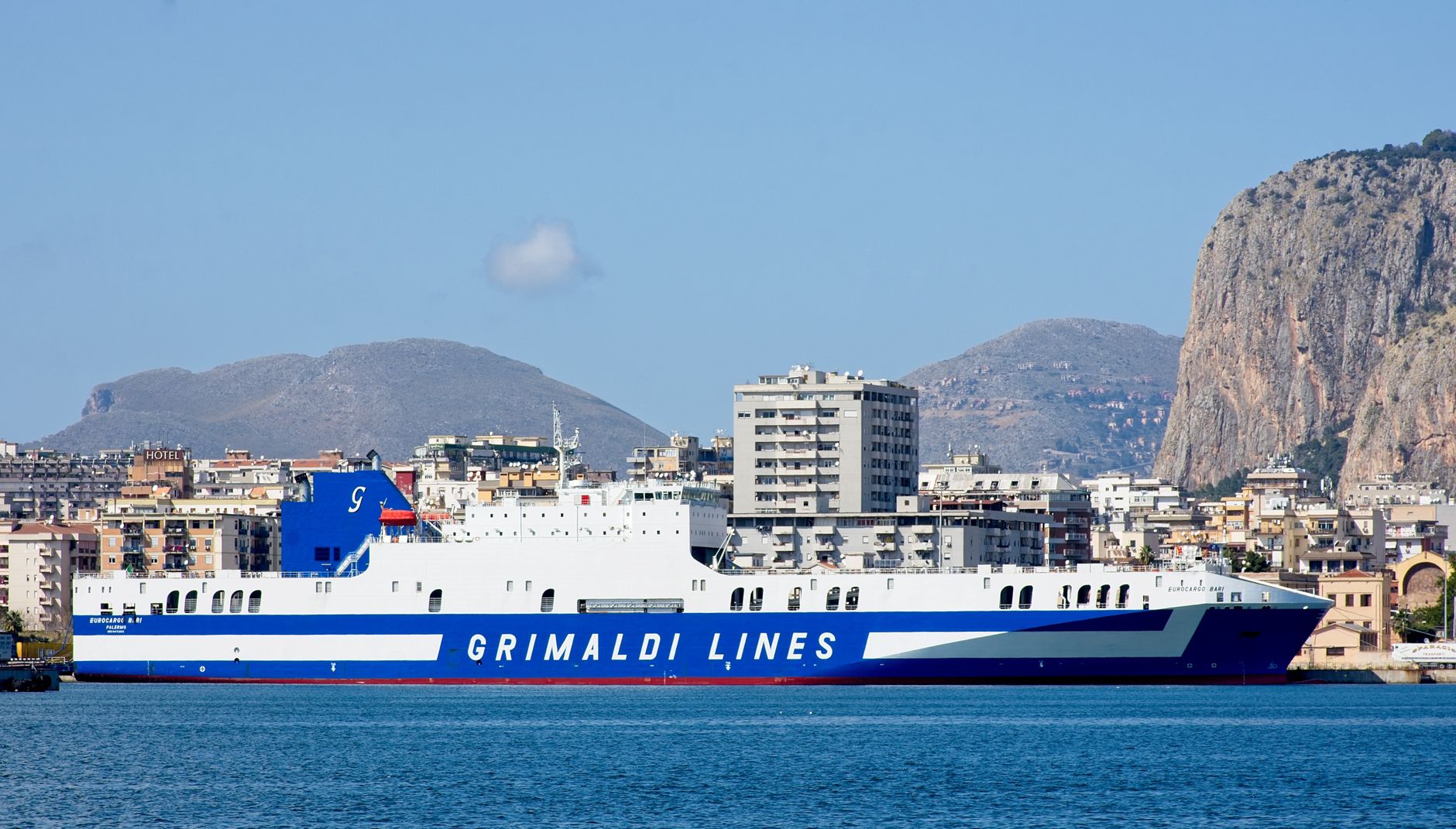
By ferry — GNV (Grandi Navi Veloci) and Grimaldi Lines both run overnight crossings from Palermo to Naples, approximately 11 hours, with departures typically between 10pm and midnight. Deck passage from around €28; cabin fares higher depending on accommodation class. Check gnv.it or grimaldi-lines.com for current schedules — frequencies are 2–4 crossings daily in peak periods (Ferryhopper/DirectFerries, 2026).
By rail — Trenitalia InterCity Notte runs Palermo Centrale to Naples Centrale overnight, roughly 11–12 hours. Couchette berths from around €35–60 advance booking; book early through trenitalia.com as couchette inventory runs thin in summer (Seat 61, 2026). The particular thing about this train is that it drives onto a ferry to cross the Strait of Messina. Carriages roll onto the deck. Passengers walk upstairs to watch the Sicilian coast recede, then come back down to their bunks on the far side. One of the few European overnight rail routes where the train itself becomes a ferry passenger.
Catania has no equivalent. A traveler wanting to reach the mainland by sea from the island's east end faces a significantly longer routing. For a trip that continues up the Italian peninsula, the western departure is the more versatile choice.
4. The Arab-Norman Monument Cluster, Unique to the West
Arab-Norman architecture — the synthesis of Arab geometric craftsmanship, Byzantine mosaic tradition, and Norman ecclesiastical structure — flourished in 12th-century Palermo. Nine UNESCO-listed structures survive in the city and its surrounds; none are in eastern Sicily.
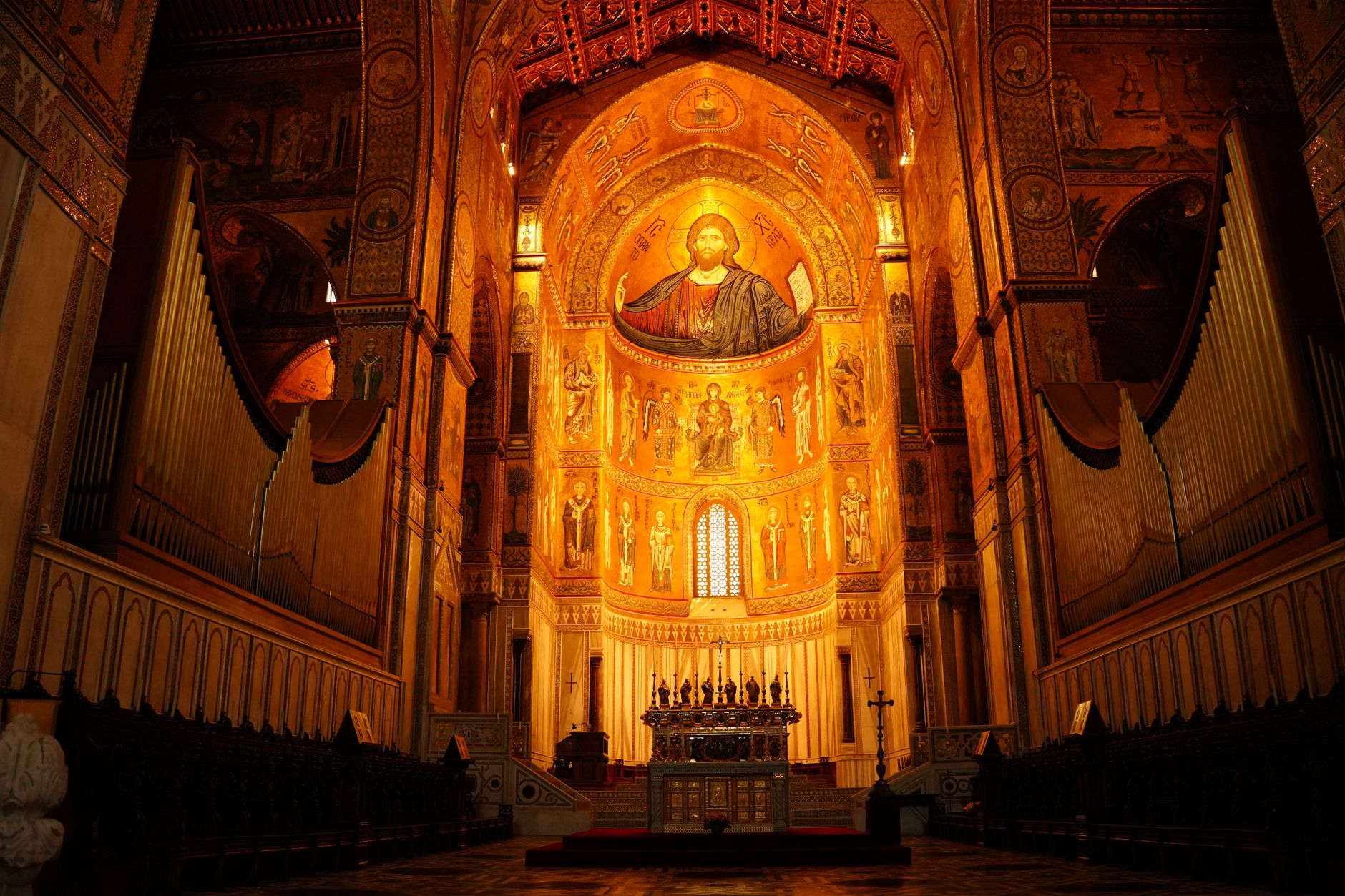
The Norman kings who took Sicily from the Arabs in 1072 did something unusual: they kept the Arab craftsmen. They hired Byzantine mosaicists too, and Latin clergy, and built an administration that ran in Arabic, Greek, and Latin simultaneously. What came out of that arrangement — stalactite muqarnas ceilings, walls covered in gold tesserae, geometric stonework — is unlike anything produced in the same era anywhere else in Europe. Nine structures in and around Palermo carry the collective UNESCO World Heritage designation "Arab-Norman Palermo and the Cathedral Churches of Cefalù and Monreale" (UNESCO WHC listing 1487, 2015). None of them are in eastern Sicily. Catania's historic center is Baroque — rebuilt after the 1693 earthquake. The two cities occupy different centuries entirely.
The Cappella Palatina — the Palatine Chapel inside Palazzo dei Normanni — is where to start. Arrive when the doors open, around 8:30–9am before the tour groups fill the nave. Step inside and let your eyes adjust. Every wall surface is gold mosaic. The Christ Pantocrator in the apse has been looking down from the 12th century. Entry is included in the Palazzo dei Normanni ticket; allow 90 minutes. Admission around €12–15 for adults (Italia.it, 2025). La Martorana and San Giovanni degli Eremiti are both within a five-minute walk, San Giovanni's Arab-influenced red domes visible from the street before you enter.
Monreale Cathedral, 8km southwest of the center, is a half-day addition rather than a separate destination. Take Bus 389 from Piazza dell'Indipendenza — 30 minutes, €1.40. Inside, 6,340 square meters of Byzantine mosaic cover every surface from floor to vault, the largest medieval mosaic program in Europe (UNESCO WHC, 2015). Go early. Entry is around €4–5 for adults.
The Arab-Norman synthesis began with the same trading routes and cultural exchanges that shaped Palermo's markets and its food — which is why this motif runs through the whole city, not just through the monuments.
5. Palermo's Food Culture as a Distinct Opening Chapter
Palermitan street food grew from the same confluence the monuments did — Arab spice traders, Norman port commerce, centuries of fish through this harbor — and the dishes at Ballarò were designed for the city's working population, not for visitors.

Ballarò, spreading through the Albergheria neighborhood and most active before 2pm, is where Palermo shops. The vendors are calling prices to regulars, not performing for tourists. Produce is piled high and changing by the hour. Capo Market, north of the Cathedral, runs the same way. Both are free to walk through; street food at either runs €1.50–€5 per item.
Order pani ca meusa — a sesame roll stuffed with veal spleen, boiled, fried, and served with a squeeze of lemon or melted caciocavallo cheese — at any stall with a meusaro (spleen vendor) behind the counter. The vendor keeps a small gas burner going and a stack of sesame rolls on one side; the spleen goes in, the roll closes, you eat it standing at the counter. It costs around €2.50. Order the "maritata" version — the "married" one, with caciocavallo — first. This dish exists nowhere else in Italy in the same form; its roots run back through the Arab trading culture that established Palermo as a port provisioning city for centuries (AuthenticFoodQuest.com, 2026; WeArePalermo.com, 2025).
Arancina — the feminine Palermitan form, not Catania's arancino — is a round fried rice ball stuffed with ragù, peas, or cheese. The spelling is not a typo; the distinction between arancina and arancino is an actively contested local identity marker, a real cultural flashpoint between the two ends of the island (WeArePalermo.com, 2025). Write it arancino in Palermo and you will be corrected. The correction is worth paying attention to: it tells you something about what it means to be from this city rather than that one.
One note on Vucciria: it's Palermo's most famous market by name, but it's essentially defunct as a daytime food market — sparse stalls and mostly shuttered by morning. After 9pm it becomes the city's noisiest outdoor nightlife zone. For market atmosphere and street food, Ballarò and Capo are the correct daytime choices (DoEatBetterExperience.com, 2026; WeArePalermo.com, 2025).
This is a genuine reason to start in Palermo rather than Catania. Both cities have strong food cultures; they are not the same culture. The spleen sandwich, the market noise, the arancina debate — none of it is interchangeable with anywhere else in southern Italy, and none of it is available from a Catania arrival. What you eat on day one of a Sicily trip sets the tone for the rest of it. Palermo's version is older, stranger, and rooted more deeply in the trade routes that shaped this side of the island.
Practical Notes
Everything you need to know before landing at PMO: how to get from the airport to the city center, how to get around the historic core, what documents you need, and the best time of year to arrive.
Getting to Palermo from the airport: The Prestia e Comandè bus runs from PMO to Palermo Centrale and Via Libertà every 30 minutes, takes about 50 minutes, and costs €6.50. The Trinacria Express train (Trenitalia) covers the same route in 45–55 minutes for €6.90, running roughly every 30 minutes from around 5:45am to 10pm. A taxi runs €45 in the daytime, €55 at night or on holidays, and takes 30–45 minutes depending on traffic — if you take one, agree on the metered fare before you depart (Palermo Airport official site, 2026).
Getting around the city: The historic core from Quattro Canti to Teatro Massimo to the Cathedral covers about 25 minutes on foot and sits inside a ZTL (Zona a Traffico Limitato — a pedestrian-priority zone with access restrictions for private vehicles). You don't need a car in the center. AMAT buses and trams cost €1.40 per trip, valid for 90 minutes, with contactless payment accepted on both (AMAT Palermo, 2026). Bus 812 from Piazza Politeama runs to Monte Pellegrino in about 25 minutes — the limestone promontory above the city that carries the Santuario di Santa Rosalia, the shrine of Palermo's patron saint, carved directly into the cliff face.
Money and tipping: Check your restaurant bill for a coperto (cover charge, typically €1–3 per person) — if one appears, additional tipping is optional. Card payments are accepted at most restaurants and shops; markets and street food stalls are predominantly cash. ATMs are plentiful in the historic center.
Schengen and ETIAS: US passport holders enter Italy visa-free for up to 90 days in any 180-day Schengen period (US State Department, 2025). ETIAS — the European Travel Information and Authorization System — is expected to launch in late 2026, with a 6-month grace period after launch. It carries a €20 fee, valid for 3 years across 30 countries. That launch timeline is not confirmed; check current status before booking if your travel falls in that window (EEAS, 2025; etias.com, 2026).
Best time to visit: April through June and September through October. Spring temperatures run 18–24°C with manageable crowds. July and August are hot (30–38°C), crowded at major sites, and expensive at the coast. The Festino di Santa Rosalia — Palermo's largest annual event, honoring the patron saint credited with ending the 1624 plague — runs July 10–15, with main processions on July 14–15. Significant crowds in the historic center during those dates.
When Catania is the right call: If Taormina, Etna, Syracuse, or the Val di Noto baroque towns are the primary draw on your Sicily trip, fly into Catania. The airport is two hours closer to eastern Sicily's anchors, and adding a cross-island transit to reach Palermo doesn't serve a trip that's primarily eastern. Palermo is the gateway for travelers spending real time in the west, doing the full open-jaw circuit from one end of the island to the other, or continuing to the Italian mainland from the port. It is not the universally better Sicily entry — it is the better entry for the right trip.
Planning Sicily? Two more guides worth a look: 3 days in Palermo and Catania vs Palermo: which gateway.
Frequently asked questions
Is Palermo or Catania the better gateway for a Sicily trip?
It depends on where you're actually going in Sicily. Palermo (PMO) is the right entry for western Sicily — Segesta, Agrigento, and the Arab-Norman monuments — and for travelers doing a full open-jaw island circuit. Catania (CTA) is the better call if your primary draws are Taormina, Etna, Syracuse, or the Baroque towns of the Val di Noto. Choose by itinerary geography, not by price alone.
Can I fly into Palermo and out of Catania on the same booking?
Yes. An open-jaw ticket — flying into one city and home from another, so you never retrace the same ground — is available on most booking platforms. Search under 'multi-city' rather than 'round-trip.' A PMO-in/CTA-out routing is the standard advice on Sicily travel forums for first-time visitors doing a full-island trip, because it eliminates the east-west backtrack that a round-trip to either airport forces.
What is the Arab-Norman heritage in Palermo and why does it matter?
Arab-Norman refers to the architectural and artistic synthesis that emerged in 12th-century Palermo under Norman kings who ruled a court drawing simultaneously on Arab engineers, Byzantine mosaicists, and Latin clergy. The result — gold-mosaic chapels, stalactite muqarnas ceilings, geometric carved stonework — is unlike anything produced in the same era elsewhere in Europe. Nine structures in and around Palermo carry a collective UNESCO World Heritage designation for this reason (UNESCO WHC listing 1487, 2015).
What should I eat in Palermo that I cannot find anywhere else in Italy?
Two dishes are genuinely Palermitan. Pani ca meusa — a sesame roll stuffed with veal spleen, fried and served with lemon or melted caciocavallo cheese — is sold by meusari (spleen vendors) at Ballarò stalls for around €2.50. Arancina — note the feminine Palermitan spelling, not Catania's arancino — is a round fried rice ball; the distinction marks a real regional identity, not a typo. Both trace their character to Arab trading routes that ran through this port for centuries.
Do I need a car to explore western Sicily from Palermo?
A car is the most flexible option if Segesta and the interior are on the itinerary. Both Segesta and Agrigento are reachable by public transport — Agrigento by Cuffaro bus or Trenitalia regional train (around 2 hours, €10–15) — but frequency is limited. Palermo's historic center is entirely walkable within a ZTL pedestrian-priority zone; no car is needed in the city itself.